Search
Plant family

Brassicaceae

Called “cabbage family” in GBIF

Brassicaceae or Cruciferae is a medium-sized and economically important family of flowering plants commonly known as the mustards, the crucifers, or the cabbage family. Most are herbaceous plants, while some are shrubs. The leaves are simple, lack stipules, and appear alternately on stems or in rosettes. The inflorescences are terminal and lack bracts. The flowers have four free sepals, four free alternating petals, two shorter free stamens and four longer free stamens. The fruit has seeds in rows, divided by a thin wall. As of 2023, the family was divided into two subfamilies, Brassicoideae and Aethionemoideae, and as of September 2025, it contained over 350 accepted genera.

From Wikipedia, licensed under CC BY-SA 4.0

4,900
accepted species in GBIF
Source: GBIF
570
genera in GBIF
Source: GBIF
37
plants on Plant News
347
research articles
Browse by topic

Plants in this family

37 plants
Arabidopsis

Arabidopsis

159 articles
Thale Cress

Thale Cress

Arabidopsis thaliana

128 articles
Rapeseed

Rapeseed

Brassica napus

30 articles
Kale

Kale

Brassica oleracea

12 articles
Indian mustard

Indian mustard

Brassica juncea

10 articles
Garlic Mustard

Garlic Mustard

Alliaria petiolata

9 articles
Dame's Rocket

Dame's Rocket

Hesperis matronalis

5 articles
Camelina

Camelina

4 articles
Field Mustard

Field Mustard

Brassica rapa

3 articles
Brassica

Brassica

2 articles
Cut-leaved toothwort

Cut-leaved toothwort

Cardamine concatenata

2 articles
Wild Radish

Wild Radish

Raphanus raphanistrum

2 articles
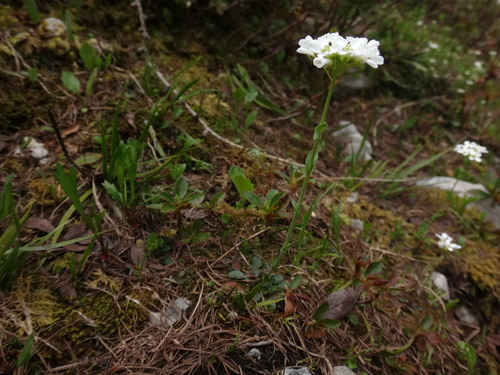
Alpine pennycress (c) Christian Berg · Steiermark, Austria · CC BY

Alpine pennycress

Noccaea alpestris

1 article
Arabidopsis halleri

Arabidopsis halleri

1 article
Candytuft

Candytuft

Iberis

1 article
Crambe

Crambe

1 article
Field Peppergrass

Field Peppergrass

Lepidium campestre

1 article
Hoary Mustard

Hoary Mustard

Hirschfeldia

1 article
Horseradish

Horseradish

Armoracia rusticana

1 article
eco

Iberis carica

1 article
eco

Iberis gypsicola

1 article
Iberis halophila

Iberis halophila

1 article
Iberis odorata (c) Karim Haddad · Constantine, Algeria · CC BY

Iberis odorata

1 article
Iberis saxatilis

Iberis saxatilis

1 article
Iberis sempervirens

Iberis sempervirens

1 article
Iberis simplex Татьяна Прозорова · Krasnodar, Russia · CC0

Iberis simplex

1 article
London Rocket

London Rocket

Sisymbrium irio

1 article
napa cabbage

napa cabbage

Brassica rapa subsp. pekinensis

1 article
Noccaea praecox Mirko Ubović · Federacija Bosna i Hercegovina, Bosnia and Herzegovina · CC0

Noccaea praecox

1 article
Pennycress

Pennycress

Thlaspi

1 article
purple cabbage

purple cabbage

Moricandia moricandioides

1 article
Sand rock-cress

Sand rock-cress

Arabidopsis arenosa

1 article
Shepherd's Purse

Shepherd's Purse

Capsella bursa-pastoris

1 article
Shortpod Mustard

Shortpod Mustard

Hirschfeldia incana

1 article
Sweet alyssum

Sweet alyssum

Lobularia maritima

1 article
Virginia pepperweed

Virginia pepperweed

Lepidium virginicum

1 article
Watercress

Watercress

Nasturtium officinale

1 article

Genera in this family

Also here, with one plant each: Alliaria (Garlic Mustard), Armoracia (Horseradish), Capsella (Shepherd's Purse), Cardamine (Cut-leaved toothwort), Hesperis (Dame's Rocket), Lobularia (Sweet alyssum), Moricandia (purple cabbage), Nasturtium (Watercress), Raphanus (Wild Radish), Sisymbrium (London Rocket), Camelina (Camelina), Crambe (Crambe), Thlaspi (Pennycress).

Research on Brassicaceae

347 articles

Two seed genes team up to manage nitrogen in thale cress

The nitrogen stored in a seed decides how vigorously a seedling starts, so the seeds you save fro...

AI model spots rapeseed field weeds fast on cheap hardware

Farmers walking oilseed rape fields could soon point a low-cost camera at a patch and get instant...

PubMed → · research article

Mustard plants use tiny genetic switches to fight toxic metal

If you've ever wondered whether plants can help clean up contaminated soil near old industrial si...

PubMed → · research article

Camelina's narrow gene pool puts aviation biofuel crops at risk

Camelina oil is already showing up in aviation biofuels and omega-3 supplements, and the narrow g...

What science is finding about Brassicaceae

Every article on Plant News that mentions a member of this family, newest first.

Root cells secretly split into two identity modes under drought

The roots on your drought-stressed tomatoes or struggling lawn aren't just wilting passively, they're actively reshuffling...

Arabidopsis plant-signaling / climate-adaptation

Plants use hidden protein relays to sound the alarm faster

Every tomato plant or rose bush fighting off a fungal invasion relies on split-second internal signaling like this, and...

Arabidopsis plant-signaling / crop-improvement

This sorghum gene helps plants shrug off salty soil

If you've ever watched plants struggle near a salted sidewalk or in coastal soil, this gene points to a natural toolkit...

Arabidopsis crop-improvement / climate-adaptation

Blue light helps plants balance growth and drought survival hormones

If you've ever noticed houseplants near a window handle dry spells better than ones in a dim corner, this research explains...

Thale Cress plant-signaling / climate-adaptation

Plant cell wall sensors rewrite the rules of disease defense

The tomatoes, wheat, and roses in your garden fend off fungal and bacterial attacks using these same wall-spanning sensors, so...

Arabidopsis plant-signaling / crop-improvement

Scientists map how plants remember past heat waves

If you've noticed your tomatoes bounce back stronger after one heat wave but wilt during the next unexpected scorcher, this...

Arabidopsis climate-adaptation / plant-signaling

Plants have a backup stress alarm older than their main one

The tomato plant wilting under summer heat or the oak dropping leaves early during drought is running on a stress-signaling...

Arabidopsis plant-signaling / climate-adaptation

Plants use chemical messengers to decide which stress wins

The tomato wilting in your garden during a hot, dry spell with poor soil isn't confused, it's running an internal triage...

Arabidopsis plant-signaling / climate-adaptation

Scientists find a better way to spot winning crop genes

The rice that resists flooding and the canola with richer oil both trace back to specific gene versions, and this new...

Rapeseed crop-improvement / climate-adaptation

Wild plants fight disease the same way lab plants do

The next time you spot a spotted or wilting leaf on a plant in your yard, know that the invisible genetic defense system...

Thale Cress plant-signaling / climate-adaptation

One gene fragment can switch off a plant's iron alarm

Iron-poor soil causes the yellow, veiny leaves gardeners often see on roses, blueberries, and citrus, and this research...

Arabidopsis plant-signaling / crop-improvement

One mustard gene variant controls cadmium uptake from soil

If you garden near old industrial sites or busy roads, the mustard family plants you choose could either pull toxic cadmium...

Indian mustard phytoremediation / crop-improvement

Plants can now flip a genetic switch in soil bacteria

If you've ever wished your garden's beneficial soil microbes would kick into gear right when your tomatoes need them, this is...

Arabidopsis crop-improvement / soil-health

Clubroot disease is outsmarting canola's genetic defenses in Canada

If you grow anything in the cabbage family, from broccoli to kale to canola-cousin mustard greens, this soil pathogen can...

Brassica crop-improvement / soil-health

Scientists catch a plant virus rewiring protein production mid-infection

The clover and vetch patches you see in fields and roadsides are battling viruses like this one constantly, and understanding...

Arabidopsis plant-signaling / crop-improvement

Candytuft plants' chemistry confirms their family tree

The candytuft flowers sold as garden border plants belong to a genus with hidden chemical diversity, and this kind of chemical...

Candytuft chemotaxonomy / medicinal-plants

AI reveals why one genome copy outlasts its twin in crops

The corn in your garden and the bok choy or canola on your plate both descend from ancient genome mergers, and understanding...

Field Mustard crop-improvement / plant-genetics

Two genes quietly control how bushy plants grow

The difference between a leggy, sparse houseplant and a full, bushy one often comes down to hormone signals like these, so...

Arabidopsis plant-signaling / crop-improvement

This gene helps canola seeds survive salty soil

If you garden near winter-salted roads or in coastal soil, this points to a root-level mechanism that could eventually breed...

Rapeseed crop-improvement / climate-adaptation

Two natural plant hormones team up to beat copper poisoning

If your garden soil runs high in copper from old fungicide sprays or treated wood, this points to natural, affordable ways...

Indian mustard phytoremediation / plant-signaling

One gene helps plants juggle multiple defenses against salty soil

If you've ever watered a plant with tap water that's a bit mineral-heavy or gardened near a coastal area where salt spray...

Arabidopsis plant-signaling / climate-adaptation

Seed formation varies more across crops than scientists assumed

The seed packet you tear open each spring holds a plant that built itself from a single fertilized cell using a developmental...

Arabidopsis crispr / crop-improvement

Berry pigments show modest but real anti-obesity benefits in studies

The deep purple and red hues in your blueberries, black currants, and purple cabbage aren't just pretty, they're the same...

purple cabbage medicinal-plants / food-forest

One flowering hormone works by switching on another

The timing tricks that make a mustard weed flower on cue are the same molecular switches breeders tweak to make lettuce bolt...

Arabidopsis plant-signaling / phenology

Plants pick different soil bacteria tricks based on pH

If you've ever struggled with yellowing leaves on acid-loving plants like blueberries or rhododendrons in the wrong soil, this...

Arabidopsis soil-health / plant-signaling

Plants fend off viruses using a cell-to-cell relay signal

The next time you spot a mottled, stunted leaf on a garden plant, this explains the invisible cellular relay race happening...

Arabidopsis plant-signaling / plant-immunity

Removing hidden air bubbles reveals plant cells in sharp detail

Every leaf and petal in your garden holds tiny air pockets that scientists had to learn to vacuum out before they could...

Arabidopsis plant-science-methods / microscopy

A chemical switch helps plants sense and survive UV light

Every tomato plant and pepper in your garden relies on this same molecular dimmer switch to ramp up sun protection on bright...

Arabidopsis plant-signaling / crop-improvement

Wheat gene found that works against its own drought defenses

If you've ever watched a lawn or garden bed crisp up during a dry spell, this research points toward crops bred to simply dial...

Thale Cress crop-improvement / climate-adaptation

Plants balance two hormones to survive salty, nutrient-poor soil

If you've ever watered a struggling container plant in salty coastal soil or over-fertilized ground, this is the internal...

Arabidopsis plant-signaling / climate-adaptation

Plants dial down a growth signal to survive heat waves

The tiny cluster of stem cells at every shoot tip, the one that makes all new leaves and flowers possible, has its own...

Arabidopsis plant-signaling / climate-adaptation

A shrub compound tunes plant growth up or down by dose

A compound from a tropical shrub's leaves can nudge a plant's own hormone signals to grow faster, flower earlier, or toughen...

Thale Cress plant-signaling / crop-improvement

Urban farm microbes are so local they reveal which farm grew your greens

The community garden plot down the street has its own invisible signature of helpful bacteria and fungi, shaped by what water...

Kale soil-health / urban-ecology

Deleting one gene throws off moth mating signals and dances

If you grow cabbage, broccoli, kale, or other brassicas, the diamondback moth is likely already chewing through your crop, and...

Kale crispr / invasive-species

Rice and Arabidopsis use the same signal to grow roots

Stronger, better-regulated root systems mean plants that pull water and nutrients more efficiently, so understanding this...

Arabidopsis plant-signaling / crop-improvement

New glowing tag lets scientists watch RNA move through plants

The signal that tells a plant when to flower has to travel from leaf to stem, and this tool reveals the actual route and...

Thale Cress crispr / plant-signaling

Flower pigment extracts boost veggie yields, skip wheat entirely

If you grow coriander, spinach, or peppers in your own beds, a spray made from flavonoid-rich plant extracts could mean a...

Kale crop-improvement / climate-adaptation

Charcoal soil additive helps poisoned plants bounce back, differently

If you garden on old industrial land or near a busy road, this points to a cheap, natural soil additive that could help plants...

Thale Cress phytoremediation / soil-health

Plants destroy their own immune brake to fight fungal invaders

Every time a fungal pathogen brushes up against your tomato plants or garden roses, this molecular tug-of-war between "go" and...

Arabidopsis plant-signaling / crop-improvement

Scientists decode why oil palms wilt in unexpected cold

If you've ever wondered why tropical houseplants sulk the moment temperatures dip, this research on oil palm shows the same...

Rapeseed climate-adaptation / crop-improvement

Plants juggle sulfur, phosphorus, nitrogen and iron as one system

The fertilizer you choose for tomatoes or roses doesn't work in isolation: give a plant more phosphorus and it quietly...

Arabidopsis plant-signaling / soil-health

Buckwheat's gene duo helps it shrug off toxic metals

A hardy, fast-growing crop that can soak up or block lead and cadmium could turn contaminated urban lots and old industrial...

Arabidopsis phytoremediation / crop-improvement

Plant roots call bacteria for help finding phosphorus

The thin layer of soil hugging a plant's roots, right where your trowel disturbs it when you transplant, turns out to be a...

Arabidopsis soil-health / plant-signaling

A chemical burst at the wound tells cut plant stems to rebuild

The clean cut you make when pruning or grafting only heals because the plant floods the wound with reactive oxygen, which...

Arabidopsis plant-signaling / pruning

Two seed genes team up to manage nitrogen in thale cress

The nitrogen stored in a seed decides how vigorously a seedling starts, so the seeds you save from your own garden plants...

Thale Cress seed-saving / crop-improvement

One plant protein may sense ethylene, cell stress, and calcium at once

The ethylene that ripens your windowsill tomatoes and drops leaves from stressed houseplants is detected by a receptor now...

Thale Cress plant-signaling / ethylene

Why flower sepals stay smooth: matched growth and stiffness between cell layers

The clean, smooth edge of a leaf or the green sepals cupping a flower bud depend on cell layers growing in step, and when that...

Thale Cress plant-signaling / plant-development

A light-sensing feedback loop keeps plant stems and leaf stalks from getting leggy

The stretched, floppy stems on seedlings started on a dim windowsill come from this same light-controlled growth switch, and...

Thale Cress plant-signaling / light-response

Tiny protein signals quietly run plant growth, defense, and even leaf shedding

When a wounded tomato leaf in your garden ramps up its defenses, or a flower drops its petals on schedule, short peptide...

Arabidopsis plant-signaling / crop-improvement

Not all wall-loosening proteins can help root hairs grow

The fine root hairs that let your tomatoes, native wildflowers and street trees drink and feed from the soil depend on...

Arabidopsis crispr / plant-signaling

Stress-sensing genes help cabbage-family crops time their flowering

If your broccoli or kale bolts early in a hot spell, WRKY genes are part of the reason, and breeders are now learning how to...

Thale Cress climate-adaptation / crop-improvement

Alfalfa gene switch boosts drought survival without slowing plant growth

Alfalfa feeds the cattle and horses behind much of the milk, cheese, and hay we rely on, and it also enriches soil with...

Arabidopsis crispr / crop-improvement

Gene found that helps azaleas survive hotter summers

The azaleas and rhododendrons that scorch and sulk in your yard during hot summers may eventually be bred with this gene, so...

Arabidopsis climate-adaptation / crispr

Tug-of-war between growing tissues shapes a fruit and its seed count

The curve of a mustard-family seed pod in your garden, and how many seeds it holds, depends on fast-growing walls stretching a...

Arabidopsis plant-development / biomechanics

A molecular brake and release keep plant stem cells balanced at growing tips

The stem cells at the tip of every shoot in your garden decide how tall, bushy, or flowering a plant becomes, and this work...

Thale Cress plant-signaling / crop-improvement

One gene helps alfalfa relatives survive harsh alkaline soil

If you've ever watched plants struggle in soil near concrete foundations or in dry, mineral-heavy patches of yard, this gene...

Arabidopsis crop-improvement / climate-adaptation

One tea oil tree gene quadruples drought survival in test plants

The next time you're babying a stressed plant through a dry spell, know that scientists are pinpointing the exact genetic...

Thale Cress crop-improvement / climate-adaptation

Common roadside weeds could help clean up toxic soil

The scrappy weeds growing in vacant lots and along industrial fence lines, the ones most people pull without a second thought,...

London Rocket phytoremediation / native-plants

How plant cells split their solar-powered chloroplasts in two

Every leaf in your garden owes its green color and food-making ability to chloroplasts that trace back to a billion-year-old...

Arabidopsis plant-signaling / crop-improvement

Newly found protein helps plants build their light-capturing machinery

Every leaf in your garden relies on this exact assembly process to turn sunlight into the energy that fuels growth, flowering,...

Arabidopsis plant-signaling / crop-improvement

Where genes start reading skips their own genetic speed bumps

Every tomato, pepper, or petunia in your garden relies on this same gene-reading trick, so understanding it could help...

Arabidopsis plant-signaling / crop-improvement

One plant protein switch could unlock smarter crop breeding

The wheat, rice, and vegetables on your plate all rely on this same growth-regulating protein, and cracking its code means...

Arabidopsis crop-improvement / plant-signaling

Plants have a built-in off-switch for smoke germination signals

The same smoke chemistry that tells wildflower seeds to sprout after a burn turns out to have a built-in shutoff valve, which...

Arabidopsis plant-signaling / seed-saving

Friendly root fungus sends helper proteins to boost plant toughness

The mycorrhizal-like fungi already living in your garden soil may be quietly wiring your plants' stress defenses, and figuring...

Arabidopsis plant-signaling / mycorrhizal-networks

Desert shrub gene helps plants detoxify copper and industrial chemicals

If you've ever wondered how anything grows near an old industrial site or mining runoff, this gene shows one way plants pull...

Arabidopsis phytoremediation / crop-improvement

Gene edit makes tomatoes stay fresh far longer

The tomato going soft in your fruit bowl within days is a cell-wall enzyme at work, and researchers just found a way to dial...

Thale Cress crispr / crop-improvement

Plant cells use molecular editors to stay reproductive, not supportive

Every seed a plant produces starts with a cell that has to 'choose' to become reproductive instead of ordinary tissue, and...

Arabidopsis crop-improvement / plant-signaling

Plants need a specific vitamin E form to handle bright light

If you've ever moved a houseplant to a sunnier window and watched it bleach or scorch, this research points to one of the...

Arabidopsis plant-signaling / climate-adaptation

Plants fine-tune protein-building within minutes of bright light

The tomato plant that wilts a little when the afternoon sun hits it full-on is actually running a rapid internal repair...

Arabidopsis plant-signaling / crop-improvement

A plant protein fine-tunes how sunlight and heat control growth

Every time a seedling in your garden decides whether to stretch tall for light or stay compact in the heat, it's running a...

Arabidopsis plant-signaling / climate-adaptation

Plants use ribosome traffic jams to fine-tune stress responses

When your garden soil gets waterlogged after a heavy rain, the roots sitting in low oxygen are relying on this exact molecular...

Arabidopsis plant-signaling / climate-adaptation

Plants fine-tune growth hormone response with a molecular dimmer switch

The same growth hormone pathway that tells your tomato seedlings when to stretch toward light and your bulbs when to send up...

Arabidopsis plant-signaling / crop-improvement

Two genes secretly speed up how plants lose epigenetic memory

The weedy little Arabidopsis plant many gardeners overlook is teaching scientists how plants accumulate inheritable changes...

Arabidopsis plant-signaling / crop-improvement

A friendly root fungus evens out plants' disease resistance

The soil microbes clinging to your tomato or houseplant roots might matter more for disease resistance than which variety you...

Arabidopsis soil-health / plant-signaling

Why this self-pollinating plant's flowers shrink at the edges of its range

If you've ever noticed that the same wildflower species looks different from one hillside to the next, this shows environment...

Thale Cress climate-adaptation / native-plants

Tiny helper proteins could make crops tougher in a changing climate

The tomatoes ripening on your vine and the rice on your plate both depend on these microscopic protein-folding helpers to...

Arabidopsis crop-improvement / climate-adaptation

How plants sense and fight back against salty soil

If you've ever watched a plant struggle near a salted sidewalk or in coastal soil, this research explains the internal alarm...

Arabidopsis plant-signaling / climate-adaptation

Stressed plants change their pace, not their playbook

The drought-stressed tree in your yard or the salt-stressed seedling on your patio isn't improvising some new survival...

Arabidopsis climate-adaptation / plant-signaling

Cotton's fatty signal molecules act as an internal disease alarm

The cotton in your t-shirt and bedsheets comes from a crop that loses billions of dollars each year to a fungus that clogs its...

Arabidopsis plant-signaling / crop-improvement

A membrane 'organizer' protein helps plant cells coordinate growth and defense

The same molecular sorting system that keeps a plant's immune sensors clustered and ready to fire is likely at work in the...

Arabidopsis plant-signaling / crop-improvement

Same antioxidant family, opposite effects on plant light protection

If you've ever sprayed a stressed houseplant or garden crop with a seaweed extract or vitamin C tonic hoping to help it cope...

Thale Cress plant-signaling / crop-improvement

Hormone spray helps oilseed crop thrive despite salty soil

If you've ever struggled with a garden bed near a de-iced sidewalk or coastal soil that leaves plants stunted, this hormone...

Camelina climate-adaptation / crop-improvement

A hormone balance decides if grapevines grow fruit or curls

If you've ever grown grapes on an arbor and wondered why some shoots give you clusters while others just throw out springy...

Arabidopsis plant-signaling / crop-improvement

How temperature secretly controls plant cells' decision to divide

The stretchy, leggy growth your seedlings show on a hot windowsill or the stalled growth after a cold snap traces back to...

Arabidopsis plant-signaling / climate-adaptation

Grapevine gene switch found that weakens cold resistance

If you grow grapes or fruit trees in a climate with unpredictable frosts, this gene could eventually become a breeding target...

Arabidopsis climate-adaptation / plant-signaling

Stressing parent plants makes their seedlings grow bigger, tougher

If a brief, controlled stress to a parent plant can make its offspring grow bigger and handle salt or drought better,...

Arabidopsis seed-saving / crop-improvement

Plants use vitamin B3 to recruit bacteria that boost immunity

The soil bacteria clustering around your garden plants' roots may be manufacturing a natural immune boost from a vitamin the...

Arabidopsis plant-signaling / soil-health

Single gene controls the fatty, colorful coating on pollen

The dusty coating on pollen you see on bees and windowsills isn't just mess, it's a carefully engineered coat of fats and...

Arabidopsis pollinators / plant-signaling

Growth hormone quietly dials down a plant's disease defenses

Every gardener has noticed that a plant pushed hard with fertilizer or ideal conditions sometimes gets hit harder by disease,...

Thale Cress plant-signaling / crop-improvement

Mustard family plants share ancient stress-detection genes across species

If you've ever watched a garden brassica like kale or canola wilt in a dry spell, this research pinpoints the exact root genes...

Field Mustard crop-improvement / climate-adaptation

AI model spots rapeseed field weeds fast on cheap hardware

Farmers walking oilseed rape fields could soon point a low-cost camera at a patch and get instant, precise weed identification...

Rapeseed crop-improvement / invasive-species

A cellular mail-sorting gene helps plants fight bacterial disease

The same molecular machinery that lets your tomato plants recognize and repel bacterial invaders relies on genes like TEX1...

Arabidopsis plant-signaling / crop-improvement

Wild mustard relatives ranked for their crop-breeding potential

The wild radish or wild mustard growing along a roadside or field edge might carry drought or pest resistance genes that could...

Wild Radish crop-improvement / seed-saving

Smarter canola pest control comes from teamwork, not just tactics

The hedgerows, flowering borders, and mixed plantings you see edging farm fields aren't just pretty, they're recruiting an...

Rapeseed crop-improvement / pollinators

Plant hormone spray helps mulberry trees detoxify manganese-poisoned soil

If you garden near old mining sites, industrial land, or naturally metal-rich soil, this points to a real strategy (hormone...

Arabidopsis phytoremediation / plant-signaling

Duplicated genes let mustard family plants time flowering as climate shifted

The broccoli, kale, radishes, and arugula in your garden all belong to this same family, and the gene duplications described...

Arabidopsis plant-signaling / climate-adaptation

A steroid spray lets scientists flip plant genes on demand

The next drought-tolerant tomato or disease-resistant wheat variety in development may owe its precision to researchers being...

Arabidopsis crispr / crop-improvement

How plants read daylight length to decide when to flower

The zucchini that suddenly blooms in June or the mums that only flower as days shorten in fall are both following this same...

Thale Cress plant-signaling / crop-improvement

New microscopy protocol reveals hidden compartments inside plant cells

The next time you wonder how a root tip actually builds and moves material inside its cells, this method lets scientists watch...

Arabidopsis plant-signaling / propagation

Drones collect insect DNA from crops to track farm biodiversity

The hedgerow or wildflower strip bordering a farm field you pass on a walk may be doing more for insect diversity than the...

Rapeseed pollinators / urban-ecology

How flowers time pollen release down to the hour

The bees and other pollinators visiting your garden depend on flowers opening their pollen sacs at just the right moment, and...

Arabidopsis plant-signaling / pollinators

Two chickpea genes turn on during drought and salt stress

Chickpeas are a staple legume in gardens and diets worldwide, and finding the genes that let a hardy variety shrug off drought...

Arabidopsis crop-improvement / climate-adaptation

Olive bacteria produce a natural skin-soothing soap compound

The bacteria living on the skin of olives, the same ones behind traditional fermentation, are turning out to be tiny chemists...

Rapeseed ethnobotany / soil-health

Plants use a chloroplast damage signal to fine-tune growth

The sunburn-like stress that wilts your tomatoes on a scorching afternoon is being sensed and translated into a survival...

Arabidopsis plant-signaling / climate-adaptation

One gene family may control growth patterns in all plants

The same growth-control switch found in a humble moss also shapes root and shoot growth in flowering plants, meaning...

Arabidopsis plant-signaling / crop-improvement

Heat-triggered jumping gene reveals how plants police their own DNA

The same heat spikes that stress your tomatoes and peppers in a summer garden can stir up dormant genetic elements inside...

Thale Cress climate-adaptation / plant-signaling

Seeds run on a father-mother gene tug-of-war

Every seed a gardener plants started as a negotiation between its mother and father plant over how much food to pack inside...

Sand rock-cress plant-signaling / seed-saving

Wild mustard plants rewrite their gene activity by elevation and season

The seedy little weed sprouting in sidewalk cracks each spring is running a genetic program tuned to its exact patch of...

Thale Cress climate-adaptation / phenology

Editing one gene makes soybean plants produce far more seeds

Soybeans are one of the most widely grown crops on the planet, feeding livestock, people, and industry, so a single gene tweak...

Arabidopsis crispr / crop-improvement

One chloroplast protein controls how well plants grow roots and shoots

The variegated leaves you might spot on a houseplant or garden ornamental trace back to protein quality-control machinery like...

Arabidopsis crispr / plant-signaling

Scientists share blueprint for programmable on-off switches in plants

The wheat in your bread and the canola oil in your pantry could one day carry precisely tunable genetic switches, thanks to a...

Arabidopsis crispr / crop-improvement

Removing a molecular brake made rice plants yield more

The rice on dinner tables worldwide could get a genetic tune-up from this discovery, since engineering the same protein tweak...

Arabidopsis crop-improvement / crispr

A cell recycling protein secretly directs how plant cells divide

Every leaf, root, and stem in your garden grows by cells dividing in precisely the right place, and this study reveals a...

Thale Cress plant-signaling / crop-improvement

A calcium-sensing protein controls plant growth, and warmth can override it

The next time an unexpected warm spell makes your stunted seedlings suddenly perk up, it might be more than just better...

Arabidopsis plant-signaling / climate-adaptation

This gene family controls plant size and helps crops survive drought

The corn in a Midwest field that keeps growing through a dry summer may owe some of that resilience to a small set of genes...

Arabidopsis crop-improvement / climate-adaptation

A gene unique to rice makes crops drought-tough across species

If you've ever watched tomatoes wilt in a summer dry spell, this points to a gene that could someday get bred or engineered...

Arabidopsis crop-improvement / climate-adaptation

Canola's flowering clock still ticks without a cold winter

If you've ever wondered why some canola or mustard-family crops bolt early in a warm spring, this gene family is a big part of...

Arabidopsis crispr / crop-improvement

Plant cells use their recycling system to build enzymes, not just break them down

The same cellular delivery system this study maps also shapes how plants respond to stress and reproduce, meaning tweaks to it...

Thale Cress plant-signaling / crispr

One gene lets trees make both wood fiber and vitamin C

The next time you tap a maple or admire a tree's tough bark, you're seeing the output of a single gene family that also...

Arabidopsis crispr / crop-improvement

Plants keep repairing their genetic memory long after cells divide

The variegated leaf pattern or flower color quirk you've noticed pop up in a clone or seedling from your garden may trace back...

Arabidopsis plant-signaling / crop-improvement

A bacteria-infecting virus calms plant disease without killing the germ

If you've ever watched cabbage, broccoli, or kale in your garden wilt from black rot, this points to a future spray that...

Arabidopsis plant-signaling / crop-improvement

Two humble plant chemicals turn out to control reproduction

The waxy bloom on a plum, the piney scent of a crushed conifer needle, and the flowers your tomatoes set all trace back to...

Arabidopsis plant-signaling / crop-improvement

Spraying leaves with a simple compound helps crops survive toxic soil

If you've ever tried to grow anything in old mining soil or acidic clay where aluminum locks up nutrients, this points to a...

Camelina plant-signaling / phytoremediation

Plants fine-tune tiny RNA signals to track day length

The same molecular clock that tells this lab plant when to flower as days lengthen is quietly running in your garden's...

Arabidopsis plant-signaling / phenology

Plant genes trade freeze protection for faster spring regrowth

Gardeners who've watched perennials struggle after a late-spring freeze followed by another cold snap are seeing exactly the...

Thale Cress climate-adaptation / plant-signaling

One gene family quietly directs nearly all plant growth decisions

Every time a stem cutting roots in a jar of water on your windowsill, or a pruned hedge sends out fresh branches, these WOX...

Arabidopsis plant-signaling / propagation

Common plant compound may protect against deadly pancreas disease

The compound behind this discovery, kaempferol, is the same flavonoid found in kale, broccoli, and the tea leaves growing in...

Kale medicinal-plants / plant-signaling

Seed pre-treatment helps crops survive drought, but not the same way

If you've ever soaked seeds before sowing to give them a head start, this research shows that trick can also toughen plants...

Rapeseed crop-improvement / climate-adaptation

A pathogen's toxin-busting trick can backfire and help its rivals

The mustard-family plants in many vegetable gardens, including arugula and broccoli relatives, make their own natural...

Thale Cress plant-microbiome / biocontrol

Mustard plants use tiny genetic switches to fight toxic metal

If you've ever wondered whether plants can help clean up contaminated soil near old industrial sites or roadways, this mustard...

Indian mustard phytoremediation / soil-health

An ancient plant immune switch works differently than expected

The disease resistance mechanisms protecting your tomatoes and roses were fine-tuned over hundreds of millions of years, and...

Thale Cress plant-signaling / crop-improvement

Two genes keep seedlings from poisoning themselves while greening

The seedlings sprouting in your garden right now are racing against a self-destruct switch, and this research shows which...

Arabidopsis plant-signaling / crop-improvement

New lab trick pulls more gene-control data from plant cells

The next breakthrough in drought-tolerant crops or disease-resistant trees may hinge on lab techniques like this one, which...

Arabidopsis plant-signaling / crop-improvement

Plants rewire their roots to fend off fungal invaders

Fusarium wilt is one of the most destructive soil-borne diseases home gardeners and farmers face, and this research shows the...

Arabidopsis plant-signaling / crop-improvement

A helpful fungus arms plants against toxic cadmium in soil

If a fungal partner can help plants shrug off heavy metal contamination, that same trick could one day help clean up polluted...

Arabidopsis phytoremediation / plant-signaling

A plant's amino acid factory secretly controls its growth signals

The same hormone pathway that makes your tomato seedlings stretch toward light and your bulbs push up in spring is apparently...

Arabidopsis plant-signaling / crop-improvement

Engineered charcoal amendment slashes lead uptake in canola plants

If you garden near old roads, industrial sites, or aging homes where lead-laced soil is common, this points to a soil...

Rapeseed phytoremediation / soil-health

One plant gene decides which defenses to afford when sulfur runs low

Sulfur in your garden soil isn't just a fertilizer nutrient, it's a raw material plants ration to fight off pests and disease,...

Arabidopsis plant-signaling / soil-health

A cellular switch helps plants save energy for growing, not worrying

The stunted look of houseplants in poor potting soil might trace back to this exact molecular tug-of-war between growing...

Arabidopsis plant-signaling / crop-improvement

Plants deliberately switch on genes to age their own leaves

The yellowing leaves you see dropping from garden plants each fall aren't just wearing out, they're following a genetic...

Thale Cress plant-signaling / crop-improvement

Chemical tag on plant protein helps roots branch out better

The root systems that anchor your tomatoes and help your garden survive dry spells depend on this exact molecular process to...

Arabidopsis plant-signaling / crop-improvement

Scientists find the genetic switch that builds tree wood

The next time you lean on a wooden fence post or admire a thick tree trunk in the park, you're looking at the end result of a...

Arabidopsis plant-signaling / crop-improvement

One broken gene leaves cucumber leaves defenseless against heat

The cucumbers wilting and yellowing in your garden during a summer heat wave may be reacting to exactly the kind of...

Thale Cress crop-improvement / climate-adaptation

Corn engineered to make a new sugar survives heat better

As summers get hotter, the corn in fields you drive past could increasingly struggle to survive heat waves during critical...

Arabidopsis crop-improvement / climate-adaptation

A helper fungus may fill mycorrhizae's gap in cabbage crops

If you grow broccoli, kale, cabbage, or mustard greens, you're tending plants that skip the underground fungal partnerships...

Kale soil-health / crop-improvement

New gene test catches fake camellia oil in your kitchen

The premium camellia oil you might buy for cooking or skincare is a common target for cheap oil substitution, and this new...

Rapeseed crispr / food-safety

Grain crops use a hidden root-to-shoot chemical messenger system

The wheat, rice, and barley fields that make up most of the world's calories could become more drought-tolerant if breeders...

Arabidopsis crispr / plant-signaling

A cellular gatekeeper protein helps seedlings know when to stop stretching

The leggy, pale seedlings that stretch too much on a shady windowsill are showing you this exact pathway failing to shut off,...

Arabidopsis plant-signaling / crop-improvement

How plants use sunlight to set their internal clocks

Every time you notice your garden waking up at dawn or your houseplant leaves tracking the window, you're watching this...

Arabidopsis plant-signaling / phenology

How plants evolved uneven molecular locks to avoid inbreeding

Every time you save seed from your garden, you're working with the same molecular machinery this research corrects: plants...

Thale Cress plant-signaling / pollination

Key gene identified that controls how Chinese cabbage forms its head

Chinese cabbage varieties that fail to head properly, going loose and leafy instead of forming that compact ball you want in...

Thale Cress crop-improvement / plant-signaling

How plants first activate their wound-defense hormone remains unknown

When a cabbage looper bites your kale, the plant floods its tissues with a chemical alarm that toughens leaves and can summon...

Thale Cress plant-signaling / wound-response

Crucifer plant compound blocks brain immune overreaction to viral triggers

Watercress and horseradish growing in your garden concentrate PEITC, the compound shown here to prevent the runaway brain...

Watercress medicinal-plants / plant-signaling

Plants use a protein pump's built-in brake to trigger whole-body insect defense

Tomatoes, cabbages, and kale in your garden use the same electrical signaling system described here to call up chemical...

Arabidopsis plant-signaling / crop-improvement

Nitrogen-sensing proteins quietly suppress sulfur uptake in plants

When you add nitrogen fertilizer to your garden, the proteins your plants use to process that nitrogen also dial back their...

Thale Cress plant-signaling / crop-improvement

Hidden molecular brake fine-tunes how plants grow in the heat

The tomatoes and lettuce wilting in your summer garden are doing something far more precise than just stretching toward shade:...

Arabidopsis plant-signaling / climate-adaptation

Root signaling peptide keeps plants growing through moderate heat stress

When summer soil temperatures climb past 86°F, vegetable roots quietly stall long before you see any wilting above ground, and...

Thale Cress plant-signaling / climate-adaptation

Soil bacteria broadcast growth-boosting chemical signals through the air around plants

Bacteria already living around your garden's roots signal your plants through the air to ramp up photosynthesis, which means...

Thale Cress soil-health / plant-signaling

Heat treatment and protein tweaks make maize gene editing far more efficient

Corn varieties farmers grow today took decades of careful breeding to perfect, and until now, adding a new trait meant...

Thale Cress crispr / crop-improvement

Plants manage RNA quality control differently than animals, new study finds

The molecular machinery that decides which of a plant's genes get read correctly and which get discarded is wired differently...

Thale Cress plant-signaling / crispr

Plants use hydrogen sulfide to flip molecular switches across thousands of proteins

When frost threatens your seedlings or drought grips your garden, plants trigger a hydrogen sulfide cascade that reprograms...

Thale Cress plant-signaling / climate-adaptation

New plant cell platform accelerates the push for self-fertilizing crops

Nitrogen fertilizer is the single biggest recurring cost in most vegetable gardens, and this research edges crops closer to...

Thale Cress nitrogen-fixation / synthetic-biology

Low soil nitrogen triggers a molecular switch that rushes plants to flower

The spring bolting that ruins a bed of arugula or spinach before you've made a dent in it traces back to a molecular switch...

Thale Cress plant-signaling / epigenetics

Evidence for Early Evolution of Sulfated Peptide Signaling in Plant Development.

The moss colonizing a shaded garden wall and every crop in a farmer's field share the same ancient molecular growth signal,...

Thale Cress plant-signaling / evolutionary-conservation

Camelina's narrow gene pool puts aviation biofuel crops at risk

Camelina oil is already showing up in aviation biofuels and omega-3 supplements, and the narrow genetic base this study...

Camelina crop-improvement / genetic-diversity

Canola roots recruit phosphorus-scavenging bacteria by releasing chemical signals

Farmers and gardeners growing canola or mustard greens in tired, phosphorus-depleted soil may one day swap synthetic...

Rapeseed soil-health / crop-improvement

Waxy leaf coatings can be gene-edited to keep crops drought-resilient

Every drought-stressed plant in your garden is fighting water loss through its skin, not just its roots, and the waxy coat on...

Arabidopsis climate-adaptation / crop-improvement

Viruses deliver gene-editing tools into wheat's complex genome

Wheat breeders have spent decades trying to make the crop more resilient to heat and drought, and the genetic complexity of...

Arabidopsis crispr / crop-improvement

Deleting all seven plant maintenance genes slows sprouting, stunts roots, and delays leaf drop

Every time a seed on your windowsill fails to sprout or a seedling's roots stall out, the molecular handshakes between...

Arabidopsis crispr / plant-signaling

Dialing down a common plant hormone makes cuttings root far more reliably

The cutting you stuck in water last spring that never rooted may have been sabotaged by its own hormone signaling, and knowing...

Rapeseed propagation / plant-signaling

Scientists mapped three layers of control over plants' cellular recycling system

Every tomato that survives a heat wave, every wheat plant that pushes through a dry spell, is leaning on this cellular...

Arabidopsis crop-improvement / climate-adaptation

Three proteins coordinate membrane delivery and scaffold reshaping during plant cell division

Every leaf unfurling, every root tip pushing through soil, every fruit swelling on the vine depends on billions of cells...

Arabidopsis plant-signaling / cell-biology

Pesticide-induced ecological traps and insect pollinator foraging network disruption in apple orchards compared to adjacent graveyard refugia.

Every bee that disappears from a sprayed orchard is one fewer visitor to the wildflowers and vegetables in your garden — and...

Brassica pollinators / pesticide-ecology

Flower visitors and pollinator interactions on mustard (Brassica juncea): yield increase potential of stingless bees (Tetragonula pagdeni) across field systems.

If you grow mustard greens, arugula, or any brassica that you let go to seed, the small native bees visiting those yellow...

Indian mustard pollinators / crop-improvement

A receptor kinase complex refines cambium activity in Arabidopsis.

The annual rings in a freshly cut log tell the story of each growing season — and this research pinpoints the molecular...

Thale Cress plant-signaling / wood-formation

The genetic and regulatory framework of cuticular wax formation: insights from model plants to cereal crops.

Every kernel of wheat, grain of rice, and ear of corn that survives a dry summer does so partly because of an invisible waxy...

Arabidopsis climate-adaptation / crop-improvement

Identification of the Importin β gene family in tomato (Solanum lycopersicum) and functional analysis of SlIMB4 in response to drought stress.

Tomato plants engineered without this gene wilted and struggled under dry conditions, pointing toward a concrete genetic...

Arabidopsis crispr / crop-improvement

Crops exposed to extreme conditions: perspectives of gene editing to improve stress tolerance.

The tomatoes, wheat, and rice you grow or buy are increasingly battered by hotter summers and erratic rainfall — gene editing...

Arabidopsis crispr / climate-adaptation

Early Flowering (ELF) Gene Integrates Vegetative Growth, Flowering Regulation, and Reproductive Development in Arabidopsis thaliana.

Gardeners who've wrestled with crops that bolt too early or fruit trees that refuse to set seed are looking at exactly the...

Thale Cress crispr / plant-signaling

Integrative physiological and metabolomic study of Hirschfeldia incana under short- and medium-term lead (Pb) stress.

That scrubby mustard colonizing the gravel shoulder of a brownfield or the edge of an old rail yard may be actively...

Hoary Mustard phytoremediation / soil-health

Co-transcriptional splicing regulation in FLC mediated by AtCDC5 and AtSYF2 regulates plant flowering.

Every spring flush of cherry blossoms, every tulip's precise timing, every garlic scape you're watching for — flowering is...

Thale Cress plant-signaling / phenology

Sulfur metabolism-dependent retrograde signalling for oxidative stress acclimation.

Every kale plant weathering a heat wave or drought in your garden is quietly running this same molecular stress-response...

Thale Cress plant-signaling / climate-adaptation

Plant-derived L-asparaginases: Comprehensive functional and biological characterization.

Common beans — the same ones you're growing in your vegetable patch — carry enzymes in their proteins that scientists are now...

Thale Cress medicinal-plants / crop-improvement

The multidimensional regulatory network of trichome development: from transcription factors to hormone signaling integration.

Those silvery-fuzzy leaves on your lamb's ear or the sticky hairs on tomato stems aren't just texture — they're the plant's...

Arabidopsis plant-signaling / crop-improvement

Kinesin ARK2 coordinates PIN2 trafficking and nanoclustering to mediate root gravitropism in Arabidopsis.

Every seedling that finds its way down through dark soil — from your bean seeds to the trees anchoring a hillside — relies on...

Arabidopsis plant-signaling / root-biology

Zhongchi Liu.

Strawberry breeders working to develop varieties that fruit longer, ripen more evenly, or tolerate heat stress depend on...

Arabidopsis crop-improvement / plant-signaling

A co-proteomic view of metabolite-specific interactions in the Botrytis cinerea-Arabidopsis pathosystem

Gray mold quietly destroys strawberries, tomatoes, and roses in home gardens every season — and now we know one reason it's so...

Thale Cress plant-defense / fungal-pathogens

Arabidopsis hydathodes contain a dense and heterogeneous epithem for apoplastic fluid release

Those glistening water droplets on your strawberry or tomato leaves at dawn aren't just dew—they're being actively pushed out...

Arabidopsis plant-signaling / leaf-anatomy

ATML1-GIR1-TPL/TPR transcriptional repression module controls glucosinolates and giant cells in Arabidopsis thaliana sepals

Breeding your garden kale or mustard greens to be naturally more pest-resistant without losing those bitter, health-promoting...

Thale Cress plant-signaling / crop-improvement

Loss of PSAE redirects PGRL1 to photosystem I and enhances PGR5-dependent cyclic electron transfer in Arabidopsis

Every tomato plant you've ever saved from afternoon sun stress is running the same protective circuit this study just cracked...

Arabidopsis plant-signaling / photosynthesis-efficiency

Extracellular salicylic acid activates immune signaling through cell-surface receptors

Aspirin's plant cousin — salicylic acid — turns out to work like a doorbell on the outside of plant cells, and understanding...

Arabidopsis plant-signaling / disease-resistance

A non-coding SNP in ELF3 alters ELF3β expression and confers adaptation of Arabidopsis to a continental climate.

Thale cress — the tiny white-flowered weed threading through sidewalk cracks — carries clock genes reshaped by ice ages and...

Thale Cress climate-adaptation / phenology

Genome-wide analysis of the CsGIF gene family and functional identification of CsGIF1 and CsGIF5 in leaf development of tea plant (Camellia sinensis L.).

Leaf shape in tea isn't cosmetic — narrow, elongated leaves roll differently during processing, oxidize at different rates,...

Thale Cress crop-improvement / leaf-development

Calcium channel CNGC20 and calmodulin 7 regulate melatonin-induced calcium signaling and aphid resistance in watermelon.

Aphid infestations can devastate your squash, cucumbers, and watermelons in a single season — and this discovery maps out the...

Arabidopsis plant-signaling / crop-improvement

Trehalose 6-phosphate and hormone signalling crosstalk.

Every time a stressed tomato plant drops its flowers before setting fruit, a hormone-sugar tug-of-war is playing out — and...

Arabidopsis plant-signaling / crop-improvement

HY5 enhances Arabidopsis tolerance to combined high light and heat stress by coordinating photoprotection and hormone signaling.

On scorching July afternoons when your garden wilts under blazing sun and 100°F heat simultaneously, a single molecular switch...

Thale Cress plant-signaling / climate-adaptation

HAM1 negatively regulates drought tolerance in Brassica juncea.

Growing mustard greens through a dry stretch just got scientifically interesting: the gene quietly sabotaging the plant's...

Indian mustard climate-adaptation / crop-improvement

Exogenous melatonin mitigates vanadium toxicity in Brassica napus L.: a transcriptomic perspective.

Canola fields downwind of industrial sites quietly accumulate vanadium in their seeds, and this research points toward a...

Rapeseed phytoremediation / crop-improvement

Chloroplast genome editing of Rubisco boosts photosynthesis and plant growth.

Every squash vine, bean plant, and basil bunch in your garden runs its food-making engine at a fraction of its potential,...

Thale Cress crop-improvement / photosynthesis-engineering

An F-box protein OsFKF1 interacts with either OsGI or Hd1 and mediates the degradation of OsGI to control flowering time in rice.

Rice paddies blanket more of Earth's farmed land than almost any other crop, and a single molecular switch that decides when...

Arabidopsis crispr / crop-improvement

Multiplex Editing of BnBAK Genes Creates Compact, Semi-Dwarf Rapeseed.

If you've ever watched a field of flowering rapeseed flatten in a summer storm, this is the science behind why some plants...

Rapeseed crispr / crop-improvement

Conserved and Lineage-Specific Roles of KEA-Mediated Ion Homeostasis in Chlamydomonas.

Every green leaf catching sunlight in your garden runs on chloroplasts that must maintain a precise chemical balance — this...

Thale Cress plant-signaling / crispr

GH3 phylogenetic subgroups define divergent routes of auxin inactivation via aspartate and glutamine conjugation.

Every time you pinch a stem tip to make a houseplant branch, or watch a cutting sprout roots in water, auxin is the hormone...

Arabidopsis plant-signaling / auxin-metabolism

Trending: dame's rocket (Hesperis matronalis) — 330 observations this week

If you've noticed fragrant purple flower clusters lining roadsides or spilling into woodland edges this week, you're seeing...

Dame's Rocket invasive-species / phenology

Advances in the roles of SCOOP peptides and the receptor-like kinase MIK2 in plant stress responses.

Every cabbage, broccoli, and mustard green in your garden already carries this molecular alarm system — and understanding it...

Arabidopsis plant-signaling / crop-improvement

Biomolecular Condensates in Plant Stress and Development: Recent Advances and Emerging Concepts.

When your garden plants wilt in a heat wave and then bounce back overnight, they're using these same molecular droplets to...

Thale Cress plant-signaling / climate-adaptation

Genome-Wide and Transcriptomic Analyses Reveal That HcERF37 Activates HcPDR1 to Confer Cadmium Tolerance in Kenaf.

Cadmium quietly builds up in garden soils from phosphate fertilizers and industrial dust, then moves into the vegetables you...

Arabidopsis phytoremediation / crop-improvement

Upregulated jasmonate signaling shifts Arabidopsis microbiota interactions and stress adaptations through a positive feedback loop.

The soil microbes clinging to your vegetable roots are a delicate community — and this research reveals that a plant's own...

Arabidopsis plant-signaling / soil-health

AtGATA5 contributes to ABA-mediated seed germination by promoting NCED3 and ABI4 expression in Arabidopsis thaliana.

Every seed you plant — from tomatoes to native prairie flowers — decides whether to sprout or stay dormant based on hormonal...

Thale Cress plant-signaling / seed-saving

A Conserved DT2-bZIP66-NF-YC4 Regulatory Module Confers Drought Tolerance in Rice and Arabidopsis.

Rice paddies already stressed by shifting monsoons could stay productive longer if breeders activate this newly mapped...

Arabidopsis crispr / crop-improvement

Cloning and functional verification of endogenous U6 promoters for developing an efficient CRISPR/Cas9-mediated genome editing system in kenaf (Hibiscus cannabinus L.).

Kenaf grows faster than trees and can be harvested for natural fiber, paper, and even insulation — better gene-editing tools...

Arabidopsis crispr / crop-improvement

Evidence for resource transfer via common endophyte networks.

The web of fungi threading through your garden soil is even more intricate than we knew — endophytes you've never heard of may...

Thale Cress mycorrhizal-networks / soil-health

A fungal natural product that inhibits plant cellulose biosynthesis by disrupting cellulose synthase complexes.

Weeds evolving resistance to herbicides are quietly winning the arms race in fields that grow your bread, rice, and cooking...

Arabidopsis crop-improvement / herbicide-resistance

Nuclear basket localized proteasomes maintain circadian period through nuclear TOC1 proteolysis

Every tomato ripening on schedule, every morning glory opening at dawn, every photoperiod-sensitive crop flowering at the...

Thale Cress plant-signaling / circadian-rhythms

Trending: dame's rocket (Hesperis matronalis) — 932 observations this week

Those showy purple clusters lining roadsides and garden edges in June are dame's rocket, not native phlox — and knowing the...

Dame's Rocket invasive-species / phenology

Mapping peak flowering phenology of rapeseed (Brassica napus) in North Dakota using Landsat 8 and Sentinel-2.

Canola fields turning bright yellow in midsummer are one of the most dramatic agricultural spectacles in the northern plains —...

Rapeseed phenology / crop-improvement

Orange peel soil amendments affect Brassica rapa growth and aphid development without disrupting parasitoid foraging behaviour.

Scattering dried orange peel into your vegetable bed might slow down aphid outbreaks without harming the wasps that naturally...

Field Mustard soil-health / integrated-pest-management

In-and-out signals for the root vascular tissue development.

Every drought, flood, or nutrient-poor patch of soil your garden plants survive depends on their roots quietly rewiring their...

Thale Cress plant-signaling / climate-adaptation

Benzoxazinoid-mediated microbiome feedbacks enhance Arabidopsis growth and defence.

The soil left behind by last season's corn crop isn't neutral ground — it's a microbial legacy that can either prime or dampen...

Arabidopsis soil-health / plant-signaling

Overcoming redundancy in the Arabidopsis TREHALOSE-6-PHOSPHATE PHOSPHATASE family reveals connections to development and iron homeostasis.

When your tomatoes or fruit trees branch poorly or show yellowing leaves despite fertilizing, the culprit could be a...

Thale Cress plant-signaling / crispr

A synthetic guide RNA scaffold enhanced CRISPR/Cas9 editing efficiency in plants across multiple gene targets.

Tomatoes engineered to resist drought, rice bred to fight blight without pesticides, and vegetables tailored to your climate...

Thale Cress crispr / crop-improvement

Genome-wide identification of NRAMP gene family in Brassica U's triangle species and its response to Cadmium stress in B. napus.

Rapeseed oil and canola products on your shelf may carry trace cadmium absorbed from contaminated soil, and this research...

Rapeseed phytoremediation / crop-improvement

Properties and biochemistry of phosphatidylcholine: diacylglycerol cholinephosphotransferase.

Canola, sunflower, and soybean oils in your pantry could soon be engineered for better nutrition or longer shelf life by...

Thale Cress crop-improvement / plant-biochemistry

Plasticity of the Arabidopsis shoot apical meristem during floral transition.

Every time your garden bolts — lettuce shooting up, basil going to seed, tulips sending up their flower stalk — the same...

Arabidopsis plant-signaling / phenology

Trending: dame's rocket (Hesperis matronalis) — 1256 observations this week

Those tall, fragrant purple-and-white flower clusters lining roadsides and woodland edges right now are dame's rocket —...

Dame's Rocket invasive-species / phenology

Photocaged abscisic acid enhances rice salt tolerance via sustained signaling and multilevel stress modulation.

Rice paddies in coastal and arid regions are increasingly swamped by salt — and this light-activated hormone delivery could...

Arabidopsis crop-improvement / plant-signaling

Sweet shaping of root system architecture under water deficit.

Every time a drought summer cracks your garden soil, your plants are already running this exact sugar-based navigation system...

Arabidopsis plant-signaling / climate-adaptation

Exl1 from Pectobacterium activates a jasmonate-dependent immune network in Arabidopsis thaliana.

Soft rot bacteria silently devastate vegetable gardens every summer, turning healthy stems to mush overnight — understanding...

Thale Cress plant-signaling / crop-improvement

The RLK7-MPK3/6-LEAFY PETIOLE signaling axis mediates growth inhibition during PIP peptide-induced immunity in Arabidopsis.

Tomatoes, lettuce, and most crops quietly stunt their own roots every time they detect a pathogen — this research pinpoints...

Arabidopsis plant-signaling / crop-improvement

A zinc finger protein gene TksC3H20 positively regulates salt tolerance in Taraxacum kok-saghyz under salinity.

Saltwater intrusion and decades of irrigation are quietly turning millions of acres of farmland into mineral-crusted ground...

Thale Cress climate-adaptation / crop-improvement

A LEA2 domain-containing protein PpLEA37 promotes seed germination under salinity and drought stresses through abscisic acid signaling.

Seeds planted in a late-summer drought or salty coastal garden bed often just sit there and fail — this discovery points...

Arabidopsis seed-saving / climate-adaptation

Seasonality, land use and plant community diversity shape microbiome-pathogen interactions in wild populations of Arabidopsis thaliana.

The weedy mix of plants you leave growing around your garden beds may be quietly shielding your prized plants from disease by...

Thale Cress soil-health / urban-ecology

Ethnomedicinal plants as green tools for heavy metal phytoremediation from soil and water: a review.

If your vegetable garden sits on land that was once a gas station, an orchard sprayed with lead arsenate, or near a busy road,...

Indian mustard phytoremediation / soil-health

Dim Green Light Enables Day-and-Night Monitoring of Leaf Movements

If you've ever wondered why your lettuce bolts or your houseplants seem to 'move' overnight, this research makes it possible...

Thale Cress phenology / plant-signaling

Trending: dame's rocket (Hesperis matronalis) — 1154 observations this week

Dame's rocket blooming along your neighborhood trail right now looks just like native phlox — knowing the difference keeps...

Dame's Rocket invasive-species / phenology

Arabidopsis OST1 homologs of barley are involved in stomatal regulation.

Every barley field — and every pint of beer or bowl of porridge that comes from it — depends on tiny pores called stomata...

Arabidopsis plant-signaling / crop-improvement

Light-Controlled Seed Germination: Molecular Integration With Environmental Signals.

Every seed you sow is running a hidden calculation — reading light, temperature, and soil moisture before it commits to...

Thale Cress plant-signaling / seed-saving

The circular RNA circP5CS1 coordinates plant immunity by sequestering miR167 to modulate ARF6/8 signaling and repressing P5CS1-mediated proline biosynthesis in Arabidopsis.

Every tomato plant that rots from bacterial speck, every basil that wilts from blight, loses to the same microbial warfare...

Thale Cress plant-signaling / disease-resistance

Translating Arabidopsis-based insights into gravitropic set-point angle regulation in monocots.

The angle at which roots dive into soil determines whether a plant survives a dry summer or starves in a thin topsoil — and...

Thale Cress root-architecture / crop-improvement

Cytokinin histidine kinase receptors regulate multiple aspects of rice growth and development.

Grasses from your backyard lawn to ornamental bamboo share the same hormonal wiring this study just mapped in rice — so...

Thale Cress crispr / plant-signaling

The phytochrome interacting factor 3 (PIF3) mediates low accumulated temperature (LAT) response in Brassica napus.

Rapeseed fields planted after the rice harvest in southern China — and eventually in colder northern regions — could stay...

Rapeseed crop-improvement / climate-adaptation

Sequential soil application of bacterial siderophores and biosurfactants enhances Cu, Ni, Pb, and Zn accumulation and physiological performance in Brassica juncea L. Czern.

If your neighborhood sits near old industrial land, smelters, or a brownfield, this approach could one day mean planting a...

Indian mustard phytoremediation / soil-health

Diversification of plant specific organellar single-stranded DNA binding genes and their roles in mitochondrial genome rearrangements in Arabidopsis and rice.

Every rice plant in a paddy and every vegetable in your kitchen garden runs its cellular metabolism off mitochondrial DNA —...

Thale Cress genome-stability / crop-improvement

Rewiring the unfolded protein response for plant growth recovery from stress.

Every tomato plant you've nursed back from heat wilt, every seedling that drooped and then recovered — that comeback is run by...

Thale Cress plant-signaling / climate-adaptation

The transcription factor LEC2 as an epigenetic regulator of plant totipotency: from Arabidopsis to crop improvement.

Every cutting you've ever failed to root — from a stubborn fig branch to a temperamental olive — may someday be coaxed into a...

Thale Cress propagation / crop-improvement

The abundance of pollen coat small signaling proteins shows limited convergence between independent selfing transitions in Arabidopsis and Capsella.

Every tomato, apple, and wildflower in your garden depends on pollen carrying just the right surface proteins to successfully...

Thale Cress plant-signaling / pollinators

Purine permease 5 contributes to riboflavin distribution in Arabidopsis reproductive organs

Watching a silique swell on your radish or mustard plant, you're witnessing a molecular tug-of-war over nutrients — and this...

Thale Cress plant-signaling / crop-improvement

Trending: dame's rocket (Hesperis matronalis) — 967 observations this week

Dame's rocket lines roadsides and woodland edges every May looking nearly identical to native phlox — learning to tell them...

Dame's Rocket invasive-species / phenology

Trending: garlic mustard (Alliaria petiolata) — 1021 observations this week

Every garlic mustard plant you pull from your woodland edge before it sets seed stops hundreds of next year's seedlings — and...

Garlic Mustard invasive-species / phenology

HUB1 positively regulates salt tolerance in Arabidopsis through dynamic H2B monoubiquitination.

Salt-crusted soil is quietly spreading at the edges of over-irrigated gardens and coastal landscapes — this discovery of a...

Thale Cress salt-tolerance / epigenetics

MicroRNA858a antagonistically regulates plant response to concurrent biotic and abiotic stresses.

Every tomato plant in your garden faces simultaneous threats — fungal spores, scorching afternoon sun, drought — and this...

Arabidopsis plant-signaling / climate-adaptation

CRISPR/Cas9-mediated disruption of the gamma carbonic anhydrase 2 gene leads to reduced mitochondrial complex I and growth alterations in tomato.

Tomato seedlings on your windowsill are racing to germinate before their stored energy runs out — and this research reveals...

Arabidopsis crispr / crop-improvement

Adaptive responses of Brassica juncea vs. Sorghum bicolor to increasing toxicity of potentially toxic elements in soil.

Old mine tailings and industrial brownfields leaching cadmium and zinc into neighborhood soils could be cleaned up by...

Indian mustard phytoremediation / soil-health

Ameliorative role of apricot shell-derived biochar in modulating photosynthetic pigments, osmolytes, and secondary metabolites in chromium stressed Brassica juncea.

Apricot pits, charred and crushed into garden soil, can lock down toxic heavy metals before they ever reach the roots of your...

Indian mustard phytoremediation / soil-health

Trending: garlic mustard (Alliaria petiolata) — 1246 observations this week

Garlic mustard is probably already creeping into a park, trail, or shaded garden bed near you right now — and this is the...

Garlic Mustard invasive-species / citizen-science

Wild radish (Raphanus raphanistrum) observed in Santa Clara County, US-CA, US

Wild radish can take over disturbed roadsides, farm edges, and open spaces in your neighborhood, crowding out native...

Wild Radish invasive-species / urban-ecology

sweet alyssum (Lobularia maritima) observed in Santa Clara County, US-CA, US

Sweet alyssum spreading through Santa Clara County means this fragrant, low-growing groundcover is establishing itself in...

Sweet alyssum citizen-science / urban-ecology

Virginia pepperweed (Lepidium virginicum) observed in Kaelepulu Mini Park, Kailua, HI, US

Virginia pepperweed is quietly spreading through parks and gardens in Hawaii, and spotting it early in places like your local...

Virginia pepperweed invasive-species / urban-ecology

garlic mustard (Alliaria petiolata) observed in Charlton, NY, USA

Garlic mustard growing near your garden or local woods releases chemicals into the soil that kill the underground fungi native...

Garlic Mustard invasive-species / urban-ecology

Switchgrass transcription factor PvATAF2 plays positive roles in plant root-zone low-temperature tolerance.

Cold spring soil is one of the main reasons your vegetable seedlings stall out after transplanting — this discovery points...

Arabidopsis climate-adaptation / crop-improvement

Genome-wide association study and evolutionary analysis of the CrRLK1L family reveal BnCrRLK1L1_5 as a positive regulator of Sclerotinia sclerotiorum resistance in Brassica napus.

The canola oil in your kitchen and the rapeseed fields across farming regions are under constant threat from a soil fungus...

Rapeseed crop-improvement / plant-signaling

Brassinosteroid-mediated stress adaptation and signaling networks in Brassicaceae crops.

The kale and canola on grocery shelves could become more reliably available even as extreme weather events increase, because...

Arabidopsis plant-signaling / crop-improvement

Transcriptome analysis reveals the mechanism and key role of CdPER47 in bermudagrass (Cynodon dactylon) adaptation to submergence and post-submergence stresses.

The bermudagrass in your local park or sports field can bounce back after heavy flooding partly because of genes like CdPER47...

Thale Cress climate-adaptation / plant-signaling

A group of TCP transcription factors is a missing link in strigolactone signaling.

Strigolactones are the hormones that decide how bushy or tall your garden plants grow — cracking how they work at the...

Thale Cress plant-signaling / crop-improvement

FT florigen proteins in photoperiodic signaling: Conservation and diversity in their regulation, structure, and function.

The potatoes on your plate and the tomatoes in your garden know when to flower and form tubers because of a molecular signal...

Arabidopsis plant-signaling / phenology

OsELP Mediated Apoplastic Sequestration in Roots Acts as an Arsenic Filter, Limiting Grain Accumulation in Rice.

Rice you eat regularly — including white rice, rice flour, and baby rice cereals — absorbs arsenic from soil and water, and...

Thale Cress crop-improvement / phytoremediation

BnaA07.SUC2 regulated by BnaA05.MYC2 in jasmonate pathway promotes oilseed rape susceptibility to Plasmodiophora brassicae.

Clubroot destroys canola and cabbage crops worldwide, and this discovery points to a specific genetic switch that could be...

Arabidopsis crispr / crop-improvement

WRKY30 negatively regulates lateral root development downstream of the RGF1-RGI1 peptide-receptor module in Arabidopsis.

Lateral roots are how plants mine deeper soil for water and nutrients, so understanding the molecular dial that controls root...

Thale Cress plant-signaling / root-development

Pseudomonas volatiles shape the root transcriptome and microbiome to promote plant growth under drought.

Beneficial bacteria already living in your garden soil could be cultivated or applied as a natural treatment to help your...

Thale Cress soil-health / climate-adaptation

A genome-wide analysis of YUCCA genes in cotton and the functional study of GhYUC19 in plant development.

Cotton grown in fields worldwide could be engineered to flower more reliably and produce more fiber per plant, directly...

Thale Cress crop-improvement / plant-signaling

Trending: garlic mustard (Alliaria petiolata) — 2651 observations this week

Garlic mustard is actively spreading through the woods and parks near you right now, outcompeting native wildflowers like...

Garlic Mustard invasive-species / citizen-science

L-Glutamic acid negatively regulates extracellular ATP-induced reactive oxygen species signaling.

Every time a deer grazes your garden or a pest bores into a stem, your plants are running a finely tuned chemical triage...

Thale Cress plant-signaling / wound-response

A comparative framework for trichome and trichome-derived epidermal appendage development across model glycophytes and halophytes.

Salt-tolerant wild plants have tiny surface structures that actively filter salt out of their tissues, and understanding how...

Thale Cress crop-improvement / climate-adaptation

NtMBD1 regulates shoot branching regulation and evolutionary differentiation in tobacco (Nicotiana tabacum L.).

Tobacco farmers lose yield to unruly side shoots they must manually remove, and the same branching logic governs tomatoes,...

Thale Cress crispr / crop-improvement

Virus-induced genome editing enables functional genomics across diverse plant species.

Crops like tomatoes, wheat, and medicinal herbs that feed and heal you could be improved far faster than before, because...

Thale Cress crispr / crop-improvement

Burkholderia sp. ZF6-mediated mitigation of Cd and Zn stress in contaminated soil: effects on Chinese cabbage growth and rhizosphere microbial communities.

Vegetables like napa cabbage grown in soil near old industrial areas or heavily trafficked roads can silently accumulate toxic...

napa cabbage phytoremediation / soil-health

DEFECTIVE CHLOROPLASTS and LEAVES is essential for chloroplast ribosome RNA processing in Arabidopsis thaliana.

Every green leaf in your garden depends on chloroplasts working perfectly from the moment a seed sprouts, and understanding...

Thale Cress chloroplast-biology / plant-development

Shaping Kale Morphology and Physiology Using Precision LED Light Recipes.

The kale you buy at the grocery store could soon be grown under custom LED light recipes that intentionally boost its...

Kale indoor-farming / crop-improvement

Trending: garlic mustard (Alliaria petiolata) — 1718 observations this week

Garlic mustard is likely already colonizing the edges of your local park or garden right now — and if left unchecked, it...

Garlic Mustard invasive-species / citizen-science

garlic mustard (Alliaria petiolata) observed in Hidden Valley Rd, Long Grove, IL, US

Garlic mustard growing near your yard or local forest preserve releases chemicals into the soil that kill the fungi native...

Garlic Mustard invasive-species / urban-ecology

Acute remodeling of phosphoinositide lipids promotes endocytosis downstream of RALF/FERONIA signaling.

Every tomato, apple, and flower in your garden depends on cells that can instantly reconfigure themselves when attacked by...

Thale Cress plant-signaling / stress-response

The F-box Containing Bacterial Effector RipG6 Destabilizes a Receptor-Like Cytoplasmic Kinase Involved in Plant Immune Signaling.

Bacterial wilt quietly kills tomatoes, peppers, and potatoes in home gardens and farms worldwide — cracking open exactly how...

Thale Cress plant-signaling / crop-improvement

MirMAN-mediated mannose promotes root development in Arabidopsis via the MYB41-DWF4 module regulating brassinosteroid signaling pathways.

Crops engineered with more branching, deeper roots could pull water and nutrients from soil more efficiently during droughts —...

Thale Cress plant-signaling / root-development

HDAC-mediated non-histone deacetylation as a central regulatory network integrating crop growth and stress adaptation.

Tomatoes, wheat bread, and rice on your plate could become more reliably abundant as breeders use these newly mapped molecular...

Thale Cress crop-improvement / climate-adaptation

A defense-inducible bidirectional promoter enables disease-resistance engineering in Arabidopsis without growth trade-offs.

Tomatoes, peppers, and other crops engineered with this switch could resist devastating bacterial wilts and fungal blights...

Arabidopsis crispr / crop-improvement

ZmDRL1 regulates maize leaf angle via phytohormone signaling.

The corn on the cob at your summer barbecue exists because breeders have spent decades coaxing maize plants to grow more...

Arabidopsis crop-improvement / plant-signaling

Arabidopsis Group I Pumilio RNA-binding factors are vital for embryo development and balancing growth and stress resistance.

Cracking the molecular dial that lets plants choose between growing faster and surviving drought could unlock crops that stay...

Thale Cress crispr / plant-signaling

Exploring the growth and biochemical response of canola varieties to cadmium and lead contamination.

Vegetables and cooking oils grown in soil near roads, old industrial sites, or heavily fertilized farmland can quietly...

Rapeseed phytoremediation / soil-health

Interacting with GUN1 and MORF2, SL1 modulates plastid RNA editing during norflurazon-induced retrograde signaling.

Healthier, greener crops and garden plants could come from this discovery — understanding how plant cells coordinate stress...

Arabidopsis plant-signaling / chloroplast-biology

Sulfur as a Central Integrator of Plant-Microbe Interactions: From Nutrient Cycling to Immune Signalling and Microbiome Assembly.

The garlic, kale, and broccoli in your garden use sulfur compounds as both a immune system and a bouncer — deciding which soil...

Arabidopsis soil-health / plant-signaling

garlic mustard (Alliaria petiolata) observed in W Prospect Ave + #210, Ingram, PA 15205, USA

Garlic mustard quietly poisons the soil fungi that native wildflowers and tree seedlings depend on, so if it shows up in your...

Garlic Mustard invasive-species / urban-ecology

field peppergrass (Lepidium campestre) observed in Jefferson Township, PA, USA

Field peppergrass can quietly colonize the edges of your vegetable garden or lawn, competing with cultivated plants and...

Field Peppergrass invasive-species / urban-ecology

Conservation and divergence of UVR8 photoreceptor-mediated UV-B signaling in Marchantia polymorpha.

Every tomato, rose, and lawn grass you grow has inherited a UV-defense system from ancient plant ancestors — understanding how...

Arabidopsis plant-signaling / climate-adaptation

Functions and interactions of important sulfur-containing metabolites in plant development and stress responses.

The broccoli and kale on your plate owe their cancer-fighting compounds and their ability to survive drought or pest attack to...

Kale plant-signaling / crop-improvement

Role of AtCPK5 and AtCPK6 in the regulation of the plant immune response triggered by rhamnolipids in Arabidopsis.

Farmers and gardeners may soon be able to spray a natural, bacteria-derived substance on their crops to help plants defend...

Thale Cress plant-signaling / biocontrol

Natural variation in Arabidopsis uncouples leaf and flower development and reveals massive transcriptomic heterochrony.

Breeders working on crops like canola, broccoli, or fruit trees could use this discovery to independently control when a plant...

Thale Cress plant-development / phenology

Phosphate starvation response 1 (PHR1): a versatile master regulator shaping plant resilience beyond phosphate deprivation.

The tomatoes, wheat, and corn in your grocery store could one day be bred to thrive with far less fertilizer — and stay...

Thale Cress crop-improvement / plant-signaling

Temperature regulation in plants: From molecular mechanisms to climate-resilient crop improvement.

The wheat in your bread and the vegetables in your garden depend on precise temperature cues to know when to flower and set...

Thale Cress climate-adaptation / crop-improvement

CRISPR/Cas9-based knockout of BnaLYK compromises pattern-triggered immunity and resistance to Sclerotinia sclerotiorum in Brassica napus.

Canola oil in your kitchen comes from a crop routinely devastated by white mold fungus, which can wipe out entire fields —...

Rapeseed crispr / crop-improvement

Gene edit makes canola resist a costly white mold fungus

White mold rots the stems of canola, sunflowers, beans, and lettuce in home and market gardens alike, and this edit shows...

Rapeseed crispr / crop-improvement

Copper extraction and phytotoxicity of organic acid leached mine tailings in Brassica napus.

Copper from old mine dumps can leach into the soil of nearby farms and gardens, and the 'natural' acids used to clean it up...

Rapeseed phytoremediation / soil-health

NUTCRACKER orchestrates cortical cell divisions and sustains stem cell niche integrity in the rice root meristem.

Rice feeds over half the world's population, and roots with well-organized stem cells absorb water and nutrients far more...

Thale Cress crop-improvement / root-development

Grafting reveals organ-autonomous and feedback roles of root phloem development in source-sink dynamics.

Breeding crops with better-connected root plumbing could unlock higher yields by letting roots and leaves communicate more...

Thale Cress crop-improvement / plant-signaling

WOX11 antisense construct as a functional tool to regulate root growth and volatile compound biosynthesis in Aquilaria sinensis.

Agarwood — one of the world's most expensive natural fragrances used in perfumes and incense — is increasingly rare due to...

Arabidopsis plant-signaling / secondary-metabolism

Functional Conservation and Diversity of Phytochrome B and its Potential Applications in Crop Improvement.

Tweaking how a plant senses light and heat could lead to tomatoes, rice, and wheat varieties that grow better in changing...

Arabidopsis crop-improvement / plant-signaling

FAE1 and FAD2 gene expression dynamics and fatty acid modulation in Brassica under salt stress: A molecular insight.

As soil salinization expands due to irrigation and climate change, understanding how oilseed crops like canola and mustard...

Indian mustard crop-improvement / climate-adaptation

Microbial functional traits in the hyperaccumulating Noccaea praecox rhizobiome are metal-dependent and host-driven.

Understanding how certain plants recruit helpful soil microbes to survive in polluted ground could help us design better...

Alpine pennycress phytoremediation / soil-health

BnaCIPK9 homoeologs mediate the dosage-dependent regulation of seed oil in allotetraploid Brassica napus L.

Higher-oil canola means more vegetable oil produced per acre, which could help keep cooking oil affordable and reduce the land...

Rapeseed crispr / crop-improvement

Cis-regulatory architecture downstream of FLOWERING LOCUS T underlies quantitative control of flowering in Arabidopsis thaliana.

Understanding exactly how plants decide when to flower could help breeders develop crops that bloom at the right time...

Thale Cress crispr / phenology

Ferroportin transporters contribute to nickel hyperaccumulation in Odontarrhena chalcidica.

Nickel pollution from mining contaminates soils near farms and parks worldwide, and these findings bring us closer to growing...

Thale Cress phytoremediation / soil-health

Prior film mulching alters cadmium dynamics at the soil-plant interface in successive crops: enhancing phytoremediation and ensuring safe production.

If your vegetables were grown in a field that previously used plastic mulch, the residual plastic could be affecting how much...

Rapeseed phytoremediation / soil-health

AVP1-mediated pyrophosphate homeostasis coordinates calcium-dependent cellulose synthesis and autoimmunity during leaf growth.

It points toward a way to engineer food crops — like tomatoes — that stay productive even when growing in calcium-poor soils,...

Thale Cress plant-signaling / crop-improvement

Harnessing diverse tRNAs and AI-guided mining for compact and efficient plant multiplex genome editing.

It could accelerate the development of crops that resist drought, pests, and disease — meaning more reliable harvests and...

Thale Cress crispr / crop-improvement

Trending: cut-leaved toothwort (Cardamine concatenata) — 1093 observations this week

Cut-leaved toothwort is one of the first wildflowers to bloom each spring, making it a key indicator of seasonal timing in...

Cut-leaved toothwort phenology / spring-ephemerals

garlic mustard (Alliaria petiolata) observed in General Butler State Resort Park, Carrollton, KY, US

Garlic mustard is already spreading through the park you might hike on weekends — it outcompetes native wildflowers, poisons...

Garlic Mustard invasive-species / urban-ecology

SnRK1 subcellular localization is linked to TOR signaling, chloroplast function, and salt stress tolerance in mature Arabidopsis leaves.

Saltier soils — driven by irrigation and climate change — are already reducing crop yields worldwide, and this discovery...

Thale Cress crop-improvement / climate-adaptation

MAP kinases and stomatal regulation: current updates and future perspectives.

Understanding how plants open and close their leaf pores could lead to crops that use water more efficiently — meaning more...

Thale Cress plant-signaling / climate-adaptation

WUSCHEL Transcription Factor: From Stem Cell Maintenance to Crop Improvement.

Same gene that tells a plant how to keep growing and regenerating itself could soon help scientists breed more...

Arabidopsis crop-improvement / plant-signaling

Artificial soil (ArtSoil): Recreating soil conditions in synthetic plant growth media.

Discoveries made about plant health, disease resistance, and nutrient uptake in labs have historically been skewed by...

Thale Cress soil-health / plant-microbiome

Kaempferol drives genotype-specific microbiota Bacillaceae to enhance nitrogen acquisition in rapeseed.

It means future crops could be bred to feed themselves more efficiently from the soil, potentially shrinking the enormous...

Rapeseed soil-health / crop-improvement

Toward microbiome-assisted remediation: Vanadium-titanium magnetite mining reshapes cropland soil chemistry and rhizosphere microbiomes.

Vegetables you eat may be grown in soils where nearby mining has quietly changed the underground microbial ecosystem that...

Rapeseed soil-health / phytoremediation

Super-enhancer-mediated transcriptional regulation of gene clusters in plants.

Understanding how plants switch on clusters of genes could let scientists engineer crops that produce more nutrients, natural...

Thale Cress gene-regulation / crispr

Harnessing GhGRDP1 natural variation for enhanced cotton seed yield: a rhamnose-dependent strategy in breeding.

Cotton seeds are crushed into cottonseed oil used in cooking and food products worldwide, so breeding bigger, heavier seeds...

Thale Cress crispr / crop-improvement

Golgi-localized mannanases sustain hemicellulose biosynthesis.

Understanding how plants build their cell walls could lead to crops with improved seeds, better food textures, and plants...

Thale Cress cell-wall-biology / crop-improvement

Trending: cut-leaved toothwort (Cardamine concatenata) — 800 observations this week

Cut-leaved toothwort is one of the first wildflowers to carpet forest floors each spring, and tracking its bloom timing helps...

Cut-leaved toothwort phenology / urban-ecology

Ethylene Signaling Enhances Mitochondrial Stress Tolerance Independently of the Transcription factor ANAC017 in Arabidopsis.

Understanding how plants protect their cellular 'power plants' from damage could help scientists breed more resilient crops...

Arabidopsis plant-signaling / climate-adaptation

RSL4-regulated transcription and ROP signaling coordinate root hair growth via BOUNDARY OF ROP DOMAIN proteins.

Root hairs are how plants drink and feed from the soil, so understanding their growth at the molecular level could help...

Arabidopsis plant-signaling / crop-improvement

Future perspectives in mass spectrometry of plant lipids.

Understanding how plants manage their internal fats could lead to crops that survive droughts better, produce healthier oils...

Arabidopsis plant-signaling / crop-improvement

A pennycress transparent testa 8 knockout mutant has drastic changes in seed coat anatomy and chemical compositions.

Breeding better pennycress could turn an overlooked winter weed into a widespread biofuel crop, potentially giving farmers a...

Pennycress crispr / crop-improvement

DNA repair under heat: DNA Polymerase λ modulates heat stress-induced mutagenesis in plants.

As summers get hotter, the vegetables and flowers in your garden are quietly accumulating more genetic mutations — and this...

Thale Cress climate-adaptation / crispr

Targeting redundant gene families: A multiplexed, tissue-specific CRISPR toolbox for Arabidopsis genetic screens.

Understanding how plants take up nutrients from soil could lead to crops that need less fertilizer, reducing the chemical...

Arabidopsis crispr / crop-improvement

Tolerance and trace elements extraction of Alliaria petiolata and Salix aquatica grandis under increased Cd(II) and Zn(II) exposure.

Contaminated soil near old industrial sites, roads, or farms can silently poison food crops and groundwater — and these plants...

Garlic Mustard phytoremediation / soil-health

Rhizobacteria opportunistically boost colonization and impair plant fitness by degrading plant-derived coumarins under iron deficiency.

Bacteria living around your garden plants' roots aren't always on your side — some can quietly steal the nutrients your plants...

Arabidopsis soil-health / plant-signaling

Stop, Neighbor! KLU-PREs Positional Signaling Restricts Female Germline Fate in Arabidopsis.

Understanding how plants precisely control egg cell development could help scientists engineer crops that produce more seeds...

Arabidopsis plant-signaling / crop-improvement

MEDIATOR25 integrates jasmonate signaling with specialized metabolism across alkaloid and flavonoid pathways.

Madagascar periwinkle produces compounds used in childhood leukemia drugs, and understanding the molecular switches that...

Arabidopsis plant-signaling / crop-improvement

Scientists found molecular reset buttons that help plants track sunlight

Understanding how plants optimize their response to light could lead to crop varieties that capture sunlight more efficiently...

Arabidopsis plant-signaling / photosynthesis-optimization

NUT1-Exo70A1 Regulates Xylem Vessel Development and Influences Water Use Efficiency in Maize.

Drought is one of the biggest threats to corn harvests worldwide, and this discovery points to a specific genetic lever that...

Arabidopsis crop-improvement / climate-adaptation

Assembly and annotation of hexaploid Sesuviumportulacastrum genome reveals insights into ion transport-mediated high-salinity adaptation.

Soil salinity is quietly destroying farmland worldwide — and the genetic tools found in a tough coastal plant could one day...

Arabidopsis climate-adaptation / crop-improvement

Multifaceted roles of BBX transcription factors: impacts on key agronomical traits and environmental resilience.

Understanding BBX proteins could lead to crop varieties that produce more food, stay healthier under drought or disease...

Arabidopsis plant-signaling / crop-improvement

Allelopathic and autotoxic effects of sorghum extract and residues on seed behavior, and morphological, physiological, and biochemical responses of several plants.

It means that what you grew in your garden or farm field last season could be quietly sabotaging what you're trying to grow...

Rapeseed crop-improvement / soil-health

Two LEAFY homologues regulate floral patterning and development without affecting flowering time in kiwifruit.

Understanding how kiwifruit flowers develop could help growers improve pollination success, fruit size, and shape — directly...

Arabidopsis crispr / crop-improvement

GmMYB84, a transcription factor, confers cadmium tolerance in soybean via regulation of the phenylpropanoid pathway.

Cadmium — a toxic heavy metal from industrial pollution and some phosphate fertilizers — silently accumulates in farmland soil...

Arabidopsis phytoremediation / crop-improvement

Genomic and functional insights on Priestia megaterium MOD5IV: Enhancing Metal Phytoremediation Potential in Arid Environments.

Heavy metals from mining and industry contaminate soils worldwide, and this naturally-occurring bacterium could help restore...

Thale Cress phytoremediation / soil-health

A tobacco-rapeseed rotation model for economically sustainable phytoremediation of cadmium-contaminated farmland.

Cadmium from contaminated farmland ends up in the food you eat, and this approach shows that farmers can clean that pollution...

Rapeseed phytoremediation / soil-health

One gene controls drought tolerance, root growth, and seed size in plants

Understanding how a single plant gene can boost drought and salt tolerance could help scientists breed tougher crops that...

Thale Cress plant-signaling / climate-adaptation

Conserved and Divergent: Salicylic Acid Biosynthesis and Signaling Pathways across the Plant Kingdom.

Understanding how plants naturally defend themselves against disease could help scientists breed crops that resist infections...

Arabidopsis plant-signaling / crop-improvement