Microbial functional traits in the hyperaccumulating Noccaea praecox rhizobiome are metal-dependent and host-driven.
Bočaj V, Pongrac P, Likar M
Phytoremediation
Understanding how certain plants recruit helpful soil microbes to survive in polluted ground could help us design better strategies for cleaning up contaminated soils — like old mining sites or industrial lots — using plants instead of expensive machinery.
There's a small flowering plant that can grow in soils loaded with zinc, cadmium, and lead — metals that would kill most plants. Researchers found that the bacteria living around its roots are uniquely equipped to handle those metals, carrying genes that help them pump toxic metals out of their cells. Surprisingly, the plant itself was shaping which bacteria showed up and what they could do, sometimes even more than the level of metal pollution in the soil.
Key Findings
The plant compartment (roots vs. surrounding soil) was the primary driver of overall microbial community function, outweighing soil metal levels in some cases.
Genes for cobalt-zinc-cadmium efflux and copper transport were significantly enriched in microbes at metal-polluted sites compared to clean sites.
Zinc-transporter genes (ZIP proteins) were specifically enriched in the rhizosphere of this zinc-hyperaccumulating plant, suggesting the plant recruits microbes that help it absorb zinc.
chevron_right Technical Summary
Scientists discovered that the bacteria living in and around the roots of a heavy-metal-tolerant alpine plant are specially adapted to the toxic soils the plant grows in — and that the plant itself actively shapes which microbes thrive there, sometimes more powerfully than the metal pollution does.
Abstract Preview
Noccaea praecox is a zinc (Zn), cadmium (Cd), and lead (Pb) hyperaccumulating plant native to the Italian peninsula and Western Balkans, where it occurs naturally in both metalliferous and non-meta...
open_in_new Read full abstractAbstract copyright held by the original publisher.
Species Mentioned
Was this useful?
Want to tell us more? (optional)
Thanks for the note!
Something went wrong — please try again.
Too many submissions. Try again in an hour.
Nanoplastics interfere with plant-mycorrhizal communication and limit plant growth.
Microplastics breaking down in your garden soil are quietly strangling the beneficial fungi that help your vegetables absorb phosphorus and other nutrients, ...
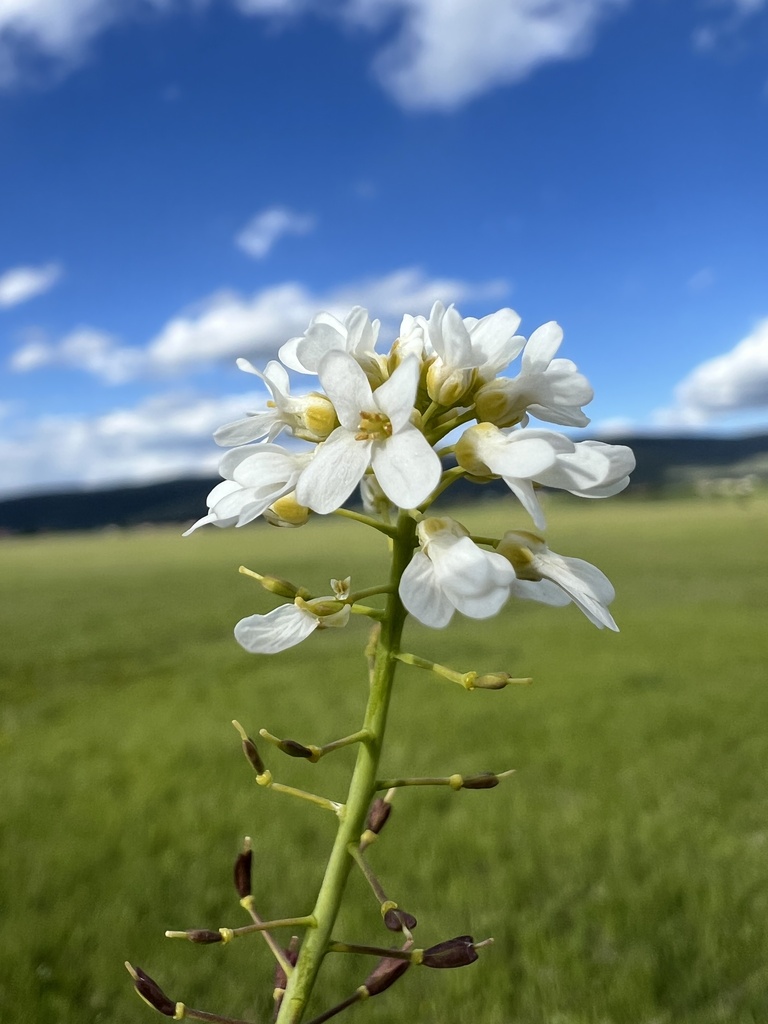
Photo by Mirko Ubović, taken in Federacija Bosna i Hercegovina, Bosnia and Herzegovina. CC0 via iNaturalist.
Soil health is the capacity of soil to function as a living ecosystem, supporting complex interactions between microorganisms, soil fauna, and plant communities. For plant science, soil health is critical because these biological and chemical soil properties directly control nutrient availability,
arrow_forward Explore topic