Search
Order

Alismatales

Called “Water Plantains And Allies” in GBIF

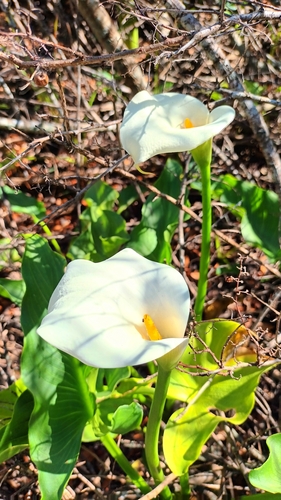
The Alismatales (alismatids) are an order of flowering plants including about 4,500 species. Plants assigned to this order are mostly tropical or aquatic. Some grow in fresh water, some in marine habitats. The order includes the taro plant, Colocasia esculenta, an important food crop.

From Wikipedia, licensed under CC BY-SA 4.0

6,025
accepted species in GBIF
Source: GBIF
388
genera in GBIF
Source: GBIF
18
plants on Plant News
37
research articles
Browse by topic

Plants in this order

18 plants

Families in this order

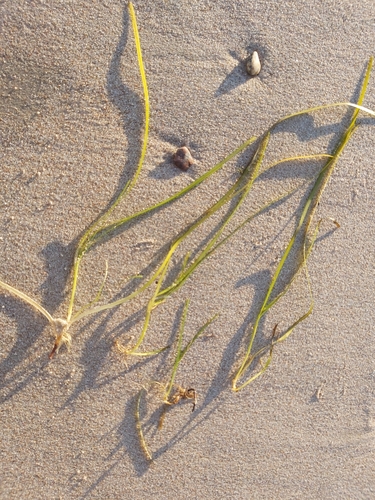
Also here, with one plant each: Alismataceae (Broadleaf Arrowhead), Hydrocharitaceae (Brazilian waterweed), Posidoniaceae (Neptune grass (Posidonia oceanica)), Zosteraceae (Eelgrass).

Research on Alismatales

37 articles
PubMed → · research article

Konjac root fiber, broken down smartly, feeds gut bacteria better

Konjac, the starchy corm behind the konjac yam and products like shirataki noodles, turns out to ...

iNaturalist → · observation

Taro spotted and confirmed growing in Aiea, Oʻahu

Every verified taro sighting logged on Oʻahu helps track where this ancestral Hawaiian staple sti...

PubMed → · research article

Taro's less-loved corm may be the better ingredient

If you grow taro or cook with it, the big central corm you might toss aside actually holds more f...

PubMed → · research article

Seed surface microbes shape eelgrass health for weeks after sprouting

Coastal restoration crews plant millions of eelgrass seeds each year to rebuild underwater meadow...

What science is finding about Alismatales

Every article on Plant News that mentions a member of this order, newest first.

These common weeds can suck heavy metals out of dirty soil

If you've ever wondered whether a scrappy roadside weed could actually be useful, these results show that plants like mimosa...

Taro phytoremediation / soil-health

More weeding controls rice field weeds but not final harvest size

If you grow rice or any row crop, this suggests that chasing weeds on an aggressive schedule may be satisfying but won't...

Water Lettuce crop-improvement / invasive-species

Taro spotted and confirmed growing in Aiea, Oʻahu

Every verified taro sighting logged on Oʻahu helps track where this ancestral Hawaiian staple still thrives outside cultivated...

Taro native-plants / ethnobotany

Beach seagrass and fish waste become restoration-ready compost with help from volcanic zeolite

The dried seagrass wrack you step over on a Mediterranean beach can be turned into compost, and a pinch of zeolite rock in the...

Neptune grass (Posidonia oceanica) composting / soil-health

Floating water plants can clean up dairy farm wastewater

The water hyacinth choking your local pond isn't just a nuisance weed, it's actively pulling pollutants out of the water it floats on.

Water Lettuce phytoremediation / native-plants

Water spinach beds fight toxic algae blooms in ponds

If you've ever seen a pond turn pea-green and smelly in late summer, this points to a low-tech fix using floating plants you...

Water Lettuce phytoremediation / soil-health

There's a pollution tipping point aquatic plants can't handle

If you've ever put water lettuce or vetiver grass in a pond or rain garden to filter runoff, this tells you there's a real...

Water Lettuce phytoremediation / soil-health

Taro's less-loved corm may be the better ingredient

If you grow taro or cook with it, the big central corm you might toss aside actually holds more fiber and calcium than the...

Taro food-forest / crop-improvement

Seed surface microbes shape eelgrass health for weeks after sprouting

Coastal restoration crews plant millions of eelgrass seeds each year to rebuild underwater meadows that shelter fish and store...

Eelgrass restoration-ecology / soil-health

Water lettuce survives heavy metal pollution and could clean contaminated ponds

That floating rosette plant colonizing neglected ponds isn't just a pretty weed — it may be one of the most practical tools...

Water Lettuce phytoremediation / aquatic-plants

A stress hormone cuts cadmium uptake in aquarium plants by 64%

The submerged plants quietly filtering heavy metals from contaminated ponds and ditches near you could be made far more...

Brazilian waterweed phytoremediation / plant-signaling

Refocusing the study of human-plant relations to the genus scale: Indigenous selection pressures in Xanthosoma.

Wild and semi-managed relatives of your garden taro are being selectively tended or uprooted by Indigenous farmers based on...

Taro ethnobotany / crop-improvement

Transcriptomic insights into nitrogen-regulated cadmium absorption and accumulation in Spirodela polyrhiza: toward enhanced phytoremediation strategies for cadmium-polluted environments.

That humble mat of tiny floating plants covering your local pond could be engineered into a living water filter — and...

Giant Duckweed phytoremediation / aquatic-plants

marsh calla (Calla palustris) observed in South Bristol, ME, US

Marsh calla is one of the few native aquatic aroids you can grow at the edge of a backyard pond — spotting it documented in...

Marsh Calla native-plants / wetland-ecology

High-value biochar from sunflower husk pyrolysis enhances growth and physiological performance of Spirodela polyrhiza.

That pile of sunflower seed shells left after harvest could become a soil amendment that feeds your water garden or pond...

Giant Duckweed soil-health / composting

Effects of moisture content on in situ analysis of plant samples using portable XRF.

Handheld soil and plant scanners are becoming popular tools for home gardeners and restoration volunteers checking for heavy...

Giant Taro phytoremediation / soil-health

Trending: Jack-in-the-Pulpit (Arisaema triphyllum) — 342 observations this week

Jack-in-the-Pulpit unfurling in your local woods right now marks one of spring's most reliable phenology clocks — spot it and...

Jack-in-the-Pulpit native-plants / phenology

green dragon (Arisaema dracontium) observed in N Forest Glen Ave, Chicago, IL, US

Green dragon growing along a Chicago street corridor signals that native woodland understory plants can persist — and...

Green Dragon native-plants / urban-ecology

Trending: Jack-in-the-Pulpit (Arisaema triphyllum) — 1141 observations this week

The hooded bloom emerging in your local forest right now is a marvel of deception: it mimics a fungal smell to trap and...

Jack-in-the-Pulpit phenology / native-plants

Eastern Skunk Cabbage (Symplocarpus foetidus) observed in Hamilton, ON, CA

Eastern Skunk Cabbage is one of the first plants to push through frozen ground each spring — if you walk a wooded creek trail...

Eastern Skunk Cabbage native-plants / phenology

Multi-omics analyses suggest that tissue-specific calcium signaling is involved in the adaptation of Zostera marina L. to high salinity.

Seagrass meadows like eelgrass beds are disappearing from coastlines worldwide, and understanding exactly how these plants...

Eelgrass plant-signaling / climate-adaptation

Hydrophyte root microbiome: a novel reservoir of plant growth-promoting bacteria for enhancing lettuce (Lactuca sativa L.) growth and nutritional quality under soilless cultivation.

Floating pond weeds you might overlook at the water's edge harbor bacteria that could replace synthetic fertilizers in the...

Water Lettuce soil-health / crop-improvement

Trending: Jack-in-the-Pulpit (Arisaema triphyllum) — 1360 observations this week

Jack-in-the-Pulpit popping up in your local woodland trail or shaded garden right now means spring ephemerals are hitting...

Jack-in-the-Pulpit phenology / native-wildflowers

Jack-in-the-Pulpit (Arisaema triphyllum) observed in Grand River South, Kitchener, ON, Canada

Jack-in-the-Pulpit growing along the Grand River means native woodland wildflowers are holding on in urban green corridors...

Jack-in-the-Pulpit urban-ecology / citizen-science

western skunk cabbage (Lysichiton americanus) observed in Bella Bella 1, BC, CA

Western skunk cabbage is one of the first plants to bloom each spring in Pacific Northwest wetlands, and tracking where it...

western skunk cabbage citizen-science / phenology

Jack-in-the-Pulpit (Arisaema triphyllum) observed in Novelty, Russell Township, OH 44072, USA

Jack-in-the-Pulpit thrives in the shaded, moist woodland edges many gardeners overlook, making it a striking native...

Jack-in-the-Pulpit citizen-science / native-plants

Phylogenomic and evolutionary analysis of arrowhead (<i>Sagittaria</i> L.) chloroplast genomes.

Arrowhead plants — grown as a starchy food crop across Asia and as ornamentals in backyard water gardens worldwide — now have...

Broadleaf Arrowhead plant-evolution / aquatic-plants

Eastern Skunk Cabbage (Symplocarpus foetidus) observed in Watertown, MA 02472, USA

Eastern Skunk Cabbage is one of the first plants to emerge each late winter, and spotting it in your local wetlands or parks...

Eastern Skunk Cabbage urban-ecology / phenology

Trending: western skunk cabbage (Lysichiton americanus) — 136 observations this week

Skunk cabbage is one of the first wildflowers to appear each spring in Pacific Northwest wetlands and stream corridors —...

western skunk cabbage phenology / citizen-science

Trending: western skunk cabbage (Lysichiton americanus) — 138 observations this week

Western skunk cabbage is a key early-spring indicator species — if you walk near wetlands or stream banks in the Pacific...

western skunk cabbage phenology / citizen-science

Trending: western skunk cabbage (Lysichiton americanus) — 128 observations this week

Western skunk cabbage is one of the first plants to emerge each spring — often pushing through snow — so tracking its bloom...

western skunk cabbage phenology / citizen-science

Strain, procedures, and tools for reproducible genetic transformation and genome editing of the emerging plant model Spirodela polyrhiza.

Duckweed grows explosively fast on water surfaces you've seen in ponds and lakes, and now that scientists can precisely edit...

Giant Duckweed crispr / plant-biotechnology

Trending: western skunk cabbage (Lysichiton americanus) — 112 observations this week

Skunk cabbage is one of the first plants to bloom each spring, and tracking when and where people are spotting it helps...

western skunk cabbage phenology / urban-ecology

western skunk cabbage (Lysichiton americanus) observed in Juanita Dr NE, Kenmore, WA, US

Tracking where native wetland plants like skunk cabbage are thriving helps communities identify healthy, functioning wetland...

western skunk cabbage urban-ecology / phenology

Steps to transform African opportunity crops into reality crops.

Foods we rely on are increasingly vulnerable to extreme weather, and investing in hardier, nutrient-rich crops like okra and...

Taro crop-improvement / climate-adaptation

From purification to energy: Biogas and biomethane production from Schoenoplectus americanus and a mixture of duckweed from phytoremediation of domestic wastewater.

Pond plants quietly cleaning your local wastewater could soon power homes — turning something you'd walk past without a second...

Gibbous duckweed phytoremediation / urban-ecology