Multi-omics analyses suggest that tissue-specific calcium signaling is involved in the adaptation of Zostera marina L. to high salinity.
Wang T, Wang Z, Wang X, Zhang H, Yu P
Plant Signaling
Seagrass meadows like eelgrass beds are disappearing from coastlines worldwide, and understanding exactly how these plants survive high salinity could help restore them — and help breeders grow salt-tolerant food crops as soils grow saltier from irrigation and sea-level rise.
Eelgrass is a flowering plant that lives fully submerged in the ocean, so it has to handle being bathed in salt all the time. Researchers blocked a key chemical alarm system in the plant — one that uses calcium like a messenger — to figure out what that alarm system normally does. They found that different parts of the plant (roots, stems, leaves) each use calcium signals in their own way to cope with salt stress, and that a group of protective compounds called phenylpropanoids is a major part of how the whole system works.
Key Findings
Calcium signaling in eelgrass roots regulates cell wall structure and plant hormone pathways to manage osmotic pressure and oxidative stress under high salinity.
In stems, calcium signaling primarily controls ion transport and osmotic regulation, while in leaves it activates antioxidant defenses as a compensatory response when calcium signals are suppressed.
Phenylpropanoid biosynthesis is a key metabolic pathway linking calcium signaling to salt tolerance, and calcium signaling and nitric oxide mutually regulate each other through nitric oxide synthase and calcium sensor protein expression.
chevron_right Technical Summary
Scientists discovered that calcium signaling plays distinct, tissue-specific roles in helping eelgrass survive saltwater — roots use it to regulate cell walls and hormones, stems use it for ion transport, and leaves activate backup antioxidant defenses when calcium signals are blocked. A key metabolic pathway involving phenylpropanoid compounds and a crosstalk with nitric oxide were also identified as central to this salt-tolerance system.
Abstract Preview
Through integrated transcriptomic and metabolomic analyses, we systematically assessed the role of calcium signaling pathways in adaptation of eelgrass to high-salinity environments. Phenylpropanoi...
open_in_new Read full abstractAbstract copyright held by the original publisher.
Species Mentioned
Was this useful?
Want to tell us more? (optional)
Thanks for the note!
Something went wrong — please try again.
Too many submissions. Try again in an hour.
Targeted knockout of a host peroxisomal peptidase confers field resistance to...
The corn in your grocery store and the staple food keeping millions of East African families fed is under serious threat from a viral disease that can wipe o...
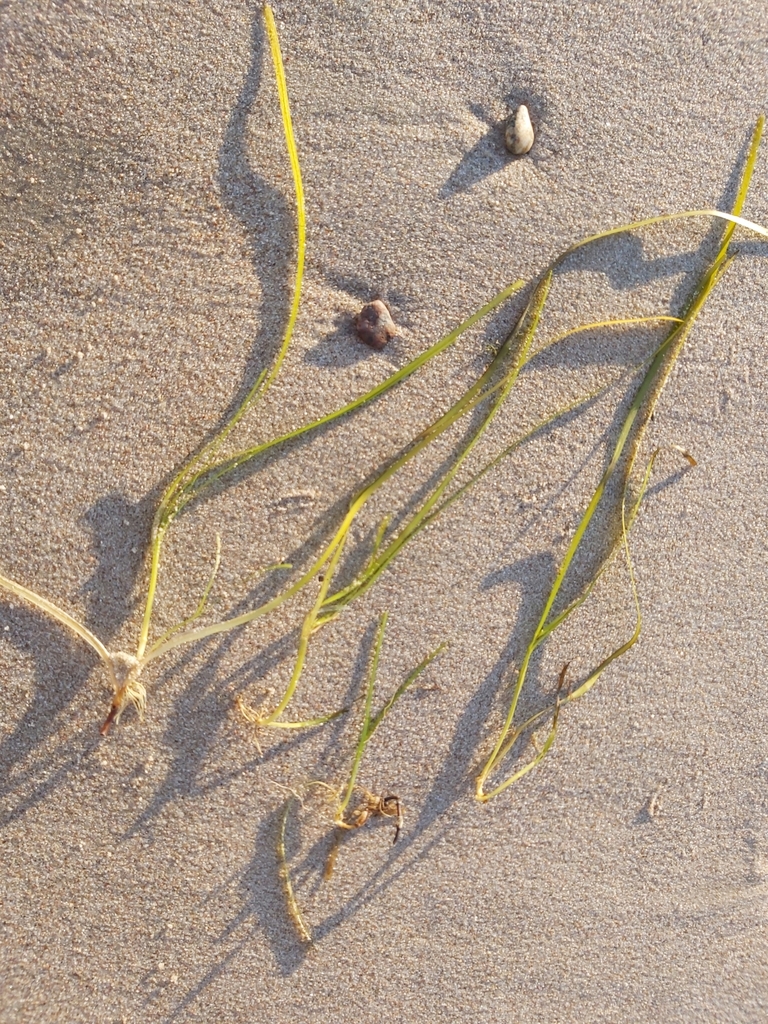
Photo by Tomas Pocius, taken in Klaipedos, Lithuania. CC0 via iNaturalist.
Climate adaptation in plants refers to the physiological and evolutionary mechanisms through which plants adjust to changing environmental conditions, including temperature shifts, altered precipitation patterns, and seasonal variations. Understanding these processes is essential for plant science
arrow_forward Explore topic