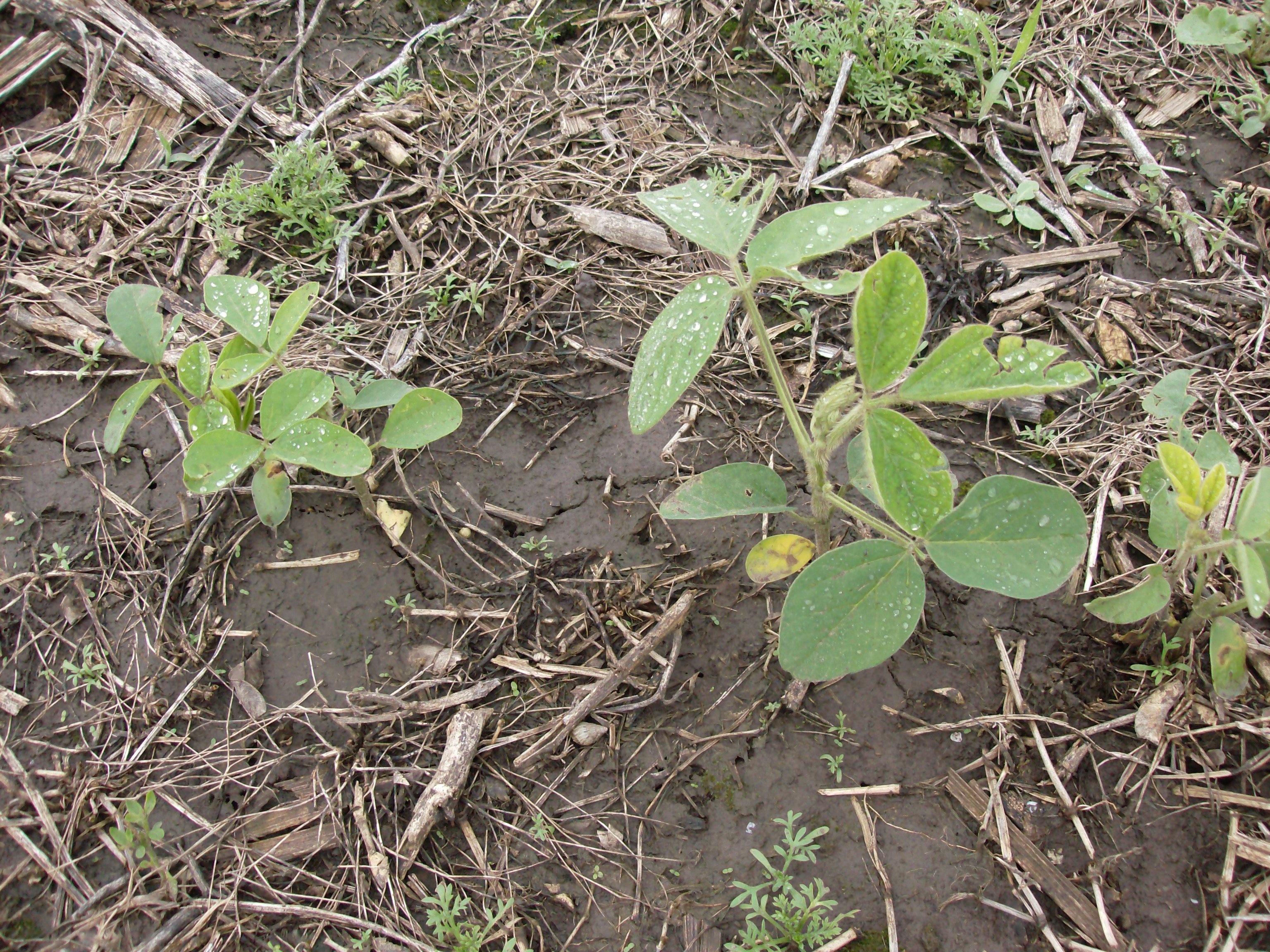
Alfalfa
Alfalfa, lucerne, Medicago sativa is a perennial flowering plant in the legume family Fabaceae. It is cultivated as an important forage crop in many countries around the world and is used for grazing, hay, and silage, as well as a green manure and cover crop. It has also been cultivated as livestock fodder since at least the era of the ancient Greeks and Romans. Alfalfa has clusters of small purple flowers followed by fruits spiraled in two to three turns containing 10–20 seeds. It is native to warmer temperate climates.
From Wikipedia, licensed under CC BY-SA 4.0

Research Mentions
Trichoderma asperellum 152-42 confers resistance to Fusarium root r...
A naturally occurring soil fungus could replace or reduce fungicides on the alfalfa fields that f...
The Medicago SPX1/3-PHR2 network relays phosphate signaling to orch...
The beans and peas in your garden naturally fertilize themselves by recruiting soil bacteria — an...
Allelopathic and autotoxic effects of sorghum extract and residues ...
It means that what you grew in your garden or farm field last season could be quietly sabotaging ...
Alfalfa plus plant-based nanoparticles team up to eat plastic
The alfalfa cover crop in a garden bed or farm field could someday double as a plastic-degrading ...
Doubling alfalfa's genome makes it tougher against salty soil
If you've ever watched plants struggle near a salted sidewalk or in coastal soil, this points to ...
Host-specific fluorescence dynamics in legume-rhizobium symbiosis d...
Bacteria living in legume roots do the invisible work of turning air into plant food, potentially...
Synergistic Remediation of Organic Arsenicals via an Integrated Pla...
Soil near old orchards, golf courses, and former chicken farms is often quietly loaded with arsen...
A High-Resolution Multifocal RGB Pollen Grain Image Dataset for Dee...
Native Chilean trees like the ulmo and quillay — whose pollen this dataset captures in unpreceden...
Overcoming breeding barriers with genome editing in autopolyploid crops.
The potato in your garden likely carries four copies of every gene — meaning breeders have to kno...
Integrative transcriptomic and metabolomic analysis reveals the mec...
Fields near old industrial sites, roadsides, and heavily fertilized farms often carry hidden cadm...
Innovations in economic assessment of drought management: Applicati...
Farmers growing the alfalfa, corn, and pecan crops that feed your region's food supply are being ...
Complete genetic map of hardy forage legume opens door to better alfalfa
The little yellow-flowered black medick creeping through your lawn or pasture edge is a tough rel...
Zinc form determines whether alfalfa absorbs more forever chemicals
Alfalfa feeds dairy cattle, so what happens in that soil-to-plant pathway can ripple into the mil...
Aphids swarm potato fields right at seedling emergence, study finds
If you grow potatoes in your own garden, the weeds and nearby alfalfa or grain fields around you ...
Alfalfa gene switch boosts drought survival without slowing plant growth
Alfalfa feeds the cattle and horses behind much of the milk, cheese, and hay we rely on, and it a...
Peanut meal beats urea for composting herbal medicine waste
If you compost at home, this confirms that what you feed the pile (not just how much) decides whe...
One gene helps alfalfa relatives survive harsh alkaline soil
If you've ever watched plants struggle in soil near concrete foundations or in dry, mineral-heavy...
Souped-up charcoal traps toxic metals and keeps soil carbon put
If you garden near an old industrial site or on soil with a history of heavy use, this points to ...
Scientists find alfalfa's built-in drought survival switch
Alfalfa feeds livestock across the world's grasslands, so a gene that helps it survive drought wi...
Alfalfa pulls rare earth metals out of coal ash waste
If you've got a compost pile or raised bed near industrial fill, this is a reminder that some com...
Legume crops use their own unique genetic flowering clock
The dry beans, peas, and soybeans you grow or cook with flower on a schedule tuned by genes uniqu...
Trending: Alfalfa (Medicago sativa) — 170 observations this week
Alfalfa is a cornerstone of both agriculture and backyard ecosystems — it feeds livestock, fixes ...
Mixing global alfalfa varieties makes breeding predictions more accurate
The hay in that roadside field or your local dairy farm's feed supply depends on breeders finding...
Highly active nodule gene turns out to be dispensable
The nitrogen-fixing nodules on your beans' and peas' roots run on hundreds of specialized genes, ...
Engineering pasture grasses genetically is far harder than reported
The clover and ryegrass mixes grazing animals depend on for feed are notoriously resistant to lab...