Search
Genus

Prunus

Called “plum” in GBIF

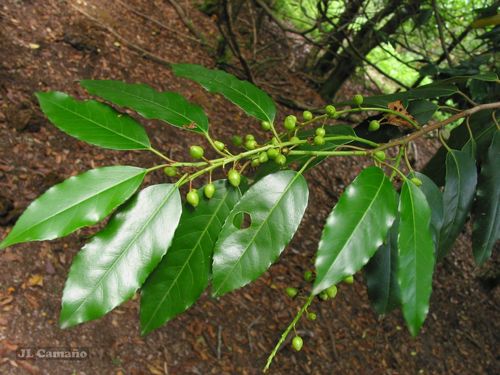
Prunus is a genus of flowering trees and shrubs from the rose family (Rosaceae) that produce stone fruits, or drupes. As of March 2024, the genus has about 340 accepted species, including almonds, apricots, cherries, peaches, and plums. It has a cosmopolitan distribution, being native to the temperate regions of North America, the neotropics of South America, and temperate and tropical regions of Eurasia and Africa.

From Wikipedia, licensed under CC BY-SA 4.0

486
accepted species in GBIF
Source: GBIF
10
plants on Plant News
33
research articles
Browse by topic

Plants in this genus

10 plants

Research on Prunus

33 articles

Certain peach rootstocks naturally shrink tree size in nurseries

If you grow peaches in a small backyard, the rootstock grafted underneath your tree, not the vari...

iNaturalist → · observation

Chokecherry sightings spike as this native shrub fruits nationwide

The dark red clusters ripening on chokecherry shrubs along trails and fencerows right now are edi...

iNaturalist → · observation

Native chokecherry spotted thriving along Bend's Deschutes River Trail

Chokecherry feeds birds, bears, and pollinators all along river corridors, so spotting one on a p...

New DNA tests spot nematode-resistant peach and almond rootstocks

If you've ever lost a peach tree to weak, stunted roots, the culprit might be root-knot nematodes...

What science is finding about Prunus

Every article on Plant News that mentions a member of this genus, newest first.

Latest finding

Fruit flies swap yeast partners depending on the fruit they eat

Scientists found that the invasive spotted wing fruit fly carries a stable set of bacteria no matter what fruit it eats, but the yeasts in its gut change depending on whether it grew up in a cherry, blackberry, or strawberry. This shows the fly picks up different fungal partners straight from the fruit it infests.

Moth pest flies farthest at a specific age and humidity sweet spot

If you grow corn, sunflowers, or fruit trees, understanding when this pest is actually dispersing versus just stirring in a...

Peach invasive-species / phenology

Garden shrub Portuguese laurel confirmed growing wild near Vancouver

If you garden in the Pacific Northwest, this evergreen hedge favorite is quietly seeding itself into natural areas, which...

Portuguese laurel invasive-species / urban-ecology

Berry pigments show modest but real anti-obesity benefits in studies

The deep purple and red hues in your blueberries, black currants, and purple cabbage aren't just pretty, they're the same...

Cherry medicinal-plants / food-forest

Cold storage quietly strips sweet cherries of their fresh flavor

The cherries that taste bland by the time they hit your fruit bowl aren't imagining it: this research maps exactly which...

Sweet Cherry crop-improvement / food-forest

Plum-damaging insect confuses sticky traps with flowers

If you grow plums, cherries, or apricots, the same white flowers that signal spring to you are also luring in a...

Plum plant-signaling / pollinators

Certain peach rootstocks naturally shrink tree size in nurseries

If you grow peaches in a small backyard, the rootstock grafted underneath your tree, not the variety on top, is what decides...

Peach crop-improvement / propagation

Newly found bugs and fungi could help fight stone fruit disease

If you grow cherries, peaches, or other stone fruit, the leafhoppers quietly feeding on your trees may carry a lethal disease,...

Cherry crop-improvement / invasive-species

Chokecherry sightings spike as this native shrub fruits nationwide

The dark red clusters ripening on chokecherry shrubs along trails and fencerows right now are edible once cooked into jelly or...

Chokecherry foraging / native-plants

Native chokecherry spotted thriving along Bend's Deschutes River Trail

Chokecherry feeds birds, bears, and pollinators all along river corridors, so spotting one on a popular trail is a reminder of...

Chokecherry native-plants / foraging

New DNA tests spot nematode-resistant peach and almond rootstocks

If you've ever lost a peach tree to weak, stunted roots, the culprit might be root-knot nematodes, and breeders are now using...

Peach crop-improvement / pest-resistance

Chokecherry sightings surge as its fruit ripens this week

If you spot clusters of dark red-to-black berries on a shrubby tree along a trail or fence line this week, there's a good...

Chokecherry native-plants / foraging

Chokecherry sightings surge as its dark fruit ripens now

That scraggly shrub along the fence line or trail edge is chokecherry, and its clusters of dark red fruit are a favorite of...

Chokecherry native-plants / foraging

This solo bee could help orchards outlast the honeybee crisis

If you grow fruit trees, the small blue-black bees nesting in hollow stems near your yard each spring may be doing more...

Cherry pollinators / native-plants

AI camera tool spots and grades peach leaf disease outdoors

If you grow peach trees, catching shot hole disease early and knowing how bad it is could save your harvest before the damage...

Peach crop-improvement / plant-signaling

Native chokecherry shrub confirmed growing wild in Montana

If you're planting for birds and pollinators in the Mountain West, chokecherry is a proven native that feeds wildlife and can...

Chokecherry native-plants / urban-ecology

Peach trees can recruit their own nitrogen-fixing bacteria

If you grow fruit trees, this points to a future where smarter, lower fertilizer inputs work with the tree's own root...

Peach plant-signaling / soil-health

Autumn hormone spray delays cherry bloom, cutting frost risk

Cherry trees in your region are blooming earlier each decade, and a single late frost can wipe out an entire year's fruit...

Sweet Cherry climate-adaptation / phenology

Mated moth antennae switch on one sensor to skip egg-laying sites

Peach orchards and corn plots across Asia are being bored apart by a moth whose larvae tunnel directly into fruit and ears,...

Peach pest-management / plant-signaling

BEYOND THE GROVE: UNVEILING THE ECOLOGY AND DIVERSITY OF X-DISEASE, ‘CANDIDATUS PHYTOPLASMA PRUNI’, STRAINS IN EXTRA-ORCHARD ENVIRONMENTS

Wild chokecherries lining the trails and roadsides near you may be hosting a pathogen that's quietly reshaping which cherries...

Cherry plant-disease / native-plants

Population dynamics of Drosophila suzukii across elevations in Wenchuan, China.

Cherry, raspberry, or blueberry growers: that ornamental honeysuckle or wild sour cherry growing at the edge of your planting...

Sweet Cherry invasive-species / phenology

Lipid ligand binding and membrane interactions of a novel food-derived lipid transfer protein enhance basophil allergic responses.

If you grow lupins or peaches and eat them fresh from the garden, the fats naturally present on the skin or in the seed coat...

Peach plant-allergens / food-safety

Pan-genome analysis of the P-type ATPase gene family in Prunus mume and functional characterization of PmAHA3 in organic acid accumulation.

Breeders working with ornamental plums and apricots now have a precise genetic dial for tuning fruit sourness — meaning the...

Japanese apricot crispr / crop-improvement

Trending: chokecherry (Prunus virginiana) — 393 observations this week

Chokecherry thickets along your local trail edges are producing clusters of dark red fruit right now — and they're one of the...

Chokecherry native-plants / phenology

Trending: chokecherry (Prunus virginiana) — 506 observations this week

Chokecherry thickets along roadsides and woodland edges are prime spots to watch for tiger swallowtails and cedar waxwings...

Chokecherry native-plants / phenology

Pangenome and resequencing analyses reveal flowering evolution and genetic control in Cerasus.

Cherry trees lining your neighborhood streets or blooming in your backyard may soon be bred to flower more reliably as springs...

Cherry phenology / genomics

A LEA2 domain-containing protein PpLEA37 promotes seed germination under salinity and drought stresses through abscisic acid signaling.

Seeds planted in a late-summer drought or salty coastal garden bed often just sit there and fail — this discovery points...

Peach seed-saving / climate-adaptation

Trending: chokecherry (Prunus virginiana) — 481 observations this week

Chokecherry thickets lining roadsides and forest edges right now are loaded with clusters of tart, dark berries that...

Chokecherry native-plants / foraging

Trending: chokecherry (Prunus virginiana) — 345 observations this week

Chokecherry thickets along roadsides and forest edges are ripening right now, and the dark astringent berries you can spot on...

Chokecherry native-plants / foraging

Improving Peach Fruit Yield and Quality Using Foliar Application of Nano Chelated Zinc and Seaweed Extract (<i>Spirulina platensis</i>): A Multivariate Analysis Approach.

Peaches at your farmers market could be sweeter, firmer, and less likely to bruise or rot before reaching your kitchen — just...

Peach crop-improvement / nano-agriculture

Conned by the enemy: the entomopathogenic fungus Metarhizium anisopliae lures and kills Drosophila suzukii.

The strawberries, blueberries, and cherries at your farmers market are under constant threat from an invasive fly that ruins...

Cherry biocontrol / invasive-species

Rhizosphere microbial shifts drive amygdalin detoxification and jasmonate-mediated alleviation of peach autotoxicity.

Peaches grown in the same orchard year after year slowly poison themselves through their own root chemicals — but the right...

Peach soil-health / crop-improvement

black cherry (Prunus serotina) observed in Wildwood Dr SE, Huntsville, AL, US

Black cherry is a native tree that produces fruit eaten by dozens of bird species and supports hundreds of moth and butterfly...

Black Cherry urban-ecology / citizen-science