Search
Plant family

Amaranthaceae

Called “pigweed family” in GBIF

Amaranthaceae is a family of flowering plants commonly known as the amaranth family, in reference to its type genus Amaranthus. It includes the former goosefoot family Chenopodiaceae and contains about 165 genera and 2,040 species, making it the most species-rich lineage within its parent order, Caryophyllales.

From Wikipedia, licensed under CC BY-SA 4.0

2,704
accepted species in GBIF
Source: GBIF
306
genera in GBIF
Source: GBIF
22
plants on Plant News
49
research articles
Browse by topic

Plants in this family

22 plants

Genera in this family

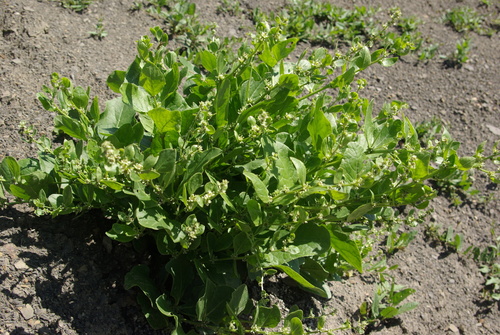
Also here, with one plant each: Achyranthes (Achyranthes aspera), Alternanthera (Joseph's coat (Alternanthera ficoidea)), Chenopodiastrum (Chenopodiastrum hybridum), Krascheninnikovia (Krascheninnikovia arborescens), Patellifolia (Patellifolia procumbens), Spinacia (Spinach), Salsola (Salsola).

Research on Amaranthaceae

49 articles
PubMed → · research article

Too much recycled trash compost makes spinach absorb more toxic metals

If you compost kitchen scraps or use municipal compost on a backyard spinach bed, this is a remin...

PubMed → · research article

Amaranth greens can clean toxic soil, but also absorb it

If you're growing amaranth greens in a city plot, near an old industrial lot, or along a roadside...

iNaturalist → · observation

Common weedy amaranth spotted thriving on a Minneapolis street

The scraggly weed pushing up through your sidewalk cracks or garden bed edges might be Redroot Am...

What science is finding about Amaranthaceae

Every article on Plant News that mentions a member of this family, newest first.

A weedy edible plant shows promise against ovarian cancer cells

The scrappy, unassuming goosefoot relative growing in disturbed soil along your fence line or garden bed edge turns out to...

Chenopodiastrum hybridum medicinal-plants / ethnobotany

Late-hatching root pests turn out to be more dangerous

If you grow beets, spinach, or brassicas, the pest attacking their roots isn't a single uniform threat: timing of hatching...

Sugar beet plant-signaling / soil-health

Spinach chloroplasts hide separate stress-chemical pockets in each inner layer

Every leaf in your garden is quietly managing chemical stress damage behind the scenes, and knowing exactly where plants store...

Spinach plant-signaling / crop-improvement

Four common roadside plants confirmed to hold real medicinal compounds

The scrappy vine climbing a fence near you might be Tinospora cordifolia, a plant local healers have trusted for generations,...

Achyranthes aspera medicinal-plants / ethnobotany

Spanish orchard weeds now shrug off six major herbicides

If you've ever wondered why the weeds in a neighbor's orchard or along a farm road keep coming back no matter how much...

Amaranthus viridis invasive-species / soil-health

Urban farm microbes are so local they reveal which farm grew your greens

The community garden plot down the street has its own invisible signature of helpful bacteria and fungi, shaped by what water...

Chard soil-health / urban-ecology

Flower pigment extracts boost veggie yields, skip wheat entirely

If you grow coriander, spinach, or peppers in your own beds, a spray made from flavonoid-rich plant extracts could mean a...

Spinach crop-improvement / climate-adaptation

Wild beet's hidden toughness traced to a doubled genome

The sugar in your kitchen traces back to beet crops with surprisingly thin genetic diversity, and this wild cousin's...

Sugar beet crop-improvement / climate-adaptation

Salt-loving seepweed can heal ruined soil and toughen crops

If you've ever watched plants brown and die along a road salted all winter or in a coastal garden with salty soil, seepweed...

Suaeda salsa soil-health / phytoremediation

Fungus and bacteria turn factory waste into plant food

Fertilizer factories produce mountains of phosphogypsum waste every year, and this microbe-driven process could turn that...

Suaeda salsa soil-health / phytoremediation

Amaranth greens can clean toxic soil, but also absorb it

If you're growing amaranth greens in a city plot, near an old industrial lot, or along a roadside, the same traits that make...

Amaranth phytoremediation / soil-health

Desert shrub gene helps plants detoxify copper and industrial chemicals

If you've ever wondered how anything grows near an old industrial site or mining runoff, this gene shows one way plants pull...

Haloxylon ammodendron phytoremediation / crop-improvement

Quinoa seedlings switch on antioxidant defenses the moment light hits

If you've ever grown quinoa microgreens on a windowsill, this explains why that first burst of light matters so much: it...

Quinoa plant-signaling / crop-improvement

Common weedy amaranth spotted thriving on a Minneapolis street

The scraggly weed pushing up through your sidewalk cracks or garden bed edges might be Redroot Amaranth, a plant whose seeds...

Redroot Amaranth urban-ecology / foraging

Certain grain proteins tell your liver to make less sugar

The oats and barley you might grow or cook with contain proteins that feed specific gut bacteria, which then send chemical...

Quinoa gut-microbiome / crop-improvement

Desert shrub rewires its chemistry hour by hour to survive

Understanding how this tough desert shrub shifts its metabolism between scorching afternoons and cool nights could point to...

Haloxylon salicornicum climate-adaptation / native-plants

Steaming beats boiling for keeping quinoa's nutrients intact

If you cook quinoa at home, swapping your boil for a steam basket keeps more protein, antioxidants and flavonoids on your...

Quinoa crop-improvement / climate-adaptation

Acid-treated charcoal helps sugar beets thrive in salty soil

If you garden near a coastline, use de-icing salt nearby, or fight alkaline soil in arid regions, this points to a soil...

Sugar beet soil-health / climate-adaptation

Why beet-red plant pigments fade, and how to stop it

The deep magenta color in your beet harvest or prickly pear fruit comes from the same pigment family scientists are now...

Beet food-science / medicinal-plants

DNA fingerprints now identify UAE's medicinal plants with near-perfect accuracy

The herbal supplement on your shelf claiming to contain a specific desert plant can now be checked against a genetic...

Suaeda medicinal-plants / ethnobotany

Organic and conventional spinach farms host similar soil worm diversity

The tiny worms living in your garden soil, invisible but abundant, are a report card on soil health, and this study shows that...

Spinach soil-health / crop-improvement

This colorful garden plant soaks up three toxic metals at once

If you've ever planted Joseph's coat as a border plant for its bright leaves, you're growing something that scientists now see...

Joseph's coat (Alternanthera ficoidea) phytoremediation / soil-health

Beetroot pigments show promise fighting cancer cells in lab tests

The beets you grow or buy owe their deep color to compounds now shown to slow cancer cell growth and quiet inflammation in...

Amaranth medicinal-plants / food-forest

Desert crust microbes help lettuce and spinach survive space-like stress

The crunchy black crust you might scrape off desert soil and ignore is packed with microbes tough enough to help your...

Spinach soil-health / crop-improvement

Vetiver grass and tree spinach lock radioactive cesium in roots

If you've ever grown vetiver grass as a border planting or chaya as an edible hedge, you're looking at two of the most...

Amaranth phytoremediation / soil-health

Solar panels over veggie crops could triple rural income

If you've ever wondered whether solar panels and food crops have to compete for the same land, this study shows a...

Spinach climate-adaptation / crop-improvement
eco

Desert shrub's full genetic blueprint reveals family evolution clues

This shrub belongs to the same plant family as spinach, beets, and quinoa, so understanding its genetic toolkit for surviving...

Krascheninnikovia arborescens climate-adaptation / native-plants

Vegetable scraps turned into charcoal supercharge lettuce growth

If you compost kitchen scraps or garden waste, this shows that gently 'cooking' plant leftovers in water under pressure...

Spinach soil-health / composting

Turnip and spinach roots can clean bacteria from spring water

If you grow turnips or spinach, their roots aren't just food, they're pulling double duty as natural water filters that could...

Spinach phytoremediation / soil-health

Drone AI pinpoints crop weeds so farmers spray only where needed

Lambsquarters, pigweed, and foxtail crowd your vegetable beds for the same reason they swamp cornfields: farmers haven't had a...

Redroot Amaranth precision-agriculture / weed-management

Planting quinoa early in cold climates can boost yields despite slower sprouting

If you're growing quinoa in a short-season or cool-climate garden, planting earlier than feels comfortable can pay off with a...

Quinoa climate-adaptation / crop-improvement

Genes behind quinoa's bitter coatings and vivid pigments finally decoded

Quinoa grown in your garden or on drought-stressed farms could soon come in varieties with less bitterness to wash off, more...

Quinoa crop-improvement / plant-signaling

AI tool counts and outlines overlapping leafy vegetables on affordable hardware

Farmers and home growers using smart cameras or apps could soon get automated, accurate counts and size estimates for their...

Spinach crop-improvement / precision-agriculture

Garden spinach compound reduces brain inflammation and aids recovery after injury

Spinach, broccoli, and other leafy greens you grow contain alpha-lipoic acid, and this research adds to a growing body of...

Spinach medicinal-plants / plant-signaling

Valorization of agro-industrial and forestry biomass ashes as soil amendments: integrating chemical screening, leaching dynamics, and Beta vulgaris L. response.

Wood ash from your fireplace or backyard fire pit is the same material studied here — and the feedstock you burned (wood chips...

Sugar beet soil-health / composting

Genome and transcriptome analyses reveal parallel altitude adaptation in Chenopodium.

Highland quinoa plants quietly deleted chunks of their own DNA over generations to survive the Andes—and researchers have now...

Quinoa climate-adaptation / crop-improvement

Polyethylene Microplastic-Induced Changes in Soil Properties Mediate Nutrient Accumulation and Growth of <i>Amaranthus tricolor</i> L.

Plastic mulch films breaking down in your vegetable beds could already be silently starving your greens of phosphorus and...

Amaranth soil-health / microplastic-pollution

Co-application of biochar and cow manure enhances growth, yield and soil chemical properties under spinach production.

Mixing charred wood scraps with aged manure before planting could transform your garden's exhausted beds into high-yielding...

Spinach soil-health / composting

Rock-phosphate-enriched hydrochars derived from organic wastes: a sustainable amendment for multi-metal contaminated soil.

Compost made from kitchen scraps can do more than feed your garden — engineered versions of it may one day let you grow safe...

Amaranth phytoremediation / soil-health

Deciphering seasonal shifts, genotype × environment interactions effect on antioxidant activity, bioactive compounds and antinutritional factors in a diverse panel of leafy amaranth (Amaranthus spp.) germplasm: genetic and multivariate insights for breeding.

Amaranth greens you can grow in a summer pot or backyard bed vary dramatically in nutritional punch depending on when you grow...

Amaranth crop-improvement / ethnobotany

Gibberellic acid modulates drought stress signaling, antioxidant defense, and ionic homeostasis in spinach.

Growing spinach through a dry summer stretch just got a little more hopeful — a naturally occurring plant hormone can act as a...

Spinach drought-tolerance / plant-signaling

Is quinoa-farming sustainable in marginal environments? Social, economical and environmental aspects.

Quinoa's ability to grow on salty, drought-prone land could soon give smallholder farmers in some of the world's harshest...

Quinoa climate-adaptation / crop-improvement

Layers to leaves: A suite of modular 3D printed hydroponics components for research and education.

Growing your own leafy greens at home or in a classroom just got cheaper and more flexible — these printable tower parts let...

Spinach hydroponics / open-source-tools

Integrative transcriptomic and metabolomic profiling elucidates the metabolic network underlying development in Salsola collina.

Knowing that a common tumbleweed relative packs its highest levels of antioxidants and medicinal compounds during flowering —...

Salsola phytochemistry / harvest-timing

Metabolic trade-offs in sugar beet under drought and beet leaf miner infestation: implications for herbivore success.

The sugar beets and chard in your garden under a dry summer spell may quietly become a better meal for leaf-mining flies,...

Sugar beet climate-adaptation / crop-improvement

Dissecting the ROS signalling component of salinity tolerance: tissue-specific K+/Na+ homeostasis in quinoa and spinach roots.

Quinoa's secret to surviving salty soils could soon be engineered into the vegetables in your garden, helping them survive as...

Quinoa salt-tolerance / crop-improvement

Steps to transform African opportunity crops into reality crops.

Foods we rely on are increasingly vulnerable to extreme weather, and investing in hardier, nutrient-rich crops like okra and...

Amaranth crop-improvement / climate-adaptation

Biochar: Acinetobacter driven rhizoremediation of arsenic contaminated soil.

Arsenic naturally contaminates soils in many regions and can silently enter leafy vegetables like spinach that people eat...

Spinach phytoremediation / soil-health