salt-tolerance
Salt-tolerance is the ability of plants to survive and thrive in environments with high salt concentrations in soil or water. This trait is crucial for plant science research because soil salinization—driven by climate change, irrigation practices, and coastal habitats—significantly threatens agricultural productivity, making the study of salt-tolerance mechanisms essential for developing resilient crops and understanding how plants adapt to extreme environmental stress.
open_in_new Wikipedia
Dissecting the ROS signalling component of salinity tolerance: tiss...
Quinoa's secret to surviving salty soils could soon be engineered into the vegetables in your gar...

SnRK1 subcellular localization is linked to TOR signaling, chloropl...
Saltier soils — driven by irrigation and climate change — are already reducing crop yields worldw...

Harnessing salt tolerance and C4-like traits from the halophyte wil...
Rice paddies in coastal Bangladesh, Vietnam, and the Philippines are already losing ground to sal...
Genome-wide identification of the ARR-B gene family and functional ...
Rice feeds more than half the world's population, and the salty, degraded farmland spreading acro...

Integrated evaluation and screening of salt-tolerant wheat germplas...
Roughly 20% of irrigated farmland worldwide is already too salty to grow crops reliably — and tha...
Acetylcholine as a shield: enhancing growth and salt tolerance in p...
If you grow peppers in containers or in coastal or arid-region soils where salt builds up over ti...

The miR396d-PagGRF20-PagXTH5 module regulates salt tolerance in poplar.
Poplar trees planted for bioenergy or windbreaks on salted roadsides and degraded farmland could ...
Role of primary protectors of plant cells in salinity tolerance: mo...
The tomatoes, carrots, and wheat increasingly grown on salt-damaged soils are quietly losing yiel...

Cotton Salt Stress Resilience: Integrating Physiological, Molecular...
Cotton clothing, towels, and bedding depend on crops grown in increasingly saline soils across th...
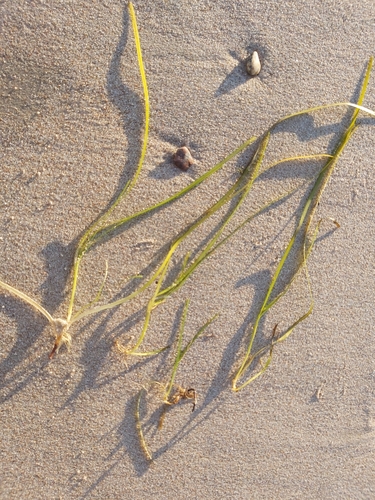
Multi-omics analyses suggest that tissue-specific calcium signaling...
Seagrass meadows like eelgrass beds are disappearing from coastlines worldwide, and understanding...

HUB1 positively regulates salt tolerance in Arabidopsis through dyn...
Salt-crusted soil is quietly spreading at the edges of over-irrigated gardens and coastal landsca...
Overexpression of the BAHD Acyltransferase-Like Protein gene OsDCR ...
Salt-damaged farmland is quietly swallowing rice paddies across South and Southeast Asia — the fi...
