floral-development
Floral development is the biological process by which plants transition their growing tissues from vegetative growth to produce flowers and reproductive structures. This is fundamental to plant science because flowers are essential for sexual reproduction, seed and fruit formation, and directly impact plant survival and agricultural productivity. Understanding the genetic and molecular mechanisms controlling floral development reveals evolutionary insights and enables improvements in crop breeding, yield, and quality.
Phylogenomic synteny reveals paleohexaploid-derived genomic blocks ...
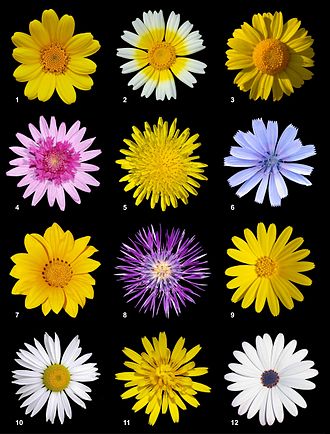
Understanding why daisies, sunflowers, lettuce, and artichokes all share that distinctive 'flower...

A genome-wide analysis of YUCCA genes in cotton and the functional ...
Cotton grown in fields worldwide could be engineered to flower more reliably and produce more fib...

Plasticity of the Arabidopsis shoot apical meristem during floral t...
Every time your garden bolts — lettuce shooting up, basil going to seed, tulips sending up their ...


