Phylogenomic synteny reveals paleohexaploid-derived genomic blocks across Asteraceae.
Feng T, McKibben M, Lovell J, Michelmore R, Rieseberg LH
Plant Signaling
Understanding why daisies, sunflowers, lettuce, and artichokes all share that distinctive 'flower-within-a-flower' head could unlock new ways to breed better crops and more resilient garden plants from one of the most agriculturally and ecologically important plant families on Earth.
About 40 million years ago, the ancestors of daisies, sunflowers, and dandelions had their entire genetic blueprint copied not once but twice over — tripling everything. Scientists mapped exactly what happened to all those extra gene copies across 23 related plant species and found that 157 genes kept all three copies intact to this day. Those surviving triplet genes appear to be the secret ingredient behind the sunflower's stunning composite bloom — that tight cluster of tiny flowers that looks like one big flower.
Key Findings
The ancestral Asteraceae genome is reconstructed as 48 genomic blocks (16 original groups × 3 from triplication), representing the earliest common ancestor of all daisies and sunflowers.
157 genes retained all three triplicated copies across most Asteraceae species, with transcription factors and auxin hormone-related genes significantly overrepresented — pointing to their role in floral development.
Modern Asteraceae genomes are genetic mosaics shaped by chromosomal rearrangements and gene loss, yet expression of the 157 triplicated gene sets is spatially and temporally differentiated, suggesting functional diversification.
chevron_right Technical Summary
Researchers traced the genetic legacy of an ancient genome-tripling event in the daisy family (Asteraceae) — the world's largest flowering plant family — identifying 157 genes that still exist in three copies and appear to drive the family's iconic composite flower head structure.
Abstract Preview
The Asteraceae (Compositae) is the largest flowering plant family, ubiquitous in most terrestrial communities, and morphologically diverse. A two-step, ancient whole genome triplication (paleohexap...
open_in_new Read full abstractAbstract copyright held by the original publisher.
Species Mentioned


Was this useful?
Want to tell us more? (optional)
Thanks for the note!
Something went wrong — please try again.
Too many submissions. Try again in an hour.
Targeted knockout of a host peroxisomal peptidase confers field resistance to...
The corn in your grocery store and the staple food keeping millions of East African families fed is under serious threat from a viral disease that can wipe o...
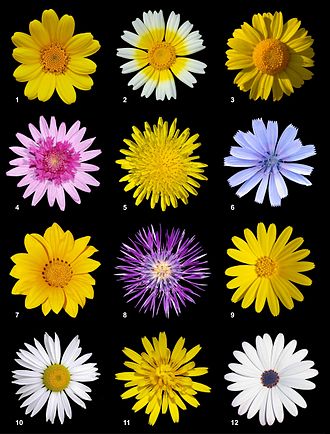
Asteraceae is a large family of flowering plants that consists of over 32,000 known species in over 1,900 genera within the order Asterales. The number of species in Asteraceae is rivaled only by the Orchidaceae, and which is the larger family is unclear as the number of extant species in each fa...