Sunflowers
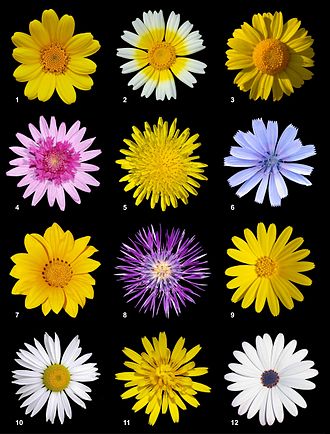
Helianthus is a genus comprising around 70 species of annual and perennial flowering plants in the daisy family Asteraceae commonly known as sunflowers. Except for three South American species, the species of Helianthus are native to North America and Central America. The best-known species is the common sunflower. This and other species, notably Jerusalem artichoke, are cultivated in temperate regions and some tropical regions, as food crops for humans, cattle, and poultry, and as ornamental plants. The species H. annuus typically grows during the summer and into early fall, with the peak growth season being mid-summer.
From Wikipedia, licensed under CC BY-SA 4.0

Research Mentions
Phylogenomic synteny reveals paleohexaploid-derived genomic blocks ...
Understanding why daisies, sunflowers, lettuce, and artichokes all share that distinctive 'flower...