Search
Order

Pinales

Called “Pines” in GBIF

The order Pinales in the subclass Pinidae, in the class Pinopsida, which under current taxonomic treatment is a monotypic order which comprises only one family, the pine family Pinaceae.

From Wikipedia, licensed under CC BY-SA 4.0

1,918
accepted species in GBIF
Source: GBIF
506
genera in GBIF
Source: GBIF
34
plants on Plant News
56
research articles
Browse by topic

Plants in this order

34 plants

Families in this order

Also here, with one plant each: Cephalotaxaceae (Cephalotaxus), Podocarpaceae (Afrocarpus falcatus).

Research on Pinales

56 articles
iNaturalist → · observation

Eastern redcedar is having a moment on iNaturalist this week

If you've noticed dense, berry-studded evergreen trees popping up in old fields, fence lines, or ...

iNaturalist → · observation

Verified coast redwood sighting logged in Redwood City park

If you've ever walked under a towering redwood canopy on the Peninsula, this kind of logged sight...

iNaturalist → · observation

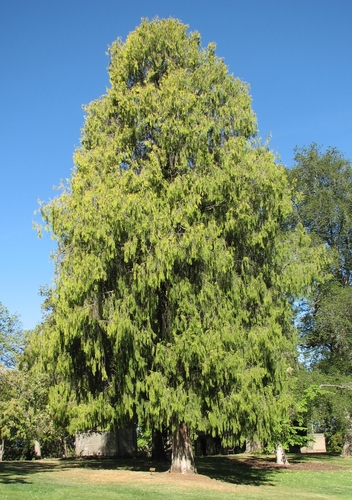
Western redcedar sightings are surging across Canada this week

If you're on a trail in British Columbia or coastal Canada right now, the tall, droopy-branched c...

What science is finding about Pinales

Every article on Plant News that mentions a member of this order, newest first.

Verified coast redwood sighting logged in Redwood City park

If you've ever walked under a towering redwood canopy on the Peninsula, this kind of logged sighting is how scientists track...

Coast Redwood native-plants / urban-ecology

Spruce trees host different needle fungi depending on disease resistance

If you've got a spruce in your yard, the invisible fungal community living on its needles shifts with the seasons and may even...

Norway spruce plant-signaling / phenology

Just the right amount of leaf litter speeds up pollution cleanup

The leaf pile you rake into your compost bin isn't just yard waste, it's the same kind of organic matter that researchers used...

Pine phytoremediation / soil-health

Scientists crack the yew tree's cancer-drug recipe for lab brewing

The Pacific yew hedges planted in shady yards grow so slowly that harvesting their bark for medicine has historically meant...

Yew medicinal-plants / crispr

Western redcedar sightings are surging across Canada this week

If you're on a trail in British Columbia or coastal Canada right now, the tall, droopy-branched conifer with lacy, scale-like...

Western redcedar native-plants / phenology

Pine trees grow secret tunnels to pump out defensive resin

The sticky sap that seals a pruning cut or wound on your pine or spruce tree flows through a dedicated internal tunnel network...

Pine plant-signaling / native-plants

Hardy desert juniper confirmed thriving near Big Pine, California

If you're hiking the eastern Sierra foothills, spotting this juniper's shredded gray bark and berry-like blue cones tells you...

Utah Juniper native-plants / phenology

Charred wood scraps help burned forest soil bounce back

If you've ever watched a burn scar in the Southwest struggle to grow anything back, this shows a practical fix: turning the...

Ponderosa Pine soil-health / climate-adaptation

Pine trees pass on drought memories, but irrigation memories fade fast

If you're planting pines for shade or a windbreak in a dry region, seed from trees that have survived drought may give...

Scots Pine climate-adaptation / transgenerational-memory

Bumper seed years help young rowan trees survive under their parents

If you're growing mountain ash or rowan from seed, or hoping wild seedlings will fill in under an existing tree, the year the...

Norway spruce native-plants / seed-saving

Tree pollen quietly fertilizes forests through rain-soaked leaves

The yellow pollen dusting your car and patio furniture each spring isn't just allergy fuel, it's a nutrient pulse that feeds...

Pine phenology / soil-health

Himalayan juniper populations are genetically isolated and losing ground to climate change

The juniper berries that flavor gin and traditional remedies come from a slow-growing mountain shrub whose Himalayan...

Common Juniper climate-adaptation / native-plants

Loblolly pine spotted and confirmed on an Atlanta street

Every verified sighting like this helps build a real-time map of which trees grow where in your city, so if you're trying to...

Loblolly Pine urban-ecology / native-plants

Scientists decode how a rare tree makes its cancer drug

The plant behind this discovery, Cephalotaxus, is endangered in the wild, so figuring out its chemistry could mean lab-grown...

Cephalotaxus medicinal-plants / ethnobotany

Tree bark's seasonal swelling can fool growth measuring instruments

If you've ever strapped a growth band around a favorite tree to track its progress, this explains why those numbers can...

Austrian Pine phenology / climate-adaptation

CRISPR gene editing could speed up breeding drought-tough forest trees

The poplar, pine, or eucalyptus stands you hike through could someday be bred for drought resistance in a fraction of the time...

Pine crispr / climate-adaptation

Pine tree genetics and needle fungi linked to disease resistance

If you've noticed browning, thinning pine needles on trees in your area, this research is part of the effort to figure out why...

Scots Pine climate-adaptation / native-plants

Why some Himalayan trees can't grow any higher up the mountain

If you've ever wondered why the alpine tree line on a mountain hike forms such a sharp edge, this explains it: it's not one...

Larch climate-adaptation / phenology

Pine gene makes poplar branches upright, but not the reverse

The difference between a tree that grows narrow and upright versus one that spreads wide comes down to genetic switches like...

Japanese Red Pine crispr / plant-signaling

Spruce trees remember their embryonic temperature for over a decade

If you've ever wondered why two trees of the same species leaf out on different schedules in your yard, this shows the answer...

Norway spruce climate-adaptation / phenology

One gene lets trees make both wood fiber and vitamin C

The next time you tap a maple or admire a tree's tough bark, you're seeing the output of a single gene family that also...

Spruce crispr / crop-improvement

Giant conifer's genome reveals ancient tree family secrets

The tall, straight-trunked conifer prized for centuries in Chinese timber and landscaping turns out to carry genetic clues...

Pinaceae climate-adaptation / native-plants

Scientists decode the shared genetic blueprint behind all tree wood

Every fence post, sheet of paper, and shade tree on your street relies on a wood-building process that this research just...

Pine crop-improvement / climate-adaptation

Hazelnut shrubs boost soil life more than any other pine understory plant

The hazelnut or rowan you might plant near a pine tree in your yard isn't just adding variety above ground, it's actively...

Scots Pine soil-health / mycorrhizal-networks

Pruning cypress trees short raises inbreeding risk in seed orchards

If you've ever wondered why nursery-grown trees can seem genetically uniform, this shows how a common orchard shortcut,...

Chinese weeping cypress seed-saving / pruning

Ethiopia's tree-planting drive is really working to store carbon

If you've ever wondered whether mass tree-planting campaigns actually do anything, this study measured over 8,000 real trees...

Afrocarpus falcatus climate-adaptation / native-plants

Shade limits understory trees far more than weather does

Shade-tolerant trees you plant beneath a canopy, like hornbeam or field maple, won't respond to a warm spell the way...

Norway spruce forest-ecology / phenology

Climate change could double spruce bark beetle generations and push spring a month earlier in Sweden

Bark beetles killing spruce trees across northern Europe are already a visible threat in many forests, and warmer summers...

Norway spruce phenology / climate-adaptation

Forest soil chemistry, not nitrogen pollution, drives toxic compound buildup

The forest floor beneath sugar maples, firs, and spruces acts as the primary filter catching airborne toxic compounds before...

Balsam Fir soil-health / phytoremediation

Creeping juniper spotted thriving wild on a rocky Michigan shoreline

Creeping juniper is one of the toughest native groundcovers for cold, rocky, or sandy slopes where almost nothing else will...

Creeping Juniper native-plants / citizen-science

Arctic pines grow fastest at midnight and stay stunted for days after hot spells

The pines at the edge of the Arctic forest are telling us that hotter, drier days don't just slow growth in the moment; they...

Scots Pine climate-adaptation / phenology

Functional characterization of LbCDF-A, an ER-localized Zn transporter of the ectomycorrhizal fungus Laccaria bicolor

Every pine, oak, birch, and spruce you walk beneath relies on root fungi like Laccaria bicolor to mine zinc and other minerals...

Pine mycorrhizal-networks / soil-health

Gymnosperms.

The towering conifers anchoring your nearest mountain forest or state park are evolutionary survivors from before the...

Giant Sequoia ancient-plants / forest-ecology

Traditional Respiratory Remedies From Anatolia: Ethnobotanical Insights and Bioactive Properties.

Elderberry, chamomile, plantain, and nettles growing in your garden or hedgerow have been quietly treating coughs and chest...

Prickly Juniper ethnobotany / medicinal-plants

Phosphorus-laden Mg/Fe Layered Double Hydroxide Dispersed on Douglas fir Biochar as a Controlled Release Fertilizer and its effect on the growth of bush beans (Phaseolus vurlagris).

Growing beans or tomatoes in depleted backyard soil could soon mean one application of a biochar-based fertilizer that feeds...

Douglas-fir soil-health / controlled-release-fertilizer

Tree-ring structure determines the temporal coordination between xylem growth and the gain in hydraulic conductivity in the outermost ring.

Oak trees in your local woodland are running a seasonal hydraulic gamble — their spring growth floods the tree with fast but...

Norway spruce phenology / climate-adaptation

Leaf phenology affects wood anatomy in an ecosystem warming experiment.

The tamarack larches turning gold in northern bogs each October are quietly rewiring their wood grain in response to shifting...

Black Spruce climate-adaptation / phenology

Phosphorus immobilization in biosolids-impacted soils: Influence of amendment type and soil chemistry on environmental and agronomic outcomes.

If your county applies treated sewage sludge to nearby pastures, the phosphorus washing off those fields is likely feeding the...

Pine soil-health / phytoremediation

Fire effects in sagebrush communities - the good, the bad, and the in-between.

If you've hiked through the wide-open sagebrush country of the West, the fate of that landscape — and the pronghorn,...

Juniper invasive-species / native-plants

Monitoring the pollination of the endangered species Abiespinsapo Boiss.: seasonality, intensity and recent trends.

If you've ever hiked the mountains of southern Spain, the ghost-blue spires of Spanish fir are part of that landscape — and...

Spanish Fir phenology / native-plants

Engineering an Artificial Taxol Biosynthetic Pathway from Baccatin III in Yeast.

Pacific yew trees, once stripped from old-growth forests to harvest Taxol bark at the rate of six trees per cancer patient,...

Pacific Yew medicinal-plants / synthetic-biology

Advancing soil health with biochar - Effects on soil microbial activity and diversity.

The char left in your firepit or backyard burn barrel, if made right, could quietly transform your vegetable garden's soil...

Pine soil-health / composting

Early physiological response of Pinus yunnanensis Franch. seedlings to simulated karst rocky desertification stress.

Rocky hillsides being reforested after overgrazing or erosion have a tipping point where soil degradation gets bad enough that...

Yunnan pine native-plants / soil-health

eastern white pine (Pinus strobus) observed in Mayflower Hill Dr, Waterville, ME, US

Eastern white pine is one of the tallest trees you can grow in a northeastern yard, providing year-round wildlife habitat,...

Eastern White Pine citizen-science / urban-ecology

Systemic defense signaling in Austrian pine.

Pine trees lining your neighborhood streets and local parks are quietly waging chemical warfare against lethal fungi, and...

Austrian Pine plant-signaling / forest-health

Assessment of impact of military activities on soil contamination with potentially toxic elements and organic pollutants: a case study for the Poček military training ground, Slovenia.

Lead and copper from old shooting ranges can leach into the groundwater and streams that feed your garden and drinking water...

Scots Pine phytoremediation / soil-health

Structural and phylogenetic analyses of umbravirus and umbra-like virus genomes suggest evolution of capsid-like proteins from 30K movement proteins.

Viruses that attack garden vegetables like squash and lettuce have been quietly evolving new tricks to spread on their...

Arborvitae plant-virus-evolution / plant-pathology

Douglas-fir (Pseudotsuga menziesii) observed in Marble Canyon, AZ, US

Finding a Douglas-fir in an Arizona canyon hints at how these iconic timber trees may cling to isolated, cool microhabitats as...

Douglas-fir climate-adaptation / species-distribution

eastern redcedar (Juniperus virginiana) observed in Long Island, Melville, NY, US

Eastern redcedar is a resilient native evergreen that's increasingly common in yards and roadsides, and tracking its spread...

eastern redcedar urban-ecology / native-species

eastern white pine (Pinus strobus) observed in Long Island, Dix Hills, NY, US

Community-verified sightings like this help track where native trees like eastern white pine are thriving or declining, which...

Eastern White Pine urban-ecology / phenology

Inhibition of joint inflammation in rheumatoid arthritis by Wuwei Ganlu Medicinal Bath Granules via blocking toll-like receptor 4/nuclear factor-kappa B and NOD-like Receptor Pyrin Domain-Containing 3 signaling.

Five plants you might find in a botanical garden or herbal shop — juniper, rhododendron, wormwood, ephedra, and tamarisk —...

Formosan Juniper medicinal-plants / plant-signaling

Microbial allies against drought stress: an optimized screening method to improve seedling survival for forest restorations.

As droughts become more frequent, the microbes living in forest soil could be a natural, low-cost tool for helping trees...

Norway spruce climate-adaptation / soil-health

Paclitaxel.

Cancer drug in your garden's yew hedge — or the Pacific yew in old-growth forests — is one of medicine's most important...

Pacific Yew crop-improvement / plant-signaling

Trending: eastern white pine (Pinus strobus) — 54 observations this week

Tracking where eastern white pine is thriving — or struggling — helps gardeners, foresters, and park managers make better...

Eastern White Pine phenology / urban-ecology

Eastern redcedar sightings surge as the tree spreads across American grasslands

Eastern redcedar is rapidly expanding its range into grasslands and open fields near many communities, meaning the tree you...

eastern redcedar urban-ecology / invasive-species