Pruning cypress trees short raises inbreeding risk in seed orchards
Zhao HB, Cao S, Zhang Z, Jin GQ, Feng ZP
Seed Saving
If you've ever wondered why nursery-grown trees can seem genetically uniform, this shows how a common orchard shortcut, pruning trees short for easy harvest, quietly narrows their gene pool.
Foresters often prune cypress seed trees into short, dense shapes so cones are easier to pick. But researchers found this compact form squeezes flowers closer together, making trees more likely to pollinate themselves instead of their neighbors. On top of that, a small group of trees, about a quarter of them, ended up parenting more than half of all the seedlings, meaning the next generation isn't as genetically diverse as it should be.
Key Findings
About 24% of clones contributed to over 50% of the progeny pool, showing highly unbalanced parentage.
Selfing rate was higher in dwarfed orchards (27.81%) than in un-dwarfed orchards (18.30%), linked to denser canopy compression rather than reduced pollen travel distance.
Progeny still retained high allelic richness but showed increased homozygosity, signaling early genetic erosion risk.
chevron_right Technical Summary
Pruning cypress trees short for easier cone harvesting backfires genetically: the compact shape crowds branches together, making it easier for trees to pollinate themselves, and a small fraction of trees end up fathering most of the seedlings.
Abstract Preview
Original paper
Phenological synchrony, parental contribution, and effective pollen dispersal patterns affect the genetic composition of Cupressus funebris dwarf seed orchard progenies.
Cupressus funebris is a pivotal conifer species for timber production and ecological restoration in subtropical regions. While dwarf seed orchards (DSO) created via apical pruning facilitate intens...
open_in_new Read full abstractAbstract copyright held by the original publisher.
Species Mentioned
Was this useful?
Want to tell us more? (optional)
Thanks for the note!
Something went wrong — please try again.
Too many submissions. Try again in an hour.
Temperature regulation in plants: From molecular mechanisms to climate-resili...
The wheat in your bread and the vegetables in your garden depend on precise temperature cues to know when to flower and set seed — and scientists decoding ex...
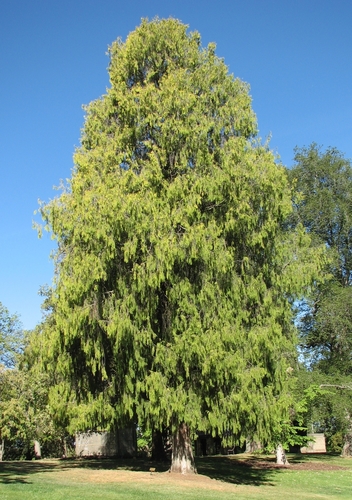
Pruning is the deliberate removal of specific plant parts—branches, buds, or roots—to shape growth and direct a plant's resources. In plant science research, it serves as a valuable tool for studying how plants respond to physical stress, reallocate nutrients, and regulate hormonal signaling
arrow_forward Explore topic