Search
Plant family

Ericaceae

Called “heather family” in GBIF

The Ericaceae are a family of flowering plants, commonly known as the heath or heather family, found most commonly in acidic and infertile growing conditions. The family is large, with about 4,250 known species spread across 124 genera, making it the 14th most speciose family of flowering plants. The many well known and economically important members of the Ericaceae include the cranberry, blueberry, huckleberry, rhododendron, and various common heaths and heathers.

From Wikipedia, licensed under CC BY-SA 4.0

5,144
accepted species in GBIF
Source: GBIF
277
genera in GBIF
Source: GBIF
15
plants on Plant News
18
research articles
Browse by topic

Plants in this family

15 plants

Genera in this family

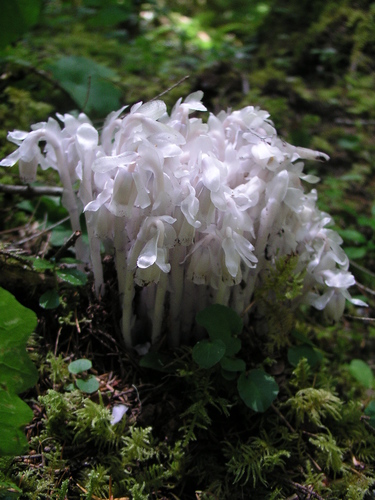
Also here, with one plant each: Allotropa (sugarstick), Calluna (Heather), Gaultheria (Salal), Kalmia (mountain laurel), Monotropa (Ghost Pipes), Pieris (Japanese Pieris).

Research on Ericaceae

18 articles
iNaturalist → · observation

Native salal shrub confirmed thriving on a Vancouver street

If you garden in the Pacific Northwest, salal is the tough, shade-loving native shrub that fills ...

iNaturalist → · observation

Native red huckleberry spotted thriving near Oregon City forests

If you hike or garden in the Pacific Northwest, this shrub's berry-red fruit and knack for growin...

iNaturalist → · observation

Verified wild sighting confirms salal thriving in Capital region

The evergreen shrub with waxy leaves and dark berries you spot on Pacific Northwest hikes is conf...

PubMed → · research article

This flowering shrub traps toxic cadmium in its roots

If you garden near old industrial land, roadsides, or other metal-tainted soil, this rhododendron...

What science is finding about Ericaceae

Every article on Plant News that mentions a member of this family, newest first.

Native salal shrub confirmed thriving on a Vancouver street

If you garden in the Pacific Northwest, salal is the tough, shade-loving native shrub that fills in woodland edges, feeds...

Salal native-plants / urban-ecology

Gene found that helps azaleas survive hotter summers

The azaleas and rhododendrons that scorch and sulk in your yard during hot summers may eventually be bred with this gene, so...

Rhododendron simsii climate-adaptation / crispr

Blueberry and heather root fungi finally get their own global research spotlight

The blueberries, rhododendrons, and azaleas in your acidic garden bed depend on root fungi that scientists have studied far...

Heather mycorrhizal-networks / soil-health

Native Hawaiian berry plant spotted and confirmed in Pahoa

If you're hiking Hawaii's volcanic slopes, spotting 'ohelo 'ai in fruit means you're looking at a plant native Hawaiians have...

'ohelo 'ai native-plants / ethnobotany

Wild medicinal berries face growing threats from climate change

The bilberries or elderberries you might forage on a forest walk owe their potency to the exact hillside, altitude, and soil...

Bilberry medicinal-plants / foraging

Fragrant wetland shrub confirmed growing wild in coastal Alaska

If you hike boggy trails near Seward, that low evergreen shrub with curled, fuzzy-backed leaves and a piney-sweet smell might...

Marsh Labrador tea native-plants / phenology

Why some Himalayan trees can't grow any higher up the mountain

If you've ever wondered why the alpine tree line on a mountain hike forms such a sharp edge, this explains it: it's not one...

Rhododendron climate-adaptation / phenology

Toxic wild honey from rhododendron nectar keeps sickening Nepali honey-hunters

That rhododendron blooming in your yard each spring produces nectar loaded with a compound potent enough to drop a grown...

Rhododendron ethnobotany / medicinal-plants

Native red huckleberry spotted thriving near Oregon City forests

If you hike or garden in the Pacific Northwest, this shrub's berry-red fruit and knack for growing straight out of old stumps...

Red Huckleberry native-plants / foraging

Verified wild sighting confirms salal thriving in Capital region

The evergreen shrub with waxy leaves and dark berries you spot on Pacific Northwest hikes is confirmed alive and well in this...

Salal native-plants / foraging
eco

First complete genome mapped for a rare endangered rhododendron

The showy rhododendrons you might grow in a shade garden belong to the same genus as this newly mapped species, and...

Rhododendron yuefengense native-plants / crop-improvement

Climate change could double spruce bark beetle generations and push spring a month earlier in Sweden

Bark beetles killing spruce trees across northern Europe are already a visible threat in many forests, and warmer summers...

Cowberry phenology / climate-adaptation

Global distribution and biogeography of ericoid mycorrhizal fungi.

The wild blueberries, heathers, and rhododendrons in your garden or the bogs near you depend on a hidden fungal partner in the...

Heather mycorrhizal-networks / soil-health

Progress and prospects of parasitic plant biodiversity genomics.

Witchweed and broomrape, the vampires of the plant world, already devastate staple crops across Africa and the Mediterranean —...

Ghost Pipes parasitic-plants / crop-improvement

mountain laurel (Kalmia latifolia) observed in Pilot Mountain State Park, Pinnacle, NC, US

Mountain laurel puts on one of the most spectacular late-spring flower shows of any native shrub in eastern parks — if you...

mountain laurel citizen-science / native-plants

Synergistic application of biochar and mercury-resistant Bacillus cereus enhances phytoremediation efficiency and stress tolerance in sorghum (Sorghum bicolor L.) grown in mercury-contaminated soil.

Contaminated urban lots, old orchard soils, and roadside gardens carry hidden mercury loads — this research points toward a...

Japanese Pieris phytoremediation / soil-health

sugarstick (Allotropa virgata) observed in San Juan County, WA, USA

Sugarstick is a rare, fascinating plant that depends entirely on healthy old-growth forest fungal networks to survive, making...

sugarstick mycorrhizal-networks / phenology