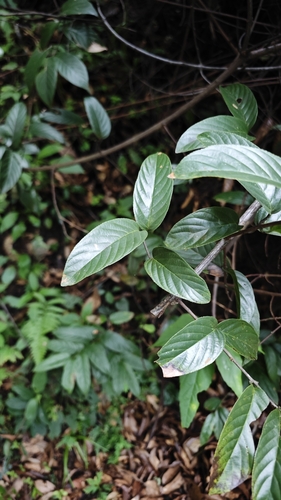
An investigation into the efficacy and mechanism of Berchemia kulingensis leaves in suppressing synovial tissue inflammation in a rat model of gouty arthritis.
Xiong Y, Xu H, Zhang Y, Chen Z, Wei F
Plant Signaling
It's a reminder that the next overlooked shrub in a forest or botanical garden could hold real medicinal value — this plant was brewed as a humble folk tea for sore joints long before any lab confirmed why it worked.
Researchers took a plant used for centuries in Chinese folk medicine as a joint-soothing tea and put it to the test in a lab. They found that a concentrated extract from its leaves dramatically lowered multiple markers of inflammation in rats with gout, working through several biological switches at once. On top of that, the extract also blocked an enzyme linked to high uric acid — one of the root causes of gout flare-ups.
Key Findings
BK leaf extract significantly reduced five key inflammatory proteins (TNF-α, IL-1β, IL-6, IL-8, and COX-2) in rat synovial tissue, with effects confirmed at p < 0.001 for key markers.
The extract suppressed the TLR4–NF-κB signaling cascade — a major inflammation 'on switch' — while simultaneously raising levels of IκBα, a natural inflammation brake.
In lab tests, BK leaf extract inhibited xanthine oxidase activity (p < 0.05 to 0.001), the enzyme that produces uric acid, suggesting a dual anti-gout mechanism.
chevron_right Technical Summary
Scientists validated a traditional Chinese folk remedy: tea made from the leaves of Berchemia kulingensis significantly reduced joint inflammation in rats with gout-like disease, identifying the biochemical pathways responsible for its effects.
Abstract Preview
The pharmacological activities of Berchemia kulingensis (BK) leaves, traditionally used as a tea for joint discomfort relief in Chinese folk, remain unexplored. To explore the potential therapeutic...
open_in_new Read full abstractAbstract copyright held by the original publisher.
Species Mentioned
Was this useful?
Want to tell us more? (optional)
Thanks for the note!
Something went wrong — please try again.
Too many submissions. Try again in an hour.
Nanoplastics interfere with plant-mycorrhizal communication and limit plant growth.
Microplastics breaking down in your garden soil are quietly strangling the beneficial fungi that help your vegetables absorb phosphorus and other nutrients, ...
Medicinal plants are species that produce bioactive chemical compounds with therapeutic applications, a characteristic studied extensively in ethnobotanical and phytochemical research. This field is vital to plant science because it reveals how plants evolved complex chemical defense and secondary
arrow_forward Explore topic