Lab fungus naturally fights soybean blight, then gets a CRISPR cleanup
Yin R, Zhai Z, Zhang M, Qin Y, Wang J
Crispr
Soybeans in fields near you face a water mold called Phytophthora that rots roots and can wipe out entire plots, and a compound found naturally in a common lab fungus now shows it can suppress that pathogen.
Scientists discovered that a fungus routinely used in labs to study plant chemistry was secretly producing its own chemical compounds the whole time, including one that fights the organism responsible for soybean root rot. Using CRISPR gene-editing, they switched off the gene behind those compounds, leaving a cleaner fungal strain with less background noise. That quieter strain makes it much easier for researchers to isolate and study new compounds borrowed from plants and other organisms.
Key Findings
Leporin B, newly identified in Aspergillus oryzae, inhibits Phytophthora sojae, the oomycete responsible for destructive soybean root rot
Both CRISPR-Cas9 and conventional gene knockout fully eliminated 2-pyridone production by disrupting a single backbone gene (AolepA), with no effect on fungal growth or sporulation
The resulting mutant strain (NSAR1-delta-L) successfully expressed a heterologous plant biosynthetic gene, validating it as a reduced-background chassis for secondary metabolite research
chevron_right Technical Summary
A lab fungus widely used to study plant chemistry was found to quietly produce its own antifungal compounds, including one that fights a major soybean disease pathogen. Researchers used CRISPR to switch off the responsible gene, creating a cleaner host strain that simplifies discovery of new plant-derived compounds.
Abstract Preview
Original paper
Towards a reduced-background cell factory: disruption of a PKS-NRPS hybrid gene (AlepA) abolishing the production of 2-pyridones in Aspergillus oryzae.
Aspergillus oryzae NSAR1 is a versatile and commonly used heterologous expression host. Typically, this host is used to express exogenous biosynthetic genes for secondary metabolites (SMs). However...
open_in_new Read full abstractAbstract copyright held by the original publisher.
Species Mentioned
Was this useful?
Want to tell us more? (optional)
Thanks for the note!
Something went wrong — please try again.
Too many submissions. Try again in an hour.
Targeted knockout of a host peroxisomal peptidase confers field resistance to...
The corn in your grocery store and the staple food keeping millions of East African families fed is under serious threat from a viral disease that can wipe o...
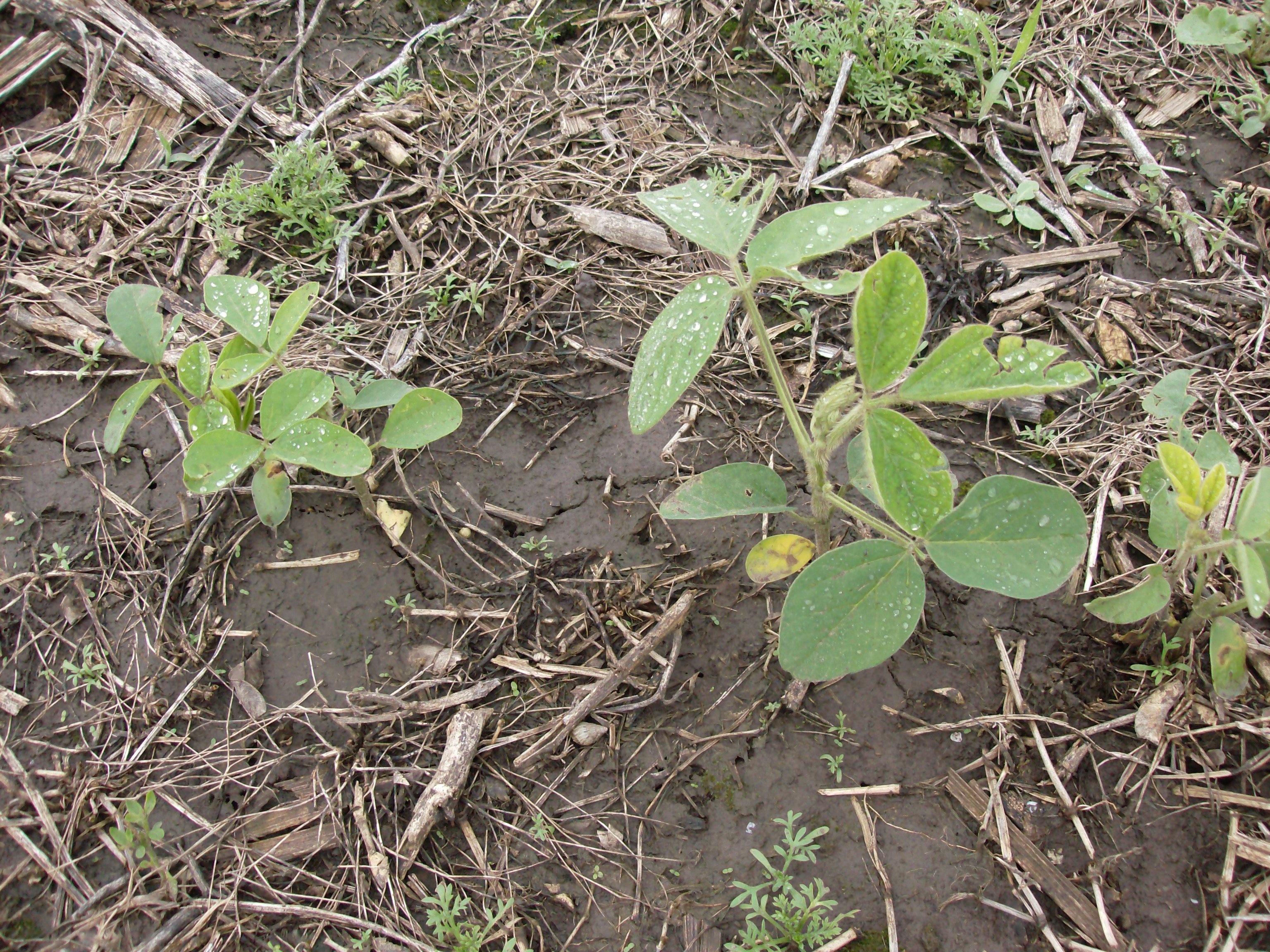
The soybean, soy bean, or soya bean is a species of legume native to East Asia, widely grown for its edible bean. Soy is a staple crop, the world's most grown legume, and an important animal feed.