Chemical Fingerprinting and Antimicrobial Potential of Selected Ethnomedicinal Plants: Correlation Between Quercetin Content and Bioactivity.
Dragan F, Dragan DM, Tocai Moțoc AC, Teodorescu AG, Kovacs MH, Kovacs ED, Mihali C, Ionaș CD, Groze AC.
Medicinal Plants
Rosemary growing in your herb bed turns out to be one of the more potent natural antibacterials among common kitchen plants — a good reason to keep a pot near the cutting board.
Scientists took six familiar plants — wild garlic, regular garlic, onion, rosemary, basil, and cloves — and made alcohol extracts to see which ones could fight bacteria. They mapped every chemical compound in each plant like a fingerprint, then tested how well each extract stopped the growth of a common harmful bacterium. Rosemary came out on top, and the researchers think a natural compound called quercetin (found in many plants, including onions and apples) may be a big reason why.
Key Findings
72 distinct compounds were identified across six plant extracts, including terpenoids, phenolic derivatives, fatty acids, and phytosterols.
Rosemary (Salvia rosmarinus) had the highest quercetin content and showed the strongest antibacterial effect against Staphylococcus aureus.
Garlic and onion extracts were dominated by phytosterols, while basil was rich in linalool — each plant showed a chemically unique 'fingerprint' distinguishable by statistical analysis.
chevron_right Technical Summary
Researchers tested six common kitchen and medicinal plants for their ability to kill bacteria, finding that rosemary extract was the most effective — likely tied to its high quercetin content. The study used chemical fingerprinting to map each plant's unique compound profile and link it to antimicrobial power.
Abstract Preview
Due to their diverse phytochemical composition, medicinal plants belonging to the families Amaryllidaceae, Lamiaceae, and Myrtaceae possess antimicrobial and antioxidant properties. In this study, ...
open_in_new Read full abstractAbstract copyright held by the original publisher.


Was this useful?
Want to tell us more? (optional)
Thanks for the note!
Something went wrong — please try again.
Too many submissions. Try again in an hour.
Fifteen herbs from turmeric to lion's mane protect the aging brain
The saffron crocuses you plant in fall, the turmeric on a sunny windowsill, and the lemon balm spreading in your herb bed all contain compounds that clinical...
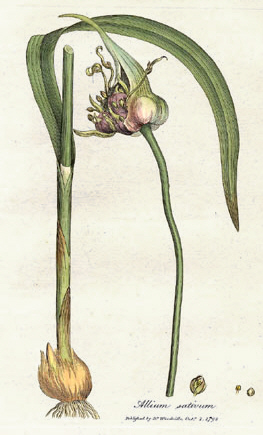
Garlic is a species of bulbous flowering plants in the genus Allium. Its close relatives include the onion, shallot, leek, chives, Welsh onion, and Chinese onion. Garlic is native to central and western Asia, stretching from the Black Sea through the southern Caucasus, northeastern Iran, and the ...