ClearDepthIAS enables automated high-throughput quantification of roots in soil-grown taproot crops.
Rajurkar AB, Wang L, Funaro L, Bellier-Igasaki S, Hunt S
Crop Improvement
Farmers and plant breeders are racing to develop crops whose roots dig deeper into soil — which means those crops can pull water during drought and lock away more carbon underground, two things that will matter enormously as growing seasons get hotter and drier.
To breed crops that can handle drought and poor soils, scientists need to know how plant roots are shaped underground — but digging them up destroys the plant and takes forever. This new system lets roots grow along the clear sides of special pots, takes photos all the way around, and uses a computer program to automatically measure root depth and angle across hundreds of plants at once. The measurements turned out to match what you'd find if you dug the plants up in a real field, making this a fast, reliable shortcut for breeders trying to build better crops.
Key Findings
The system accurately measured 'wall root shallowness' — a stand-in for root growth angle — and validated it against field-grown canola and soybean root architecture in both greenhouse and real-world field conditions.
Root distribution indices from ClearDepthIAS correlated with root biomass at different soil depths in the field, though environmental variation between field sites could weaken these correlations.
Traits measured by the platform showed medium to high heritability, confirming the system is reliable enough to power genome-wide association studies and crop breeding programs.
chevron_right Technical Summary
Scientists built ClearDepthIAS, an automated imaging platform that photographs soybean and canola roots growing against transparent pot walls, then uses AI to measure how deep and angled roots grow — without digging up the plant. The system is precise enough to support large-scale breeding programs aimed at developing crops with deeper, more efficient root systems.
Abstract Preview
Understanding root system architecture (RSA) is critical for improving crop productivity and resilience, yet phenotyping root traits such as root growth angle and rooting depth remains technically ...
open_in_new Read full abstractAbstract copyright held by the original publisher.

Was this useful?
Want to tell us more? (optional)
Thanks for the note!
Something went wrong — please try again.
Too many submissions. Try again in an hour.
Targeted knockout of a host peroxisomal peptidase confers field resistance to...
The corn in your grocery store and the staple food keeping millions of East African families fed is under serious threat from a viral disease that can wipe o...
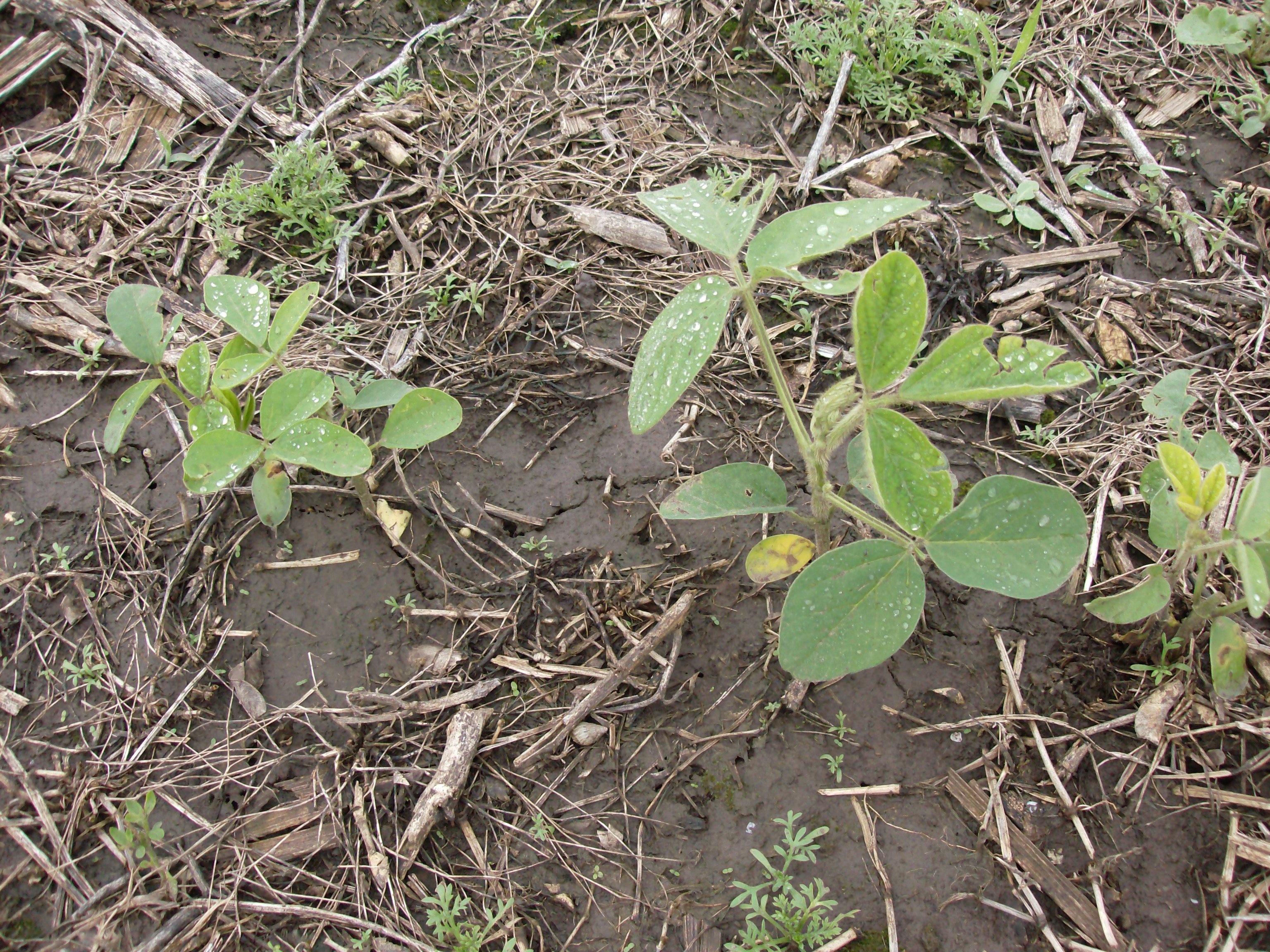
The soybean, soy bean, or soya bean is a species of legume native to East Asia, widely grown for its edible bean. Soy is a staple crop, the world's most grown legume, and an important animal feed.