A long-distance signaling loop promotes soybean nodulation and productivity.
Duan J, Wang J, Guo R, Clark CB, Luo Z
Plant Signaling
Soybeans and their bean-family cousins quietly fertilize themselves by hosting root bacteria — and this discovery reveals the hidden chemical conversation that makes that partnership work, opening a path to growing more beans in poor soils with less added fertilizer.
When soybean roots meet friendly soil bacteria, the roots send a chemical signal all the way up to the leaves. The leaves respond by reducing a tiny molecular messenger, which travels back down to the roots and unlocks a protein that welcomes even more bacteria in. It's a feedback loop — the plant essentially calls for reinforcements to build more of the root nodules that let it feed on air-based nitrogen instead of soil fertilizer.
Key Findings
A root-produced peptide (GmCEP7) travels to shoots and suppresses production of a mobile microRNA (miR4416-5p), which then travels back to roots — establishing a shoot-to-root signaling loop that promotes bacterial infection.
Lower miR4416-5p levels in roots increase expression of a lectin gene (GmLe3) that physically assists rhizobial bacteria in infecting root hairs, leading to more nodules and higher plant productivity under low-nitrogen conditions.
The miR4416-5p regulatory module is absent in model legumes (Medicago and Lotus) but appears conserved in economically important crops common bean and pigeonpea, suggesting it evolved independently as a crop-relevant innovation.
chevron_right Technical Summary
Scientists discovered that soybeans use a molecular relay system stretching from roots to leaves and back again to actively encourage beneficial soil bacteria to colonize their roots, boosting the plant's ability to pull nitrogen from the air without synthetic fertilizer.
Abstract Preview
Legume nodulation is initiated when soil bacteria rhizobia infect root hairs and is tightly regulated by host-derived mechanisms that restrict nodule numbers to balance the benefits of symbiotic ni...
open_in_new Read full abstractAbstract copyright held by the original publisher.
Species Mentioned


Was this useful?
Want to tell us more? (optional)
Thanks for the note!
Something went wrong — please try again.
Too many submissions. Try again in an hour.
Gene editing removes 97% of celiac-triggering proteins from bread wheat
It could mean that people with celiac disease — roughly 1 in 100 worldwide — may one day safely eat bread made from real wheat, without sacrificing the taste...
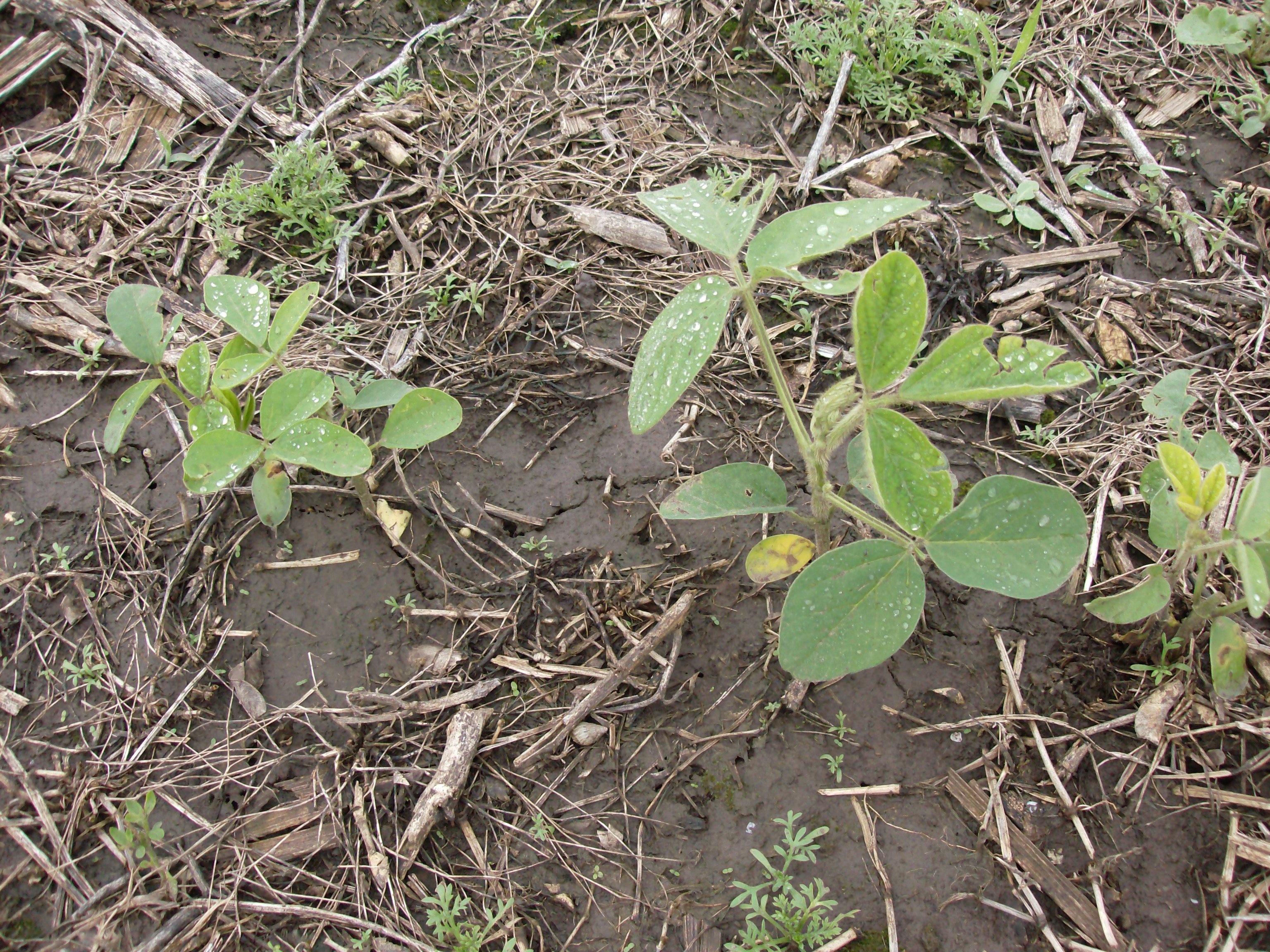
The soybean, soy bean, or soya bean is a species of legume native to East Asia, widely grown for its edible bean. Soy is a staple crop, the world's most grown legume, and an important animal feed.