Long-Term Inorganic Nitrogen Fertilization Drives a Trade-Off in the Soybean Symbiotic Network From Low-Loss Fixation to High-Loss Metabolism.
Zhang H, Sun H, Li H, Hu X, Liu C
Soil Health
Every time you skip synthetic fertilizer on your garden beans and let them fix their own nitrogen, you're relying on the same microbial handshake this study shows factory farming is quietly destroying.
Soybeans naturally team up with two types of beneficial soil microbes — bacteria that pull nitrogen from the air into the roots, and fungi that help gather nutrients from the soil. When farmers pour on too much nitrogen fertilizer year after year, these partnerships fall apart: the microbes become disorganized, stop cooperating with each other, and the plant ends up leaking nitrogen into the environment instead of storing it efficiently. The result is a crop that has become addicted to chemical fertilizer, losing the self-sufficiency that made legumes so valuable in the first place.
Key Findings
After 24 years, high nitrogen inputs (400–600 kg N/ha/year) shifted rhizobial community assembly from deterministic (host-controlled) to stochastic (random), destabilizing the symbiotic network
Excessive nitrogen broke down cross-kingdom cooperation between nitrogen-fixing bacteria and mycorrhizal fungi, weakening both symbioses simultaneously
The system transitioned from an efficient internal nitrogen-fixation mode to a high-loss external nitrogen metabolism mode, reducing nutrient retention and increasing environmental nitrogen loss
chevron_right Technical Summary
Over-fertilizing soybean fields with nitrogen for decades breaks down the plant's natural partnerships with soil microbes, forcing the crop to depend on chemical fertilizer instead of its own biological nitrogen-fixing system — reducing efficiency and increasing nutrient loss.
Abstract Preview
The productivity and sustainability of legume crops are highly dependent on their tripartite symbiotic system with rhizobia and arbuscular mycorrhizal fungi (AMF), a system currently facing signifi...
open_in_new Read full abstractAbstract copyright held by the original publisher.
Species Mentioned

Was this useful?
Want to tell us more? (optional)
Thanks for the note!
Something went wrong — please try again.
Too many submissions. Try again in an hour.
Nanoplastics interfere with plant-mycorrhizal communication and limit plant growth.
Microplastics breaking down in your garden soil are quietly strangling the beneficial fungi that help your vegetables absorb phosphorus and other nutrients, ...
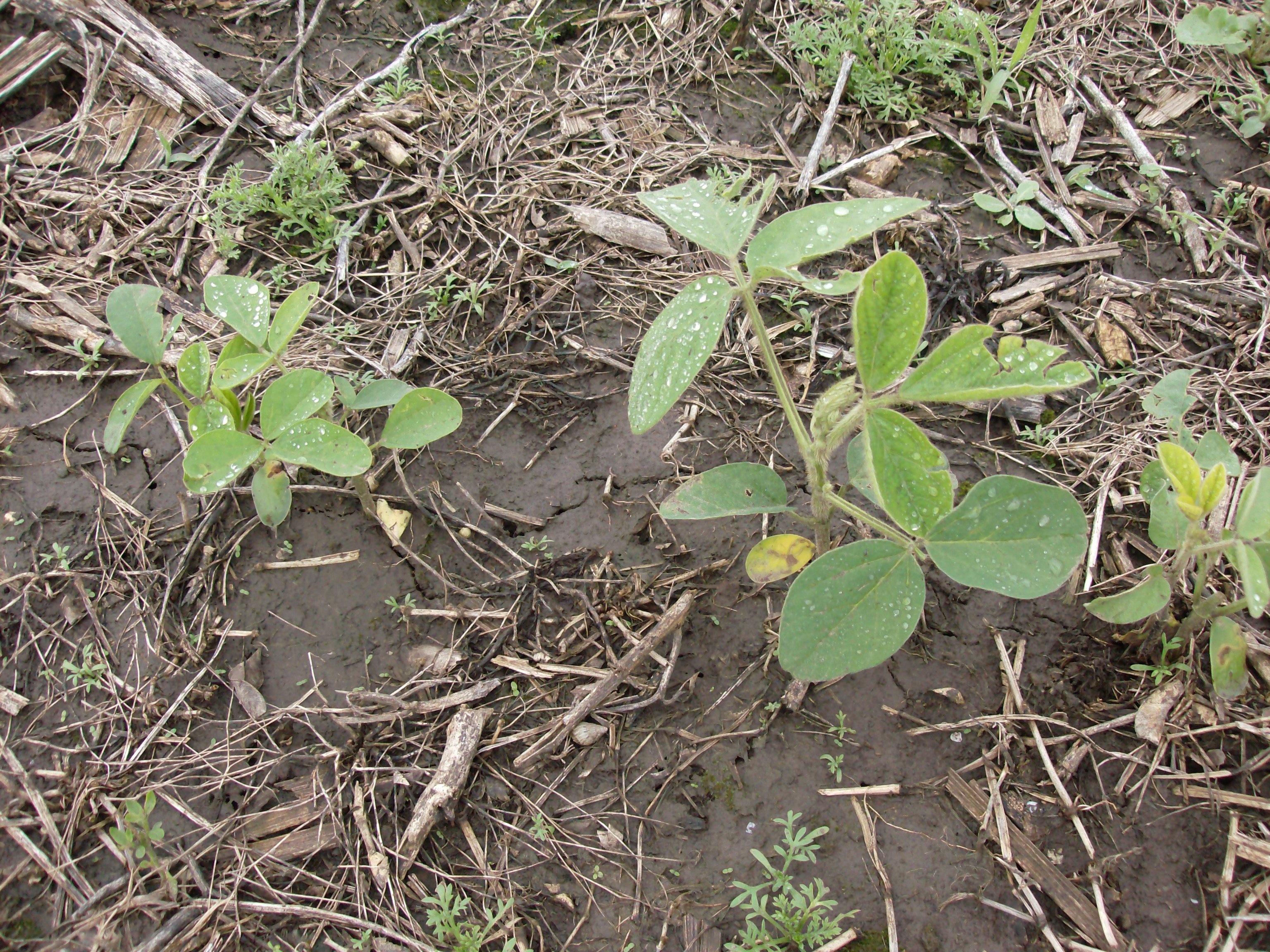
The soybean, soy bean, or soya bean is a species of legume native to East Asia, widely grown for its edible bean. Soy is a staple crop, the world's most grown legume, and an important animal feed.