Physiological and Agronomic Responses of Cucurbit Crops to Drought and Combined Heat-Drought Stress in Field Conditions.
Flores-León A, Gil-Molina M, Campos G, Romero C, Pérez-de-Castro A
Climate Adaptation
If you're growing cucumbers, melons, or squash through a brutal summer dry spell, specific varieties already exist that quietly outperform the rest—and this study names them.
Scientists grew 144 varieties of cucumbers, melons, watermelons, and pumpkins under two punishing conditions: drought alone, and drought combined with heat. They measured how the plants' water levels, leaf pigments, and harvests responded. Melon and watermelon proved the most adaptable, while certain standout varieties within each species held their ground remarkably well—useful knowledge for breeders and growers facing hotter, drier summers.
Key Findings
Both drought and combined heat-drought stress significantly reduced leaf water content and anthocyanin levels, while flavonol content rose—suggesting plants ramp up UV-protective pigments under stress.
Chlorophyll increased under drought alone but dropped under combined heat-drought stress, revealing that heat fundamentally changes how cucurbit crops respond compared to drought by itself.
Specific high-performing accessions were identified: M05 and M17 (melon), S05 and S11 (watermelon), P14 and P64 (cucumber), and CM11 and CM28 (pumpkin), offering concrete candidates for drought- and heat-resilient breeding programs.
chevron_right Technical Summary
Researchers tested four common cucurbit crops—cucumber, melon, watermelon, and pumpkin—under drought and combined heat-drought stress in real field conditions, identifying which varieties hold up best and which physiological signals most reliably predict yield loss.
Abstract Preview
Climate change is intensifying drought and heat episodes, posing severe risks to crop productivity in Mediterranean horticultural systems. Cucurbit crops, cucumber (Cucumis sativus), melon (C. melo...
open_in_new Read full abstractAbstract copyright held by the original publisher.
Species Mentioned


Was this useful?
Want to tell us more? (optional)
Thanks for the note!
Something went wrong — please try again.
Too many submissions. Try again in an hour.
Targeted knockout of a host peroxisomal peptidase confers field resistance to...
The corn in your grocery store and the staple food keeping millions of East African families fed is under serious threat from a viral disease that can wipe o...
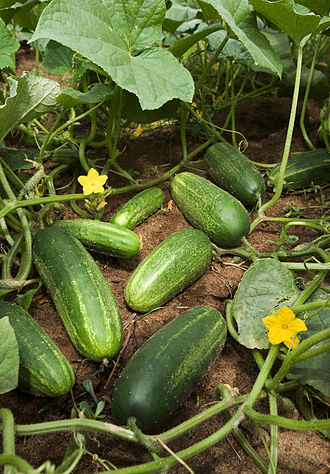
The cucumber is a widely-cultivated creeping vine plant in the family Cucurbitaceae that bears cylindrical to spherical fruits, used as culinary vegetables. Considered an annual plant, there are three main types of cucumber—slicing, pickling, and seedless.