Range monitoring involves systematically tracking and assessing the geographic distribution and population status of plant species over time. This practice is essential in plant science for detecting shifts in species boundaries driven by climate change, habitat loss, or invasive pressures, enabling researchers to identify vulnerable populations before they decline. Longitudinal range data also informs conservation prioritization and helps scientists understand how plants adapt—or fail to adapt—to rapidly changing environmental conditions.
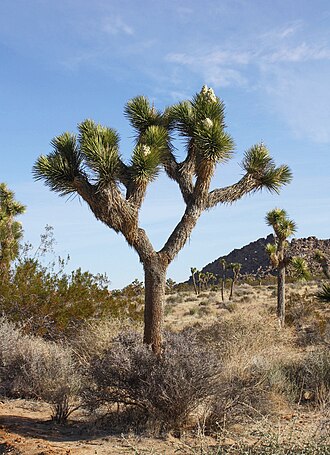
A Western Joshua Tree was observed and confirmed at research-grade quality near Desert Center, California, adding a verified data point to the range documentation of this iconic Mojave Desert species.
1
Observation achieved research-grade status, meaning at least two-thirds of identifiers agreed on the species identification
2
Location is Desert Center, CA — a southern Mojave site relevant to range-edge population monitoring
3
Species documented is Yucca brevifolia (Western Joshua Tree), the western lineage split from the eastern Yucca jaegeriana
mail
Weekly plant science — one email, Saturdays.
Check your inbox to confirm — link expires in 24 hours.
Something went wrong — please try again.
Too many signup attempts from your network. Try again in an hour, or email hello@plant.news.