crispleaf roughmoss (Claopodium crispifolium) observed in Capital, CA-BC, CA
iNaturalist: roanan_d
Citizen Science
Mosses like this one form the living crust on garden walls, forest floors, and rocky outcrops that retains moisture and shelters tiny invertebrates — knowing exactly which species are present helps track whether local microclimates are staying wet enough to support them.
Someone found a fuzzy little moss growing on a rock wall and took close-up photos to figure out exactly which kind it was. By measuring the stem — it was about 6.4 cm long, longer than one look-alike species ever grows — they were able to narrow it down to crispleaf roughmoss. The identification took careful detective work because two other mosses look nearly identical under a hand lens.
Key Findings
Stem measured ~6.4 cm, exceeding the 4.5 cm maximum recorded for the similar species Claopodium pellucinerve, effectively ruling it out
Laminal cells confirmed as 1-papillose (single surface bumps per cell), a key microscopic feature supporting the Claopodium crispifolium identification
Hair points observed on the leaves, consistent with C. crispifolium; Isothecium stoloniferum remained a residual concern but was not confirmed
chevron_right Technical Summary
A naturalist in Victoria, British Columbia photographed and measured a small rock-wall moss, confirming it as crispleaf roughmoss based on stem length and cell structure, while carefully ruling out two similar-looking species.
Abstract Preview
Rock wall. Laminal cells 1-papillose (pic 5). Tried to get a look at the stem cells to determine whether they were papillose too (if so would suggest *C. pellucinerve*), but had a hard time doing s...
open_in_new Read full abstractAbstract copyright held by the original publisher.
Species Mentioned
Was this useful?
Want to tell us more? (optional)
Thanks for the note!
Something went wrong — please try again.
Too many submissions. Try again in an hour.
Warming killed underground fungi and pushed meadows toward shrublands
Mountain meadows and wildflower-rich grasslands many people hike through and depend on for clean water and biodiversity are quietly transforming underground ...
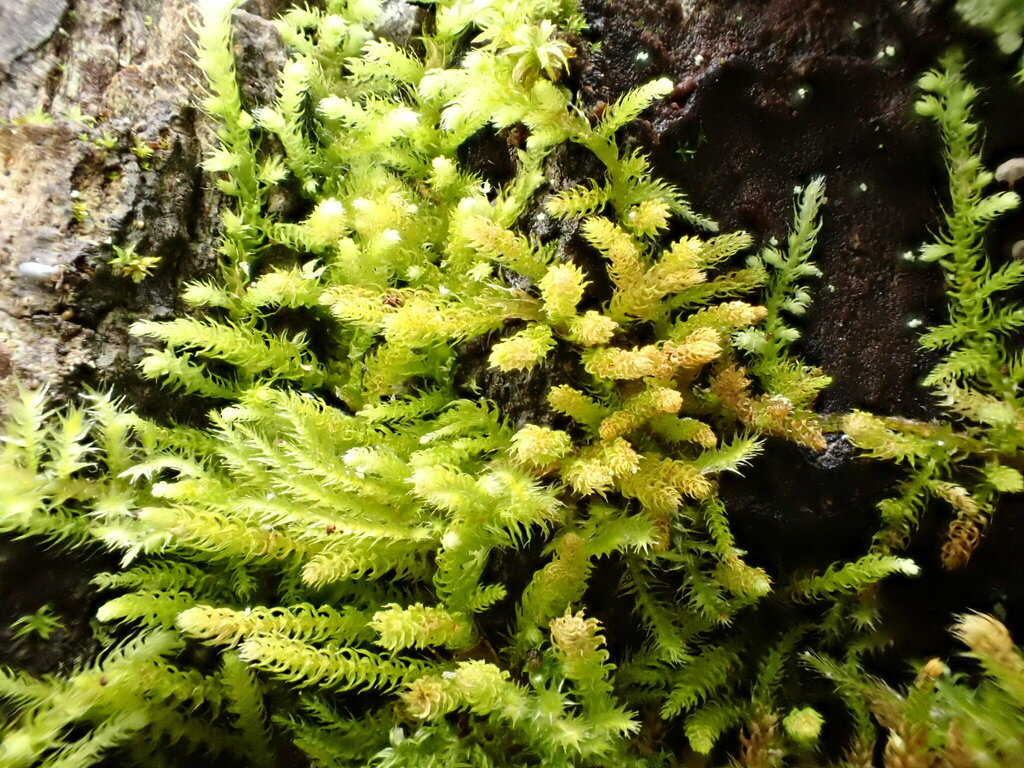
Photo by Quillipede, taken in British Columbia, Canada. CC0 via iNaturalist.
Bryophyte diversity encompasses the study of the variety, distribution, and ecological roles of mosses, liverworts, and hornworts — the earliest diverging lineages of land plants. Understanding this diversity is fundamental to plant science because bryophytes represent key evolutionary transitions
arrow_forward Explore topic