Microbiome-metabolite signaling drives aluminum stress alleviation in soybean under intercropping and selenium nanoparticle application.
Murtaza G, Hassan NE, Ahmed Z, Elmenofy W, El-Mogy MM
Soil Health
The soybeans in your grocery store's tofu and edamame increasingly come from acidic soils where aluminum poisons roots and fungi rot crops — this research shows that simply planting sorghum nearby, boosted by a trace-mineral spray, could protect those crops without heavy chemical inputs.
Acid soils release aluminum that damages plant roots and makes crops vulnerable to disease-causing fungi. Scientists found that planting soybeans next to sorghum changed the microscopic community in the soil around the roots, producing natural compounds that block aluminum from building up and fight off fungal infections. Adding tiny selenium particles to that combination made the protection even stronger, cutting both aluminum damage and a common rot disease by more than a third.
Key Findings
Soybean-sorghum intercropping combined with selenium nanoparticles reduced aluminum accumulation in soybean roots by 57.4% compared to soybeans grown alone under aluminum stress.
The combined treatment cut Fusarium wilt disease incidence by 34.4%, while intercropping alone reduced it by 10.9%.
Both intercropping treatments reduced oxidative stress markers and enhanced root growth, with the effect linked to measurable shifts in rhizosphere microbiome composition and metabolite signaling.
chevron_right Technical Summary
Growing soybeans alongside sorghum — and adding selenium nanoparticles — dramatically cuts aluminum toxicity and fungal disease in acid soils, with the combined treatment reducing aluminum buildup by 57% and Fusarium wilt by 34% compared to soybeans grown alone.
Abstract Preview
Aluminum (Al) toxicity and soil-borne pathogens severely constrain legume productivity in acidic soils, yet the signaling mechanisms underlying intercropping-mediated stress alleviation remain insu...
open_in_new Read full abstractAbstract copyright held by the original publisher.

Was this useful?
Want to tell us more? (optional)
Thanks for the note!
Something went wrong — please try again.
Too many submissions. Try again in an hour.
Targeted knockout of a host peroxisomal peptidase confers field resistance to...
The corn in your grocery store and the staple food keeping millions of East African families fed is under serious threat from a viral disease that can wipe o...
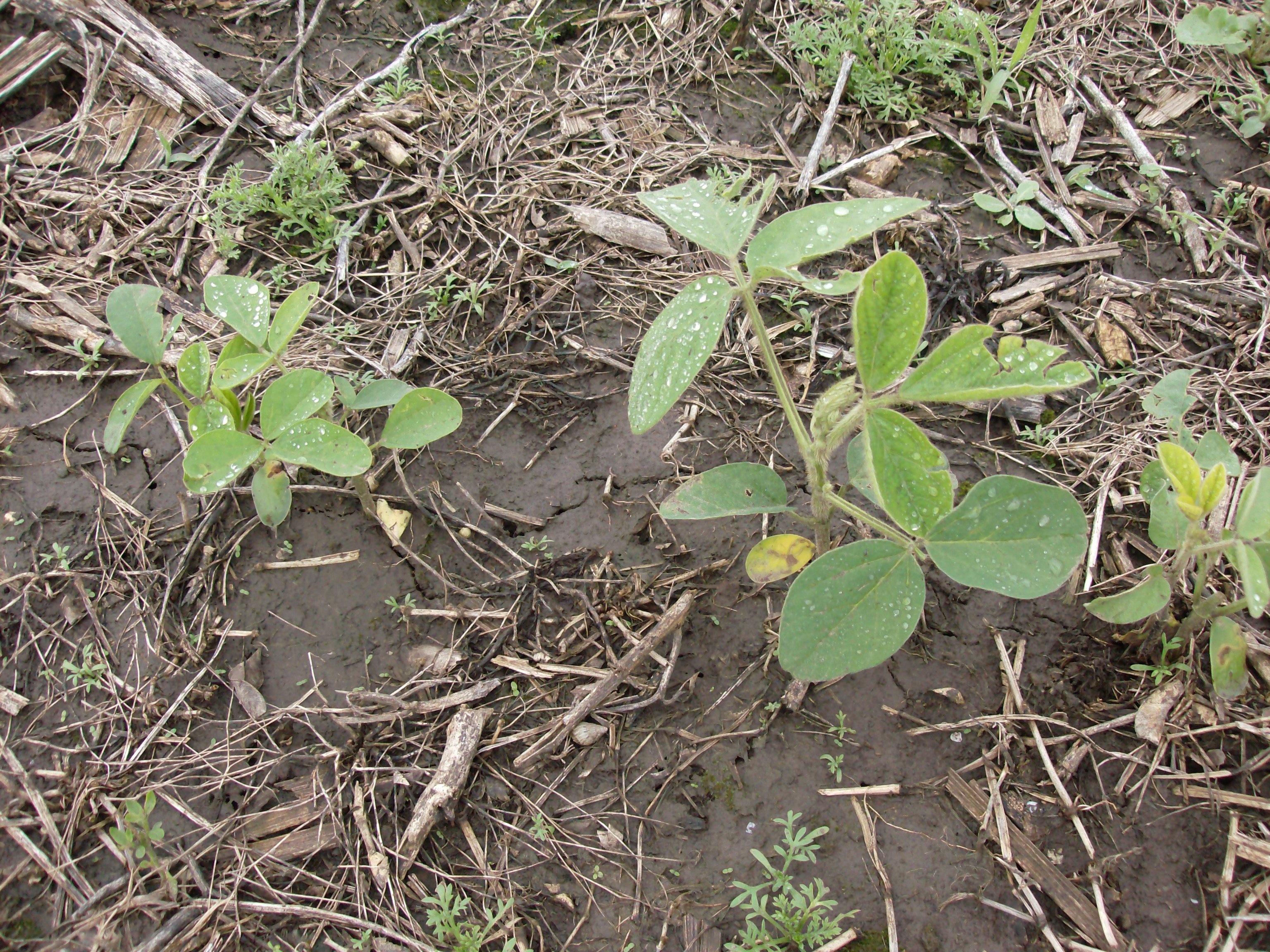
The soybean, soy bean, or soya bean is a species of legume native to East Asia, widely grown for its edible bean. Soy is a staple crop, the world's most grown legume, and an important animal feed.