20(S)-Ginsenoside Rg3 suppresses lung cancer-associated fibroblast activation associated with IL-17RD-FGF-MAP2K4-JNK signaling.
Zhang X, Xia L, Cheng F, Zhuang J, Rao R
Plant Derived Medicine
It shows that a substance from an ordinary ginseng plant — the same root sold in health food stores and used in traditional herbal teas — contains a molecule that scientists can study as a potential cancer-fighting drug.
Tumors don't grow alone — they recruit nearby cells called fibroblasts to act as helpers, feeding and shielding the cancer. Researchers found that a natural compound from ginseng root can shut down these helper cells, essentially cutting off the tumor's support system. In lab experiments, lung cancer cells surrounded by ginseng-treated helper cells grew and spread far less aggressively than those with untreated helpers.
Key Findings
Ginsenoside Rg3 identified 107 molecular targets overlapping with non-small cell lung cancer, with network analysis pinpointing EGFR, JUN, TP53, and STAT3 as the most critical hubs.
Rg3 inhibited cancer-associated fibroblast proliferation, colony formation, and migration while also triggering cell death and disrupting mitochondrial function in those support cells.
Rg3 suppressed tumor-promoting communication between fibroblasts and lung cancer cells by upregulating IL-17RD and blocking the FGFR1-MAP2K4-JNK-c-Jun signaling chain.
chevron_right Technical Summary
A compound extracted from ginseng root called Ginsenoside Rg3 was shown to disrupt the support network that lung cancer tumors rely on to grow and resist treatment, opening a potential new avenue for cancer therapy.
Abstract Preview
Cancer-associated fibroblasts (CAFs) are key components of the tumor microenvironment (TME) that contribute to tumor progression and therapeutic resistance in non-small cell lung cancer (NSCLC). Ho...
open_in_new Read full abstractAbstract copyright held by the original publisher.
Species Mentioned
Was this useful?
Want to tell us more? (optional)
Thanks for the note!
Something went wrong — please try again.
Too many submissions. Try again in an hour.
Nanoplastics interfere with plant-mycorrhizal communication and limit plant growth.
Microplastics breaking down in your garden soil are quietly strangling the beneficial fungi that help your vegetables absorb phosphorus and other nutrients, ...
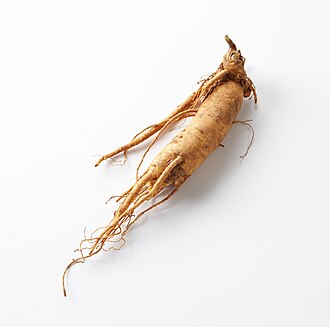
Ginseng is the root of plants in the genus Panax, such as South China ginseng (P. notoginseng), Korean ginseng (P. ginseng), and American ginseng (P. quinquefolius), characterized by the presence of ginsenosides and gintonin.