Natural Product 2-Amino-3-methylhexanoic Acid Stimulates Cucumber Growth via Nutrient and Energy Coordination.
Yang Q, Yang M, Wu M, Chen Q, Chang Y
Crop Improvement
It could lead to a safe, natural spray or soil treatment that helps your garden cucumbers grow stronger and produce more fruit, while reducing reliance on synthetic chemical fertilizers and growth hormones.
Scientists found a natural molecule that acts like a multitool for plant growth — it helps cucumbers grow bigger roots, absorb more nutrients from the soil, and capture more energy from sunlight all at the same time. Think of it like giving a plant a perfectly balanced energy drink that it can actually use efficiently. This molecule occurs in nature, which means it could eventually be developed into a garden product that's safer and more eco-friendly than many current options.
Key Findings
AMHA increased levels of two key plant hormones — one that controls energy balance (trehalose-6-phosphate) and one that drives root growth (indole-3-acetic acid), resulting in improved root architecture
Enhanced root development led to more efficient uptake of four critical nutrients: nitrogen, phosphorus, potassium, and iron
AMHA upregulated photosynthetic genes in shoot tissue, boosting the plant's ability to convert sunlight into energy
chevron_right Technical Summary
Researchers discovered that a naturally occurring compound called AMHA can act as a plant growth booster for cucumbers, working by improving root development, nutrient uptake, and photosynthesis simultaneously — offering a potential natural alternative to synthetic plant growth chemicals.
Abstract Preview
Plant growth regulators (PGRs) play a critical role in modulating plant development and stress responses. This study investigates the mechanism by which 2-amino-3-methylhexanoic acid (AMHA), a nove...
open_in_new Read full abstractAbstract copyright held by the original publisher.
Species Mentioned
Was this useful?
Want to tell us more? (optional)
Thanks for the note!
Something went wrong — please try again.
Too many submissions. Try again in an hour.
Targeted knockout of a host peroxisomal peptidase confers field resistance to...
The corn in your grocery store and the staple food keeping millions of East African families fed is under serious threat from a viral disease that can wipe o...
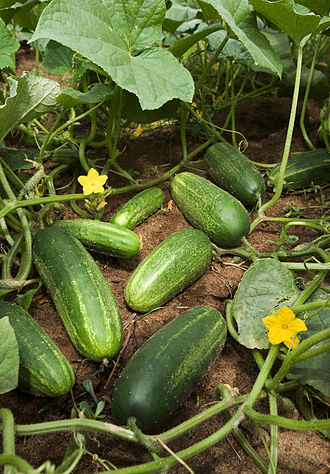
The cucumber is a widely-cultivated creeping vine plant in the family Cucurbitaceae that bears cylindrical to spherical fruits, used as culinary vegetables. Considered an annual plant, there are three main types of cucumber—slicing, pickling, and seedless.