Plant compound kaempferol helps neurons grow and resist Alzheimer's damage
Wang J, Pu H, Peng L, Cai S, Ding Q
Medicinal Plants
Kaempferol isn't some exotic lab chemical, it's a flavonoid already found in everyday plants like kale, broccoli, strawberries, and tea, so this research adds real weight to why those garden and kitchen staples matter for brain health.
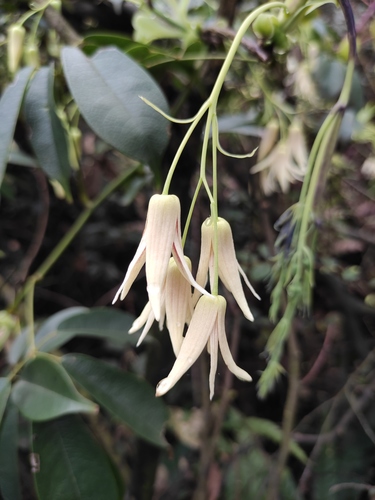
Researchers studied a traditional medicinal vine called Stauntonia brachyanthera, long used by the Dong ethnic group in China, to see if it could help fight Alzheimer's disease. They used computer modeling to find its active ingredients, then tested the most promising one, kaempferol, on brain cells in the lab. Kaempferol protected the cells from toxic protein damage and helped them grow into healthy neurons by switching on two important cell-signaling pathways.
Key Findings
Kaempferol (KMF), an active component of Stauntonia brachyanthera, alleviated Aβ1-42-induced neuronal injury in lab experiments
KMF promoted neuronal differentiation in N2a cells through activation of the PI3K/Akt and MAPK signaling pathways
Network pharmacology and molecular docking identified MAPK and PI3K/Akt pathways as central to the plant's predicted anti-Alzheimer's mechanism
chevron_right Technical Summary
Scientists found that a compound called kaempferol, derived from a traditional medicinal plant used by the Dong ethnic group in China, protects brain cells from damage linked to Alzheimer's disease and helps new neurons grow properly in lab tests.
Abstract Preview
Original paper
Effects and mechanisms of Stauntonia brachyanthera Hand.-Mazz against Alzheimer's disease through network pharmacology and experimental validation.
Stauntonia brachyanthera Hand.-Mazz. (SB), a traditional medicinal plant of the Dong ethnic group with nutraceutical applications, exhibits broad-spectrum pharmacological activity. However, the the...
open_in_new Read full abstractAbstract copyright held by the original publisher.
Species Mentioned
Was this useful?
Want to tell us more? (optional)
Thanks for the note!
Something went wrong — please try again.
Too many submissions. Try again in an hour.
Nanoplastics interfere with plant-mycorrhizal communication and limit plant growth.
Microplastics breaking down in your garden soil are quietly strangling the beneficial fungi that help your vegetables absorb phosphorus and other nutrients, ...
Ethnobotany is the interdisciplinary study of how humans use, manage, and perceive plants across different cultures, drawing on knowledge from botany, anthropology, ecology, and chemistry. It matters for plant science because it documents traditional ecological knowledge that can reveal previously
arrow_forward Explore topic