Charcoal from straw helps good bacteria protect cucumbers from wilt
Yu H, Feng J, Li M, Zhao Y, Wang Y
Soil Health
If you've ever watched a healthy cucumber vine suddenly wilt and die despite your best care, this points to a soil amendment that could keep protective bacteria alive around the roots for months instead of days.
Scientists tested whether coating a helpful soil bacterium with charcoal made from wheat straw would help it stick around cucumber roots longer. It worked: the bacteria populations grew more than six times bigger and stayed active for months, which dramatically reduced how many plants got Fusarium wilt, a common and often fatal root disease. The biochar also seemed to invite other good neighborhood microbes to set up camp near the roots, two of which were later shown to boost plant growth on their own.
Key Findings
Wheat straw biochar formulation increased B. amyloliquefaciens B1408 populations 6.62-fold in rhizosphere soil and 5.36-fold on the rhizoplane at 120 days post-inoculation
Cucumber Fusarium wilt disease index dropped from 73.33% to 20% in pot trials with the biochar formulation
Treatment boosted soil nutrient-cycling and plant antioxidant enzyme activity, reduced disease-fungus-linked microbial network connectivity, and enriched beneficial genera like Allorhizobium and Sphingomonas, with two isolated strains shown to increase plant height and fresh weight
chevron_right Technical Summary
Mixing a beneficial soil bacterium with wheat straw biochar lets it survive six times longer around cucumber roots, cutting Fusarium wilt disease rates from 73% to 20% in pot trials. The biochar also encouraged other helpful native microbes to move in, pointing to a cheaper, more durable way to protect crops without synthetic fungicides.
Abstract Preview
Original paper
Wheat straw biochar enhances rhizosphere colonization of Bacillus amyloliquefaciens B1408 for biocontrol of cucumber Fusarium wilt.
Plant growth-promoting rhizobacteria (PGPR) offer a sustainable alternative for managing soilborne diseases, yet their field efficacy is often compromised by poor rhizosphere persistence. Here, we ...
open_in_new Read full abstractAbstract copyright held by the original publisher.

Was this useful?
Want to tell us more? (optional)
Thanks for the note!
Something went wrong — please try again.
Too many submissions. Try again in an hour.
Targeted knockout of a host peroxisomal peptidase confers field resistance to...
The corn in your grocery store and the staple food keeping millions of East African families fed is under serious threat from a viral disease that can wipe o...
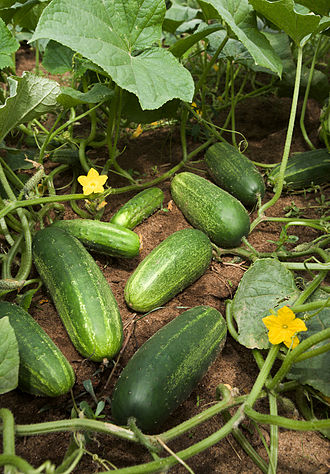
The cucumber is a widely-cultivated creeping vine plant in the family Cucurbitaceae that bears cylindrical to spherical fruits, used as culinary vegetables. Considered an annual plant, there are three main types of cucumber—slicing, pickling, and seedless.