China and US soybeans have swappable genetic superpowers, study finds
Jiao C, Li D, Zhang H, Zhang Z, Wang X
Crop Improvement
If you've ever wondered why some soybean products are praised for protein while others are prized for oil, this research shows those differences are baked into decades of separate breeding, and scientists now have a map to combine the best of both worlds into future crops.
Soybeans were first domesticated in China thousands of years ago, but once they spread to the Americas, breeders there and in China ended up favoring different traits without much genetic mixing. Researchers scanned the DNA of over 2,300 soybean plants grown in 11 locations and found that Chinese varieties are genetically rich in seed size and protein, while American varieties excel at oil content and yield. They then used that genetic map to successfully edit one gene in an American soybean to boost protein and add a disease-resistance gene to a Chinese variety, proving these traits can be swapped on purpose.
Key Findings
Analysis of 2,377 soybean accessions and 8.4 million SNPs identified 261 significant genetic loci linked to six agronomic traits, 223 of them newly discovered
Chinese germplasm carries distinct beneficial alleles for seed size and protein content, while American germplasm carries distinct alleles for oil content and yield
CRISPR/Cas9 knockout of GmST05 in an American cultivar and overexpression of a resistant GmSNAP18 haplotype in a Chinese cultivar experimentally validated predicted targets for improving protein content and soybean cyst nematode (SCN) resistance
chevron_right Technical Summary
Scientists compared nearly 2,400 soybean varieties from China and the Americas and found each region bred in different strengths: China for seed size and protein, the Americas for oil and yield. They built a genomic toolkit to swap these traits between breeding pools, already using gene editing to boost protein and disease resistance in test plants.
Abstract Preview
Original paper
Genomic dissection of divergent selection reveals a roadmap for reciprocal improvement of Chinese and American soybean.
Soybean (Glycine max [L.] Merr.) was domesticated in China over five millennia ago; yet, its global expansion has resulted in two distinct, independently evolved breeding pools in China and the Ame...
open_in_new Read full abstractAbstract copyright held by the original publisher.
Species Mentioned
Was this useful?
Want to tell us more? (optional)
Thanks for the note!
Something went wrong — please try again.
Too many submissions. Try again in an hour.
Targeted knockout of a host peroxisomal peptidase confers field resistance to...
The corn in your grocery store and the staple food keeping millions of East African families fed is under serious threat from a viral disease that can wipe o...
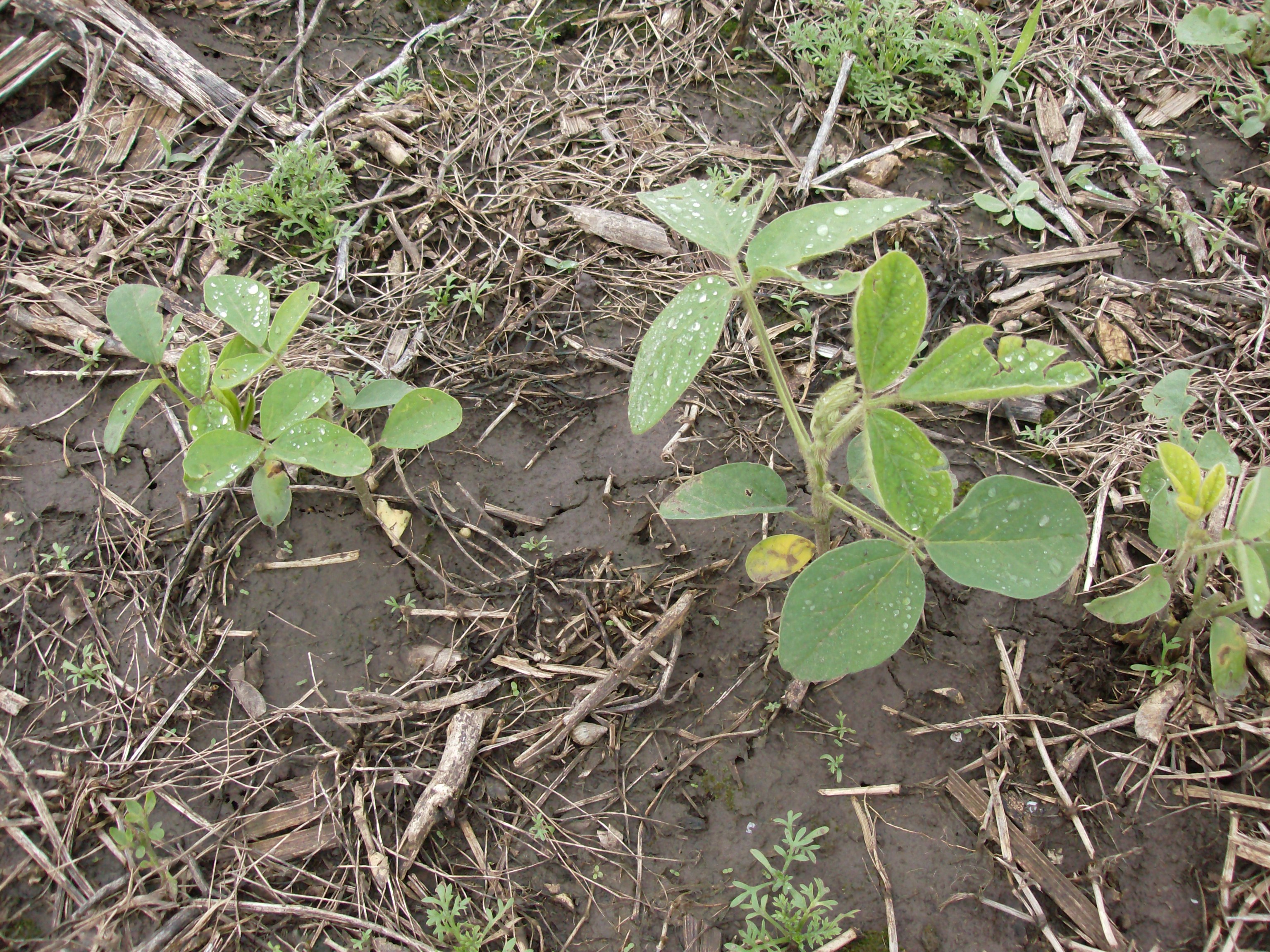
The soybean, soy bean, or soya bean is a species of legume native to East Asia, widely grown for its edible bean. Soy is a staple crop, the world's most grown legume, and an important animal feed.