Garlic and onion's hidden sugars fight inflammation and boost immunity
Mei X, Zhuo Y, Liu M, Lv L, Gao Y
Medicinal Plants
Those papery alliums sitting in your kitchen or growing in your garden bed carry fibrous compounds that scientists are only now mapping in detail, meaning the next breakthrough in natural immune support could come from a plant you're already cooking with tonight.
Garlic, onions, leeks, and chives contain special sugar chains, not the simple sweet kind, but complex fibers that feed good gut bacteria and calm inflammation in the body. Researchers combed through decades of studies and found that the exact shape and size of these sugar chains determines how powerful their health effects are, from fighting bacteria to potentially slowing tumor growth. The catch is that most of this evidence comes from lab dishes and animal studies, so human trials are still needed to confirm it works the same way in people.
Key Findings
Allium polysaccharides are mainly inulin-type fructans, fructooligosaccharides, and pectic polysaccharides with distinctive beta-(2→1) and beta-(2→6) fructosyl linkages
Bioactivity (antioxidant, anti-inflammatory, immunomodulatory, antitumor, antibacterial) works through specific pathways including Keap1/Nrf2/ARE, TLR4/NF-κB/MAPK, and NLRP3 inflammasome signaling
Molecular weight, branching pattern, uronic acid content, and extraction method all shape how potent these compounds are, but robust human clinical trials remain lacking
chevron_right Technical Summary
Garlic, onion, leek, and chive owe many of their health benefits to complex sugars called polysaccharides, which scientists now understand can fight inflammation, boost immunity, and support gut health depending on their exact molecular shape.
Abstract Preview
Original paper
Comprehensive review on Allium polysaccharides: Structural diversity, structure-activity relationships, biological functions, and future perspectives.
The genus Allium, encompassing garlic (A. sativum), onion (A. cepa), leek (A. ampeloprasum), chive (A. schoenoprasum), and allied species, represents one of the most pharmacologically significant p...
open_in_new Read full abstractAbstract copyright held by the original publisher.


Was this useful?
Want to tell us more? (optional)
Thanks for the note!
Something went wrong — please try again.
Too many submissions. Try again in an hour.
Targeted knockout of a host peroxisomal peptidase confers field resistance to...
The corn in your grocery store and the staple food keeping millions of East African families fed is under serious threat from a viral disease that can wipe o...
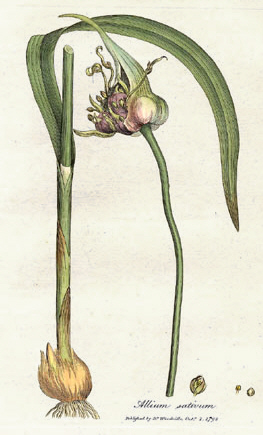
Garlic is a species of bulbous flowering plants in the genus Allium. Its close relatives include the onion, shallot, leek, chives, Welsh onion, and Chinese onion. Garlic is native to central and western Asia, stretching from the Black Sea through the southern Caucasus, northeastern Iran, and the ...