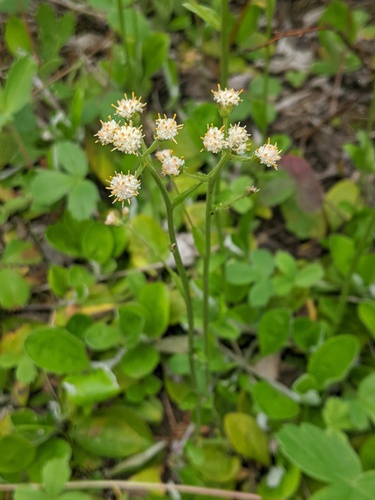
Native pussytoes wildflower spotted and confirmed in BC backcountry
iNaturalist: scythan
Native Plants
If you hike or garden in the BC interior, spotting fuzzy-leaved Hooker's Pussytoes means you're looking at a native groundcover that pollinators rely on long before most wildflowers bloom.
Someone out in Princeton, British Columbia photographed a wildflower called Hooker's Pussytoes and uploaded it to iNaturalist, where other naturalists checked the ID and confirmed it. It's now a 'research-grade' record, meaning scientists can trust and use this location data to understand where this native plant actually grows.
Key Findings
Observation achieved 'research-grade' status on iNaturalist, meaning community consensus confirmed the species ID
Location documented: Princeton, British Columbia, Canada
Species identified as Antennaria racemosa (Hooker's Pussytoes), a native North American wildflower
chevron_right Technical Summary
A citizen scientist confirmed a verified sighting of Hooker's Pussytoes, a native wildflower, growing near Princeton, British Columbia, adding a solid data point to our understanding of where this species lives.
Abstract Preview
Original paper
Hooker's Pussytoes (Antennaria racemosa) observed in Princeton, BC, Canada
Research-grade observation of Hooker's Pussytoes in Princeton, BC, Canada.
open_in_new Read full abstractAbstract copyright held by the original publisher.
Species Mentioned
Was this useful?
Want to tell us more? (optional)
Thanks for the note!
Something went wrong — please try again.
Too many submissions. Try again in an hour.
Warming killed underground fungi and pushed meadows toward shrublands
Mountain meadows and wildflower-rich grasslands many people hike through and depend on for clean water and biodiversity are quietly transforming underground ...
Phenology is the study of recurring biological events in plant life cycles—such as flowering, fruiting, and germination—and how these events are timed in response to seasonal and climatic conditions. This research is essential to plant science because phenological patterns directly influence
arrow_forward Explore topic