Ancient Hawaiian medicine plant spotted at sacred coastal park
iNaturalist: ruthannwhite
Ethnobotany
If you're walking the lava-rock trails at a Hawaiian historical park, that gnarly-leafed tree with the lumpy, foul-smelling fruit is Noni, a plant Polynesian voyagers carried across the Pacific specifically because it could heal wounds and treat illness with nothing else available.
Someone visiting Puʻuhonua o Hōnaunau, a national historical park on Hawaiʻi's Big Island, spotted and photographed a Noni tree growing there, and the sighting was verified by other naturalists as research-grade. Noni is a small tree with distinctive bumpy fruit that Polynesian settlers brought to Hawaiʻi centuries ago for food and traditional medicine, so finding it in this sacred former royal refuge site connects living plants to deep cultural history.
Key Findings
Observation confirmed as research-grade on iNaturalist, meaning multiple identifiers agreed on species ID
Location is Puʻuhonua o Hōnaunau National Historical Park, a former Hawaiian place of refuge on the Big Island
Morinda citrifolia (Noni) is a canoe plant, brought to Hawaiʻi by Polynesian voyagers for medicinal and food use
chevron_right Technical Summary
A citizen scientist confirmed a Noni tree growing at Puʻuhonua o Hōnaunau National Historical Park in Hawaiʻi, adding a verified data point for this culturally important plant in a sacred historical site.
Abstract Preview
Original paper
Noni (Morinda citrifolia) observed in Puʻuhonua o Hōnaunau National Historical Park, Hōnaunau-Nāpōʻopoʻo, HI, US
Research-grade observation of Noni in Puʻuhonua o Hōnaunau National Historical Park, Hōnaunau-Nāpōʻopoʻo, HI, US.
open_in_new Read full abstractAbstract copyright held by the original publisher.
Species Mentioned
Was this useful?
Want to tell us more? (optional)
Thanks for the note!
Something went wrong — please try again.
Too many submissions. Try again in an hour.
Ancient Amazonian forests were planted and tended by Indigenous farmers
Forests and fruits we romanticize as wild — including many plants now in our kitchens and gardens — may exist in their current abundance precisely because an...
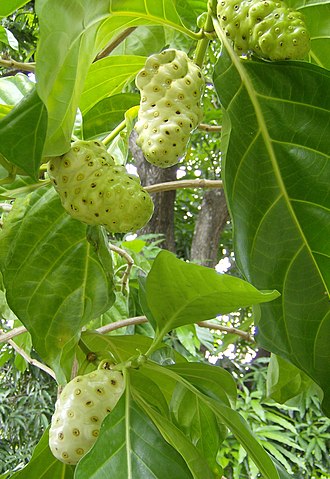
Morinda citrifolia is a fruit-bearing tree in the coffee family, Rubiaceae. There are over 100 names for this fruit across different regions, including great morinda, Indian mulberry, noni, beach mulberry, vomit fruit, awl tree, and cheesefruit.