One soybean gene lets breeders boost oil or protein without losing yield
Tian Y, Zhang H, Zheng Z, Li D, Li J
Crop Improvement
If you've ever wondered why tofu soybeans and cooking-oil soybeans are different crops, this gene explains the biological tug-of-war behind that split and hints at breeding beans that do both.
Soybeans face an old tradeoff: more oil in the seed usually means less protein, and vice versa, which makes it hard to breed a bean that's great at both. Researchers found a gene called GmSOP5 that acts like a dial for this tradeoff, and they discovered that ancient farmers had already nudged this gene during domestication to get bigger, oilier seeds. By fine-tuning the gene in test plots, the team got soybeans with more protein or more oil without shrinking the harvest, because the plant quietly adjusted its own growth pattern to make up the difference.
Key Findings
A genome-wide association study of 429 soybean accessions identified GmSOP5, a kinesin-encoding gene, as a key regulator of seed oil and protein content.
GmSOP5 positively affects seed oil content and 100-seed weight while negatively affecting seed protein content; the domestication-favored GmSOP5H1 allele is nearly fixed in cultivated soybean.
Field trials showed that both knockout (higher protein) and overexpression (higher oil) lines maintained yield comparable to wild-type plants because changes in plant architecture offset changes in seed weight.
chevron_right Technical Summary
Scientists found a single soybean gene that controls the tradeoff between seed oil and protein, and tweaking it doesn't hurt overall yield because the plant compensates elsewhere. This could let breeders boost seed quality without the usual cost to harvest size.
Abstract Preview
Original paper
Natural variation in GmSOP5 regulates seed oil and protein content during soybean domestication.
Seed oil content, protein content, and yield are agronomically important, correlated traits that determine the economic value of soybean (Glycine max). However, improving seed quality and yield sim...
open_in_new Read full abstractAbstract copyright held by the original publisher.
Species Mentioned
Was this useful?
Want to tell us more? (optional)
Thanks for the note!
Something went wrong — please try again.
Too many submissions. Try again in an hour.
Gene editing removes 97% of celiac-triggering proteins from bread wheat
It could mean that people with celiac disease — roughly 1 in 100 worldwide — may one day safely eat bread made from real wheat, without sacrificing the taste...
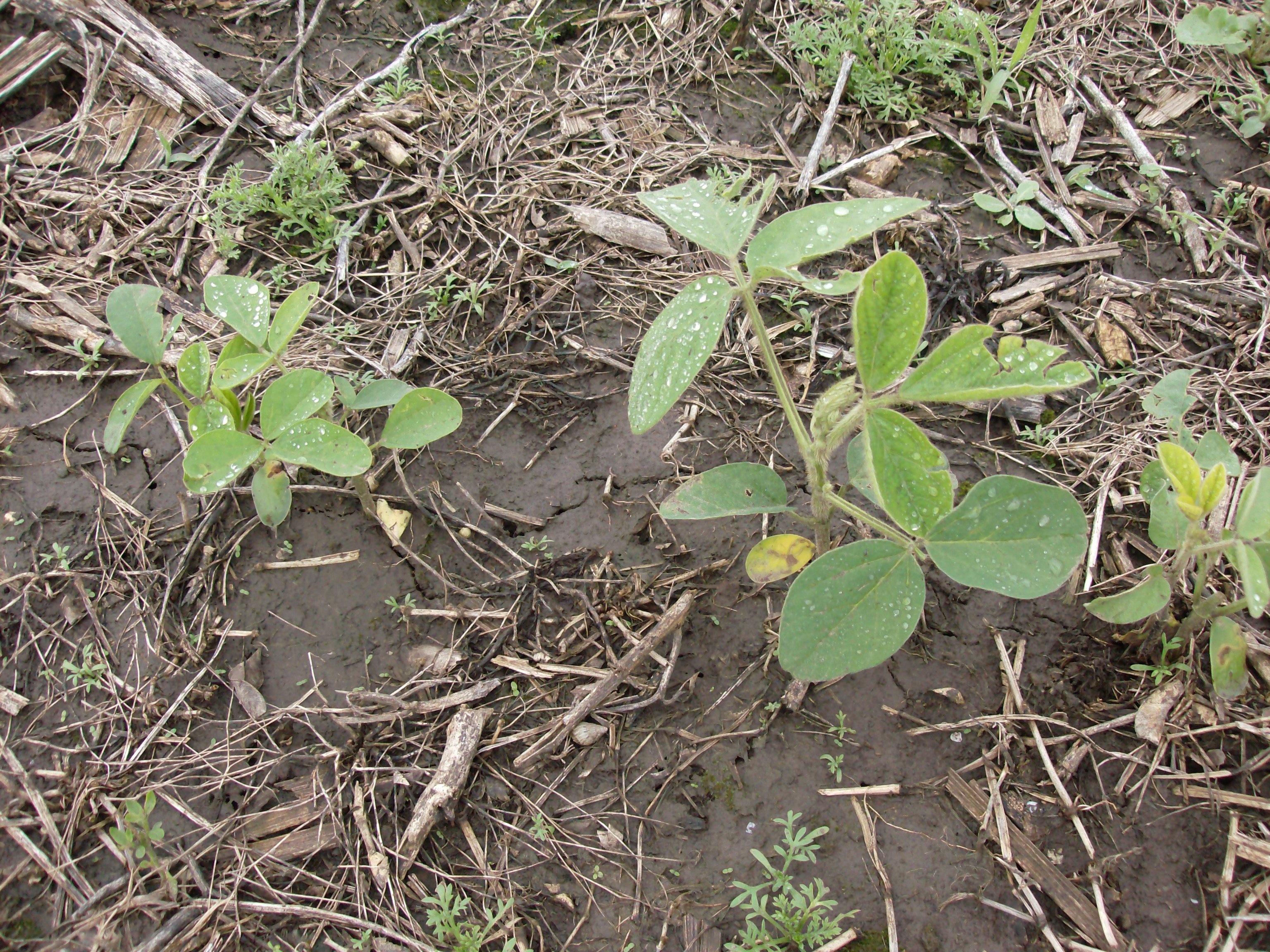
The soybean, soy bean, or soya bean is a species of legume native to East Asia, widely grown for its edible bean. Soy is a staple crop, the world's most grown legume, and an important animal feed.