Invasive vine spotted spreading in Westchester County backyard
iNaturalist: o_liv_id
Invasive Species
If you garden or hike near Harrison, NY, this barbed vine can blanket shrubs and young trees in a single season, choking out the natives you're trying to grow.
Someone spotted mile-a-minute weed, a thorny vine that grows so fast it can smother other plants in weeks, along a road in Harrison, New York. The sighting was verified by other naturalists, which means it counts as solid data for tracking where this invasive plant is showing up. Knowing exactly where it's been seen helps neighbors and land managers catch new patches early, before they take over a hillside or garden bed.
Key Findings
Observation was verified as 'research-grade' on iNaturalist, meaning the ID was confirmed by the community.
Location recorded: Anderson Hill Rd, Harrison, NY, providing a precise data point for range mapping.
Mile-a-minute weed (Persicaria perfoliata) is a known fast-growing invasive vine that can overtop native vegetation.
chevron_right Technical Summary
A confirmed sighting of mile-a-minute weed, an aggressive invasive vine, was logged in Harrison, NY, helping track how far this fast-spreading plant has moved into the area.
Abstract Preview
Original paper
mile-a-minute weed (Persicaria perfoliata) observed in Anderson Hill Rd, Harrison, NY, US
Research-grade observation of mile-a-minute weed in Anderson Hill Rd, Harrison, NY, US.
open_in_new Read full abstractAbstract copyright held by the original publisher.
Species Mentioned

Was this useful?
Want to tell us more? (optional)
Thanks for the note!
Something went wrong — please try again.
Too many submissions. Try again in an hour.
Rapid disruption of pollination function by the invasive plant Impatiens glan...
That pretty pink-flowered plant spreading along your local riverbank or woodland edge could be quietly starving native wildflowers of the bee visits they nee...
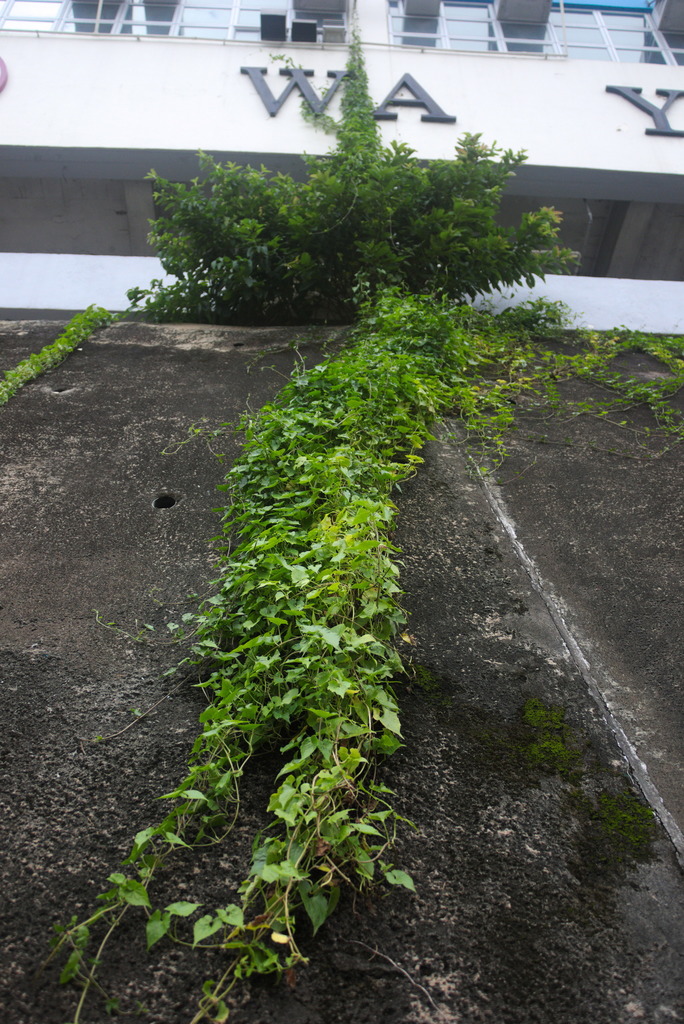
Photo (c) portioid, taken in Kowloon City, Hong Kong. CC BY via iNaturalist.
Urban ecology is the scientific study of living organisms and their interactions within densely developed environments dominated by buildings, paved surfaces, and human infrastructure. For plant science, this field is essential because it investigates how plants adapt and survive in fragmented
arrow_forward Explore topic