A toxic lily's compound may reverse asthma's lung scarring
Feng R, Bai Q, Ding N, You F, Wang C
Medicinal Plants
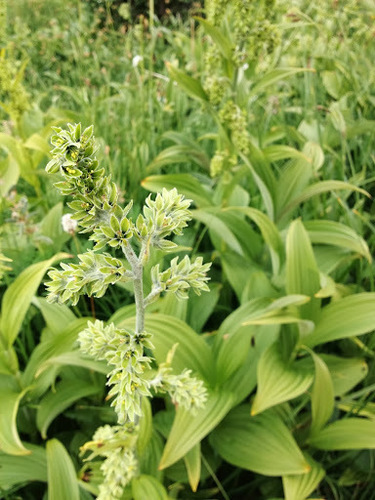
The corn lily, a striking but poisonous woodland plant many hikers spot and avoid, produces a molecule that's turning out to have precise medicinal effects on human disease pathways, another reminder that even the most feared native plants are worth pausing over rather than pulling out of the story.
Veratramine is a natural compound found in Veratrum plants, sometimes called corn lily or false hellebore, plants long known to be toxic if eaten but also studied for medicinal potential. Researchers found that in mice with asthma, this compound blocks a specific chain of cellular events that causes airways to stiffen and scar over time. By interrupting one protein's activity, the compound reduced lung inflammation, mucus-producing cell overgrowth, and scar tissue buildup, suggesting the plant's chemistry could inspire new treatments for chronic asthma.
Key Findings
Veratramine dose-dependently reduced HDM-induced airway inflammation, goblet cell metaplasia, and subepithelial collagen deposition in a mouse asthma model
The compound binds and downregulates PKM2, lowering pulmonary lactate levels and blocking lactylation of CREB1 at residue K122
Blocking K122 lactylation or restoring the SMAD7 gene reversed TGF-beta-driven airway remodelling and epithelial-mesenchymal transition
chevron_right Technical Summary
A plant compound from corn lily plants blocks a chain reaction in lung cells that causes the airway scarring and stiffening seen in chronic asthma, offering a potential new lead for anti-scarring asthma drugs in mice.
Abstract Preview
Original paper
Veratramine alleviates asthmatic airway remodelling via the PKM2/CREB1 lactylation/SMAD7 axis.
Veratramine is a natural steroidal alkaloid derived from plants of the genus Veratrum that exhibits anti-inflammatory potential. However, its pharmacological mechanisms and direct molecular targets...
open_in_new Read full abstractAbstract copyright held by the original publisher.
Species Mentioned
Was this useful?
Want to tell us more? (optional)
Thanks for the note!
Something went wrong — please try again.
Too many submissions. Try again in an hour.
Nanoplastics interfere with plant-mycorrhizal communication and limit plant growth.
Microplastics breaking down in your garden soil are quietly strangling the beneficial fungi that help your vegetables absorb phosphorus and other nutrients, ...
Ethnobotany is the interdisciplinary study of how humans use, manage, and perceive plants across different cultures, drawing on knowledge from botany, anthropology, ecology, and chemistry. It matters for plant science because it documents traditional ecological knowledge that can reveal previously
arrow_forward Explore topic