Soybean breeding's AI tools exist but don't talk to each other
Crop Improvement
The tofu, edamame, and cooking oil in your kitchen all trace back to soybean varieties bred through a slow trial-and-error process that this research says could be dramatically sped up if scientists just connected the data they already have.
Breeders now have powerful tools to read a soybean plant's DNA, photograph its traits automatically, and use AI to predict how it'll perform, but these tools mostly work in isolation from each other. This paper argues that the fix isn't inventing new technology, it's building routine feedback loops so field results retrain the models and model predictions actually guide which plants get crossed next. The authors say success should eventually be measured not by how accurate a prediction is, but by how much real genetic improvement it delivers in the field.
Key Findings
The main bottleneck in soybean smart breeding is disconnection between data, algorithms, and field applications, not a lack of any single technology
Five key challenge areas identified: data, algorithms, applications, platforms, and governance
Recommends shifting evaluation from model prediction accuracy to realized genetic gain in the field
chevron_right Technical Summary
This review looks at why soybean breeding hasn't gone fully 'smart' yet, even with all the DNA sequencing, imaging and AI tools now available: the real bottleneck is that data, algorithms and field applications aren't talking to each other. Fixing those connections could speed up development of higher-yielding soybean varieties, which matters for global food and feed supply.
Abstract Preview
Original paper
Research progress and prospect of soybean smart breeding based on multilayer collaboration of data, algorithms and applications
Soybean [Glycine max (L.) Merr.] is a strategic crop with grain, oilseed, and feed value, yet its improvement has long been constrained by slow yield gains and a narrow genetic base. For China, the...
open_in_new Read full abstractAbstract copyright held by the original publisher.
Species Mentioned
Was this useful?
Want to tell us more? (optional)
Thanks for the note!
Something went wrong — please try again.
Too many submissions. Try again in an hour.
Targeted knockout of a host peroxisomal peptidase confers field resistance to...
The corn in your grocery store and the staple food keeping millions of East African families fed is under serious threat from a viral disease that can wipe o...
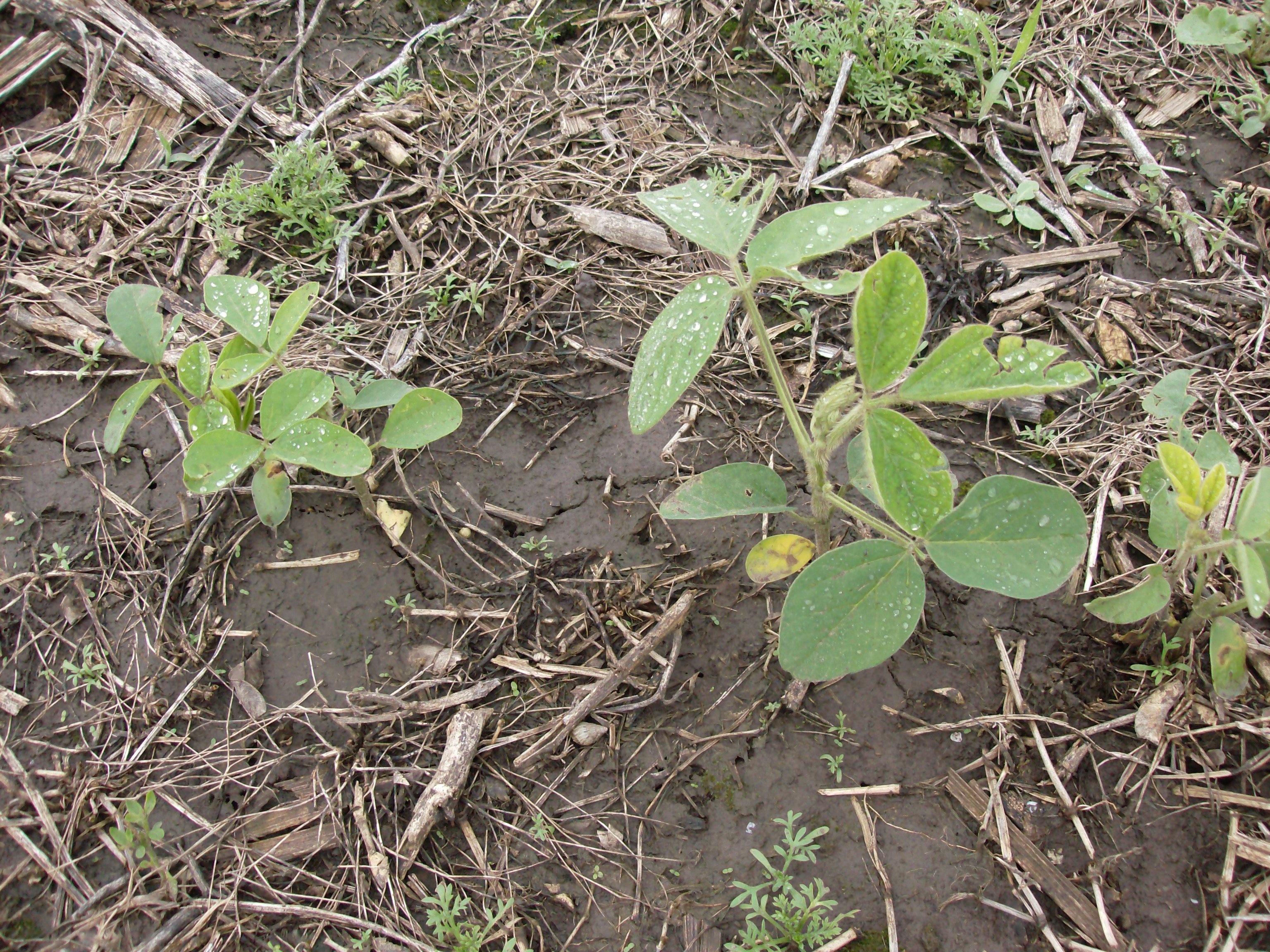
The soybean, soy bean, or soya bean is a species of legume native to East Asia, widely grown for its edible bean. Soy is a staple crop, the world's most grown legume, and an important animal feed.