Bushier soybean plants make pest-control wasps far less effective
Fernandes NGF, Cardoso EC, Ayusso JPB, Gontijo LM
Crop Improvement
If you release beneficial insects in a vegetable patch or orchard, this shows the plant's own shape and leafiness can quietly sabotage the bugs you're counting on to do the work.
Farmers release tiny parasitic wasps to attack the eggs of a damaging stink bug in soybean fields, but this study found the wasps get much worse at their job as plants grow taller, leafier, and more tangled. On simple, sparse plants the wasps found and parasitized about twice as many pest eggs as they did on bushy, complex ones. That means timing these insect releases to match how much the crop has grown could make pest control programs far more effective.
Key Findings
Parasitism of stink bug eggs by Telenomus podisi wasps was reduced by roughly half on structurally complex soybean plants compared to simpler ones
Plant height, leaf number, total leaf surface area, and an architectural complexity index were all significant predictors of parasitism success
Population growth modeling showed the pest reached its economic action threshold faster on complex plants even with the same number of wasps released
chevron_right Technical Summary
A tiny wasp used to control a major soybean pest struggles to find and parasitize pest eggs on bushier, more complex plants, cutting its effectiveness nearly in half compared to simpler-structured plants.
Abstract Preview
Original paper
Soybean plant architecture influences the capacity of Telenomus podisi to parasitize Euschistus heros eggs: implications for field releases.
Plant architectural complexity can strongly influence the foraging behavior and abundance of arthropods. Increased structural complexity has been shown to reduce the ability of natural enemies to l...
open_in_new Read full abstractAbstract copyright held by the original publisher.
Species Mentioned
Was this useful?
Want to tell us more? (optional)
Thanks for the note!
Something went wrong — please try again.
Too many submissions. Try again in an hour.
Targeted knockout of a host peroxisomal peptidase confers field resistance to...
The corn in your grocery store and the staple food keeping millions of East African families fed is under serious threat from a viral disease that can wipe o...
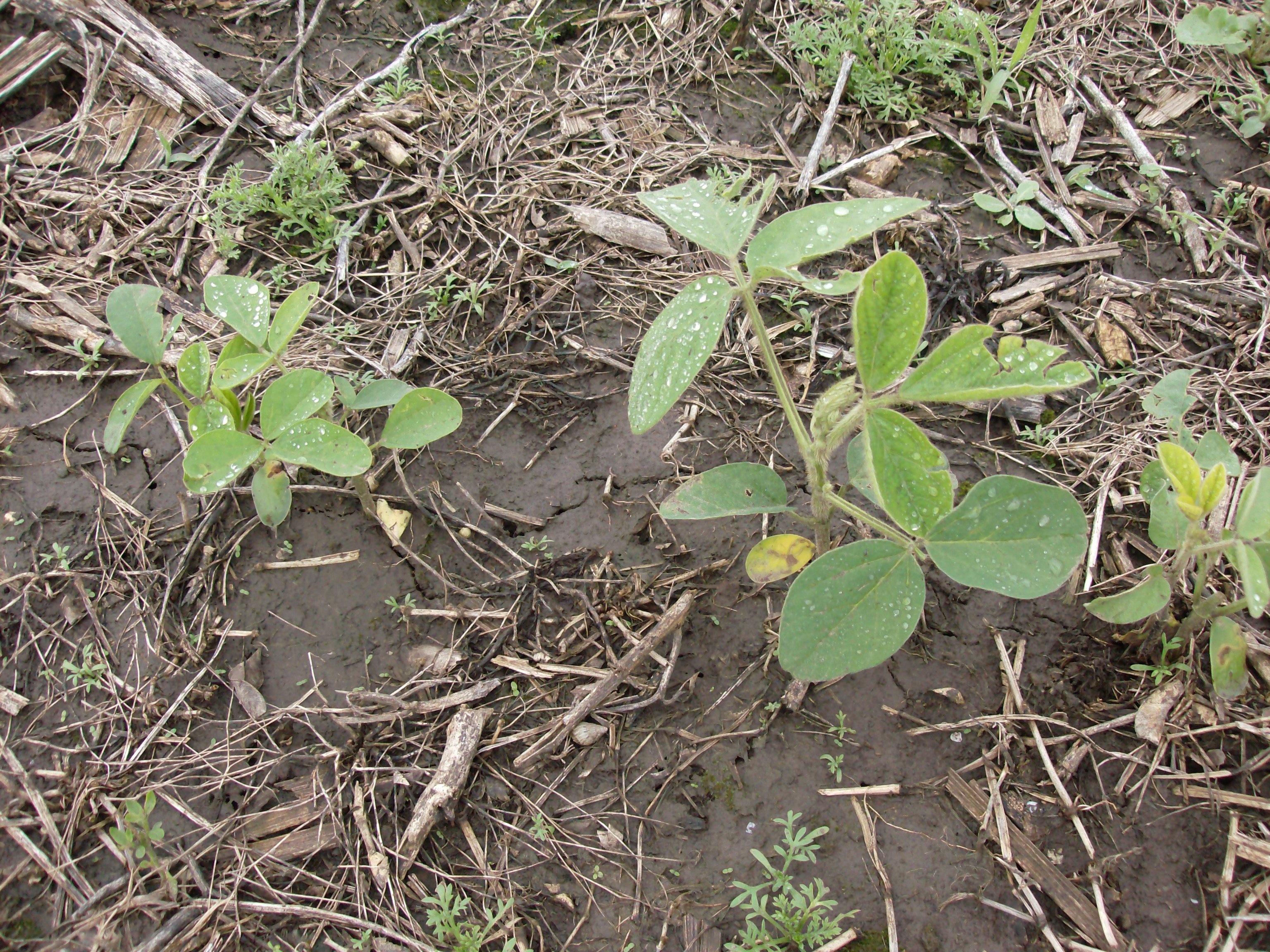
The soybean, soy bean, or soya bean is a species of legume native to East Asia, widely grown for its edible bean. Soy is a staple crop, the world's most grown legume, and an important animal feed.