Root bacteria help soybeans block toxic metals from spreading
Li X, Liu H, Jia T, Liu X, Li Y
Phytoremediation
If you grow vegetables in soil with any history of industrial contamination or old paint, the same root-microbe partnership these researchers used could someday help keep heavy metals out of the parts of your plants you actually eat.
Soybean plants team up with helpful bacteria in the soil called rhizobia, and researchers found that certain metal-tolerant strains of these bacteria can trap cadmium and copper in the roots so less of it travels up into the stems, leaves, and pods. The bacteria also made the surrounding soil healthier by boosting nutrients and organic matter, and they built stronger microbial communities both around the roots and inside the plant's root nodules. It's a promising, low-tech way to grow safer food in soil that has low levels of heavy metal contamination.
Key Findings
Combined rhizobia treatment (RC) maximized reduction in soybean cadmium accumulation by boosting root sequestration and limiting translocation to stems and pods
Rhizobia inoculation increased soil available nutrients, organic matter, and nitrogenase activity while decreasing bioavailable Cd and Cu in soil
RB strain increased microbial transfer from rhizosphere to root nodules to 85.2%, with positive microbial network associations accounting for 86.56% of links
chevron_right Technical Summary
Scientists found that adding beneficial soil bacteria to soybean roots helps the plants lock heavy metals like cadmium and copper away in their roots instead of pulling them up into the beans and stems, while also boosting soil health and plant growth.
Abstract Preview
Original paper
Rhizobia-mediated soybean rhizosphere and nodule endophytic microorganisms reduce bioavailability of Cd and Cu in soil.
Low-level bioavailable cadmium (Cd) and copper (Cu) in agricultural soils poses a severe threat to soil health and food safety; however, the mechanisms by which indigenous Cu-Cd tolerant rhizobia m...
open_in_new Read full abstractAbstract copyright held by the original publisher.
Species Mentioned
Was this useful?
Want to tell us more? (optional)
Thanks for the note!
Something went wrong — please try again.
Too many submissions. Try again in an hour.
Targeted knockout of a host peroxisomal peptidase confers field resistance to...
The corn in your grocery store and the staple food keeping millions of East African families fed is under serious threat from a viral disease that can wipe o...
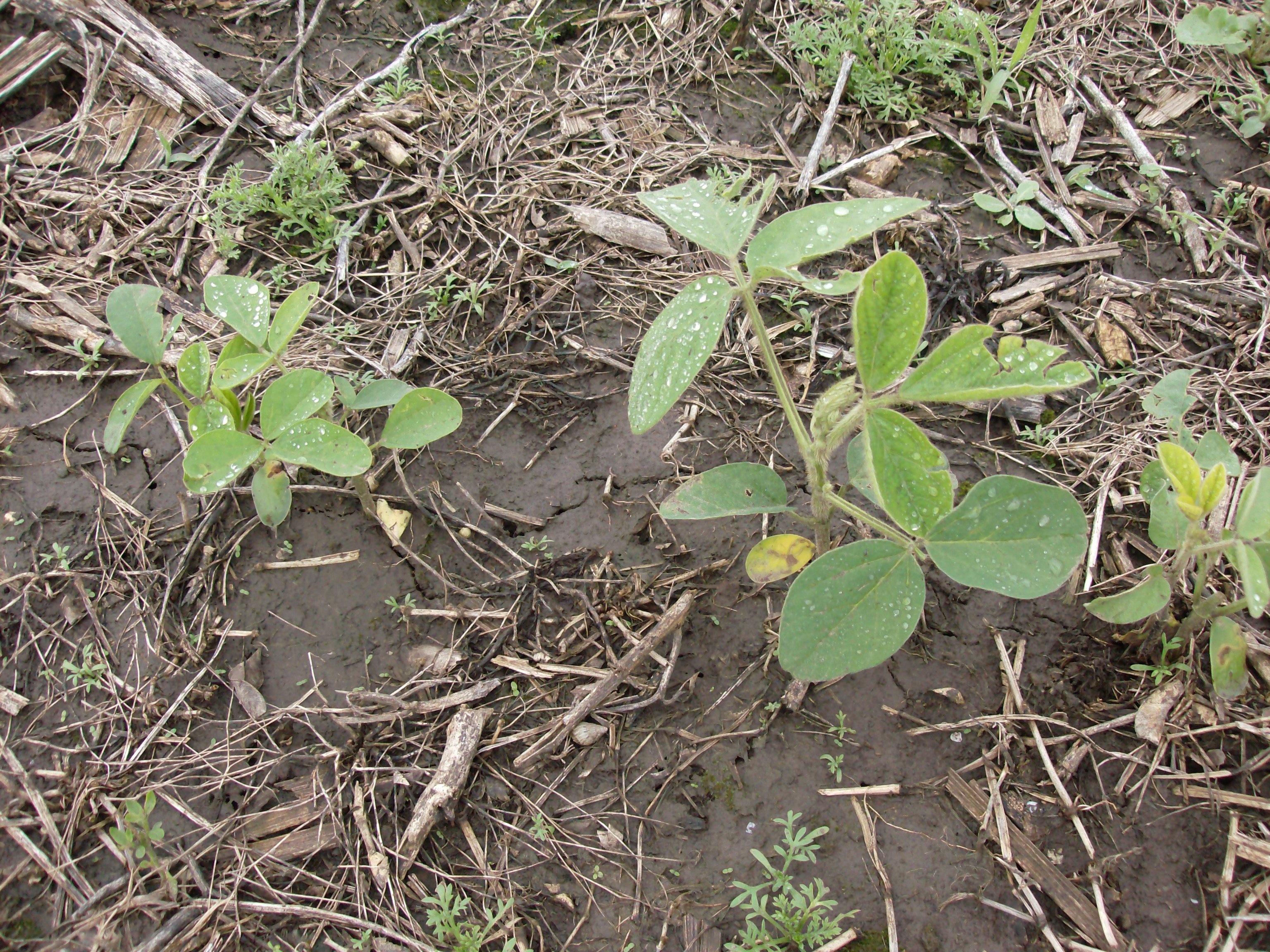
The soybean, soy bean, or soya bean is a species of legume native to East Asia, widely grown for its edible bean. Soy is a staple crop, the world's most grown legume, and an important animal feed.