Two competing genes decide how long your cucumber grows
Zhang T, Han N, Li P, Zhang J, Zhang Q
Crispr
The next time you pick between a stubby pickling cucumber and a long slicing one at the farmers market, you're seeing the output of a genetic tug-of-war scientists just mapped for the first time.
Cucumber shape, whether round or long, comes down to a battle between two genes inside the fruit. One gene called CsSUN pushes the fruit to grow longer, while a calcium-sensing partner gene called CsCaM11 pulls in the opposite direction and shortens it. When researchers used gene editing to switch off CsSUN, cucumbers shrank by nearly half; when they switched off CsCaM11 instead, cucumbers grew almost 18% longer.
Key Findings
CsSUN carries a 161 bp deletion causing a frameshift mutation in round-fruited cucumber lines; CRISPR/Cas9 knockout of CsSUN reduced fruit length by 38-46%
Calcium ion levels were 15.2% higher in round-fruit (sun161) lines, linking calcium signaling to fruit shape
CsCaM11 physically interacts with and is epistatic to CsSUN: overexpressing CsCaM11 shortened fruit 5-7.5%, while knocking it out lengthened fruit by 17.9%
chevron_right Technical Summary
Scientists identified two genes that work against each other to control how long cucumbers grow, and editing either one can make cucumbers up to 46% shorter or nearly 18% longer. The discovery explains why some cucumber varieties are round while others are long, and offers a genetic tool for breeding cucumbers with the exact shape shoppers want.
Abstract Preview
Original paper
IQ domain protein CsSUN interacts with the Calmodulin protein CsCaM11 to regulate fruit length of cucumber.
Fruit length is an important fruit quality which greatly influences the preference of consumers, but the underlying genetic mechanism regulating the fruit length in cucumber remains not very clear....
open_in_new Read full abstractAbstract copyright held by the original publisher.
Species Mentioned
Was this useful?
Want to tell us more? (optional)
Thanks for the note!
Something went wrong — please try again.
Too many submissions. Try again in an hour.
Targeted knockout of a host peroxisomal peptidase confers field resistance to...
The corn in your grocery store and the staple food keeping millions of East African families fed is under serious threat from a viral disease that can wipe o...
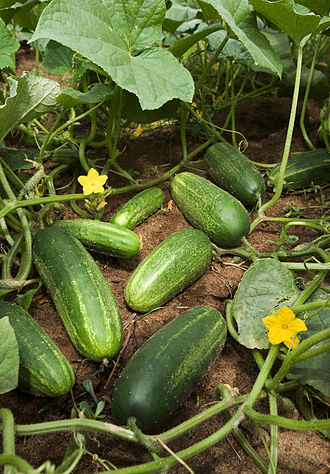
The cucumber is a widely-cultivated creeping vine plant in the family Cucurbitaceae that bears cylindrical to spherical fruits, used as culinary vegetables. Considered an annual plant, there are three main types of cucumber—slicing, pickling, and seedless.