Two soybean proteins team up to build seed oil
Li H, Li T, Xu X, Cui J, Chen X
Crop Improvement
The tofu, edamame, and cooking oil in your kitchen all trace back to how efficiently a soybean seed packs fat versus protein, and this discovery hands breeders a genetic dial to shift that balance.
Soybean seeds have to decide how much of their stored energy goes into fat versus protein, and a protein called FA9 turns out to be a key player in that decision. Researchers mapped gene activity in individual seed cells and found that FA9 grabs a partner protein called VAP to build tiny oil-storage bubbles inside cells. When they knocked out either gene, seeds made less fat and more protein instead, showing this partnership is a tunable switch for seed oil content.
Key Findings
Single-cell and spatial RNA sequencing of soybean seeds identified 26 transcriptional clusters and mapped where FA9 is active, showing that losing FA9 rewires lipid and storage-protein gene programs
FA9 binds the VAP protein at the endoplasmic reticulum through an N-terminal FFAT motif, and knocking out VAP (or both FA9 and VAP together) raised seed protein content while lowering total fatty acid content
Overexpressing FA9 and VAP together in tobacco leaves boosted lipid droplet formation, confirming the pair actively drives oil droplet assembly and lipid transport
chevron_right Technical Summary
Scientists found a pair of proteins in soybean seeds that work together to pack away fat, and turning off either one shifts seeds toward making more protein and less oil. The discovery could let breeders fine-tune the balance of oil and protein in soybeans, one of the world's biggest edible oil and protein crops.
Abstract Preview
Original paper
Single-Cell Transcriptomics Reveals the FA9-VAP Module Regulating Fatty Acid Accumulation in Soybean Seeds.
As a major commercial legume crop, soybean ranks among the world's most significant sources of edible oil and plant protein. We previously identified a SEIPIN homologue (FA9) at the fatty acid 9 lo...
open_in_new Read full abstractAbstract copyright held by the original publisher.
Species Mentioned

Was this useful?
Want to tell us more? (optional)
Thanks for the note!
Something went wrong — please try again.
Too many submissions. Try again in an hour.
Targeted knockout of a host peroxisomal peptidase confers field resistance to...
The corn in your grocery store and the staple food keeping millions of East African families fed is under serious threat from a viral disease that can wipe o...
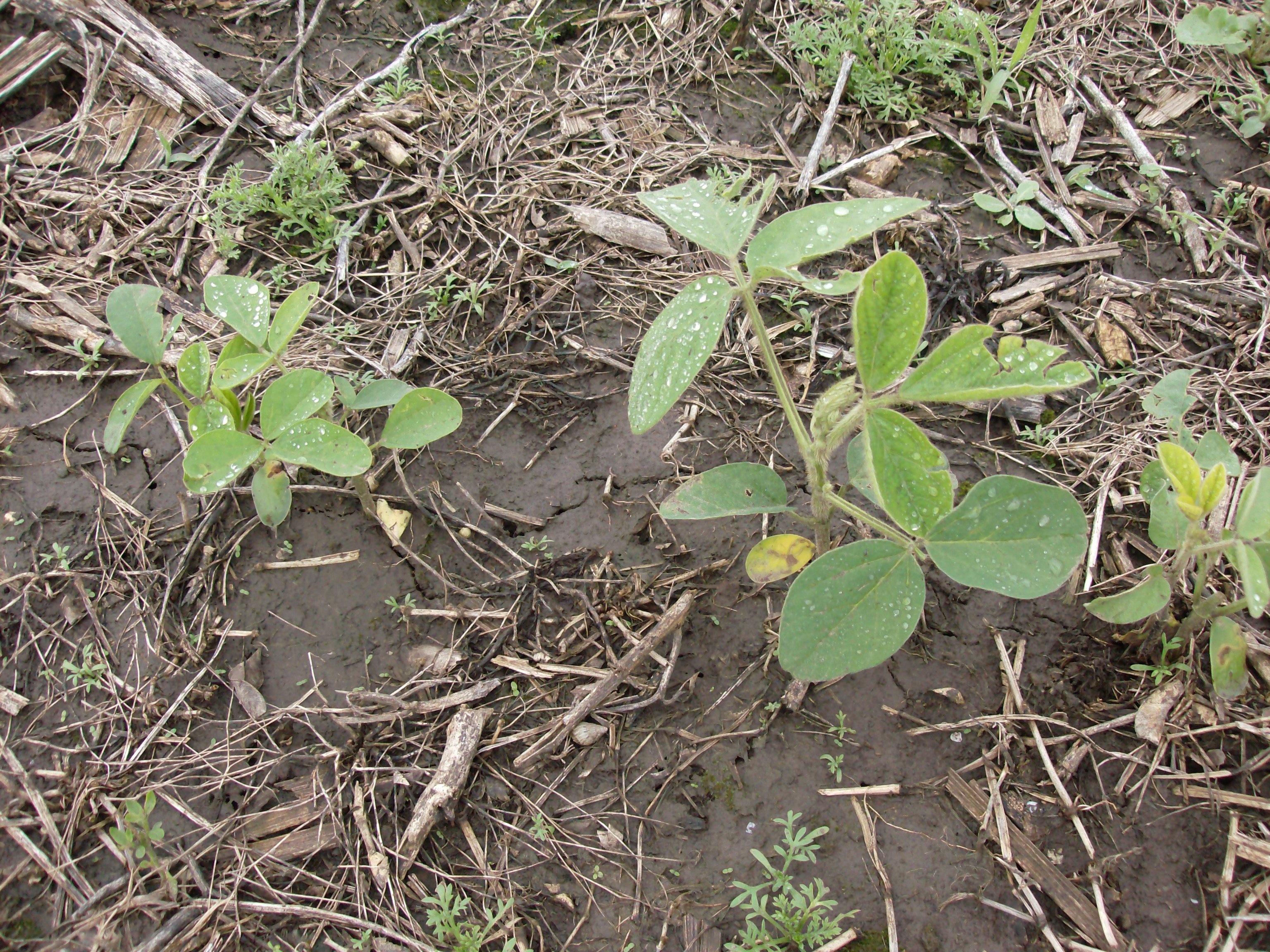
The soybean, soy bean, or soya bean is a species of legume native to East Asia, widely grown for its edible bean. Soy is a staple crop, the world's most grown legume, and an important animal feed.