Noni plant confirmed growing wild near historic Hawaiian coastal site
iNaturalist: kbeisner
Ethnobotany
Noni has been used by Hawaiians for over a thousand years as medicine, dye, and food, so spotting it thriving near Hōnaunau, a place of deep cultural significance, helps track how this canoe plant persists across the islands.
Someone out walking near Hōnaunau on the Big Island spotted a noni plant and logged it on iNaturalist, where other naturalists confirmed the identification. Noni is one of the 'canoe plants' Polynesian voyagers brought with them to Hawaiʻi centuries ago, and it's still valued today for its pungent fruit, used in traditional medicine and juices.
Key Findings
Observation was verified as 'research-grade' through community identification consensus
Location documented: Keala O Keawe Rd, Hōnaunau-Nāpōʻopoʻo, Hawaiʻi
Confirms presence of Morinda citrifolia (noni) in this coastal Hawaiʻi Island area
chevron_right Technical Summary
A citizen scientist confirmed a noni plant growing along a road near Hōnaunau on Hawaiʻi Island, adding a verified data point for this culturally important Polynesian species.
Abstract Preview
Original paper
Noni (Morinda citrifolia) observed in Keala O Keawe Rd, Hōnaunau-Nāpōʻopoʻo, HI, US
Research-grade observation of Noni in Keala O Keawe Rd, Hōnaunau-Nāpōʻopoʻo, HI, US.
open_in_new Read full abstractAbstract copyright held by the original publisher.
Species Mentioned
Was this useful?
Want to tell us more? (optional)
Thanks for the note!
Something went wrong — please try again.
Too many submissions. Try again in an hour.
Rapid disruption of pollination function by the invasive plant Impatiens glan...
That pretty pink-flowered plant spreading along your local riverbank or woodland edge could be quietly starving native wildflowers of the bee visits they nee...
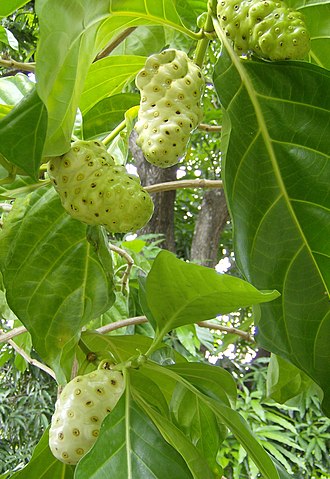
Morinda citrifolia is a fruit-bearing tree in the coffee family, Rubiaceae. There are over 100 names for this fruit across different regions, including great morinda, Indian mulberry, noni, beach mulberry, vomit fruit, awl tree, and cheesefruit.