New method maps gene activity cell-by-cell in plant tissue
Li Y, Amézquita EJ, Shrestha A, Tennant S, Libault M
Crop Improvement
The soybean nodules that fix nitrogen in your garden's bean roots, the rice paddies feeding half the planet, and the wheat heads forming this season all rely on cellular processes that scientists can now map with far more precision, thanks to this workflow.
Imagine trying to figure out which genes are switched on in each individual cell of a plant, using a microscope image where cell walls are thick, cells have huge water-filled sacs, and everything glows a little on its own. That's the challenge researchers faced when using powerful gene-mapping tools on plants, since these tools were originally built for animal cells. This team built a practical workflow, tested on soybean nodules, soybean seeds, rice roots, and wheat flowers, that correctly draws the boundaries of each plant cell so scientists can trust which genes belong to which cell.
Key Findings
Nucleus-only segmentation with fixed-distance expansion underestimates cell area and morphology, reducing the number of transcripts assignable per cell
The workflow combines fluorescence-based candidate cell masks with two napari plugins for selection and correction, plus optional Baysor-based transcript-informed refinement
The method was validated across four plant systems (soybean nodule, soybean seed, rice root, wheat inflorescence) and multiple spatial transcriptomics platforms, using metrics like assignment yield and per-cell transcript/gene distributions
chevron_right Technical Summary
Scientists developed a step-by-step method to accurately map gene activity to individual plant cells in tissue samples, solving a technical problem caused by cell walls and natural plant glow that made this kind of analysis unreliable before.
Abstract Preview
Original paper
Optimizing cell segmentation and downstream processing for plant probe-based spatial transcriptomics.
Probe-based spatial transcriptomics platforms use predefined oligonucleotide panels to detect selected RNAs in tissue sections while preserving transcript spatial coordinates. Accurate cell segment...
open_in_new Read full abstractAbstract copyright held by the original publisher.


Was this useful?
Want to tell us more? (optional)
Thanks for the note!
Something went wrong — please try again.
Too many submissions. Try again in an hour.
Targeted knockout of a host peroxisomal peptidase confers field resistance to...
The corn in your grocery store and the staple food keeping millions of East African families fed is under serious threat from a viral disease that can wipe o...
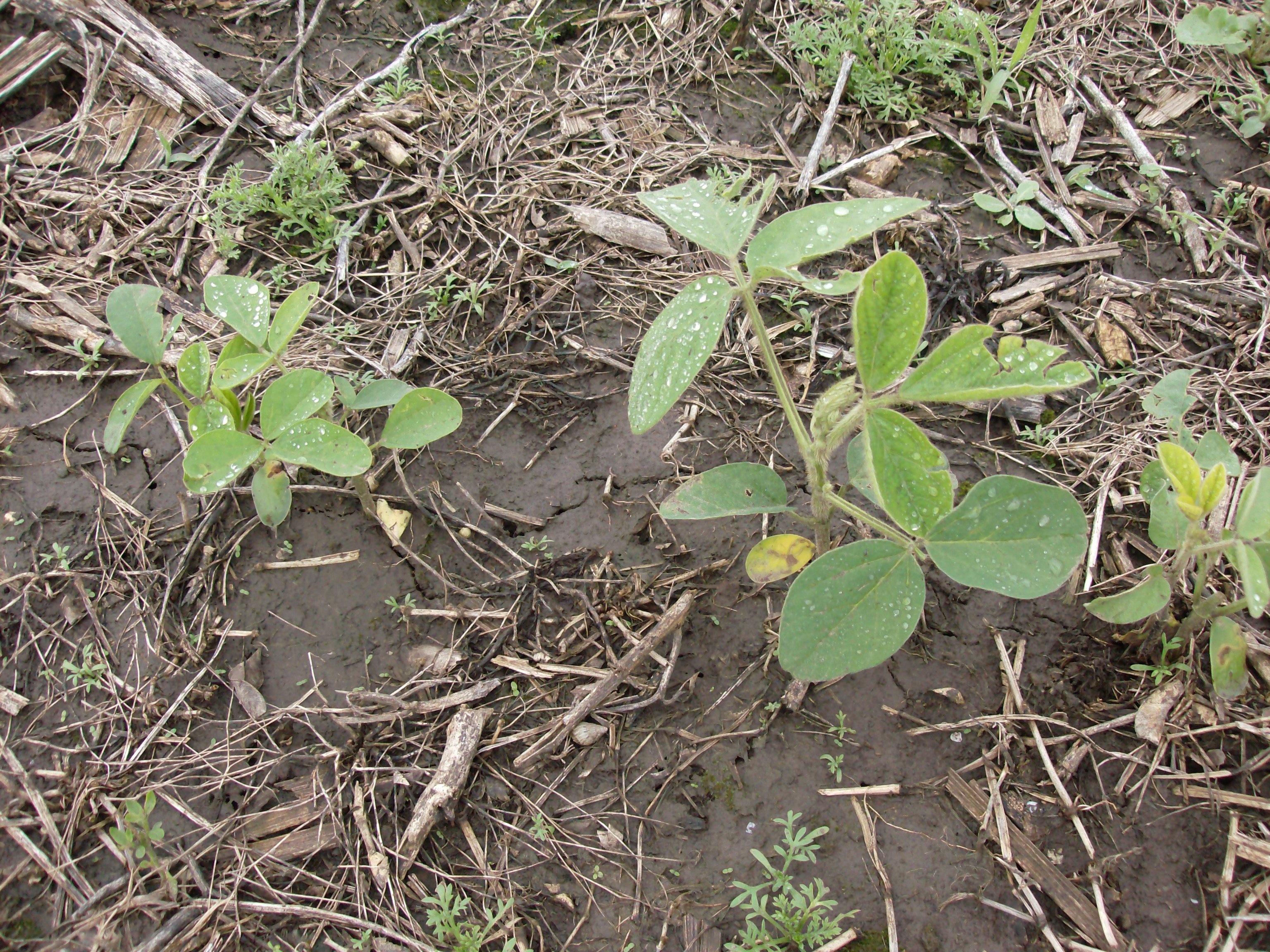
The soybean, soy bean, or soya bean is a species of legume native to East Asia, widely grown for its edible bean. Soy is a staple crop, the world's most grown legume, and an important animal feed.