Wild soybean gene helps crops survive salty soil
Jadoon S, Zhang Z, Tan M, Zhang S, Zhang D
Crop Improvement
If you've ever watched a garden bed struggle after road salt runoff or coastal flooding, this points to how a single gene borrowed from a tough wild relative could one day help food crops shrug off the same salty soil that kills ordinary plants.
There's a wild, weedy cousin of soybean that can survive salt water strong enough to kill 95% of regular soybean plants. Researchers found the gene behind that toughness, GtCOBL9, and put it into farmed soybean, where it thickened root cell walls, helped roots hold onto potassium while pushing out excess sodium, and lowered stress damage inside the plant. The soybeans with this gene handled salty conditions much better than normal ones.
Key Findings
Wild soybean relative Glycine tabacina survives 500 mM NaCl with 100% survival versus only 5% in cultivated soybean, and carries 44 COBL genes (nearly double the cultivated soybean count) due to tetraploidization and tandem duplication
Overexpressing the salt-induced gene GtCOBL9 in cultivated soybean increased root cellulose content, improved potassium retention and sodium efflux, and boosted seedling salt tolerance without changing total ion accumulation
GtCOBL9 interacts with ion-transport genes GmAKT1 and GmCAX1 and reduces reactive oxygen species by lowering GmRbohB2 and GmAOX1 expression while raising catalase activity and proline content
chevron_right Technical Summary
Scientists found a gene from a wild, salt-loving soybean relative that lets regular soybean plants survive much higher soil salt levels by strengthening root cell walls and fine-tuning how the plant handles salt and stress. This could help farmers grow soybeans on salty land that's currently unusable.
Abstract Preview
Original paper
The COBRA-Like9 from Glycine tabacina enhanced salt tolerance in cultivated soybean.
Soybean is one of the major sources of high-quality protein and oil and plays a crucial role in ensuring nutritional and economic security. The rapidly increasing population, soybean supply-demand ...
open_in_new Read full abstractAbstract copyright held by the original publisher.
Species Mentioned

Was this useful?
Want to tell us more? (optional)
Thanks for the note!
Something went wrong — please try again.
Too many submissions. Try again in an hour.
Targeted knockout of a host peroxisomal peptidase confers field resistance to...
The corn in your grocery store and the staple food keeping millions of East African families fed is under serious threat from a viral disease that can wipe o...
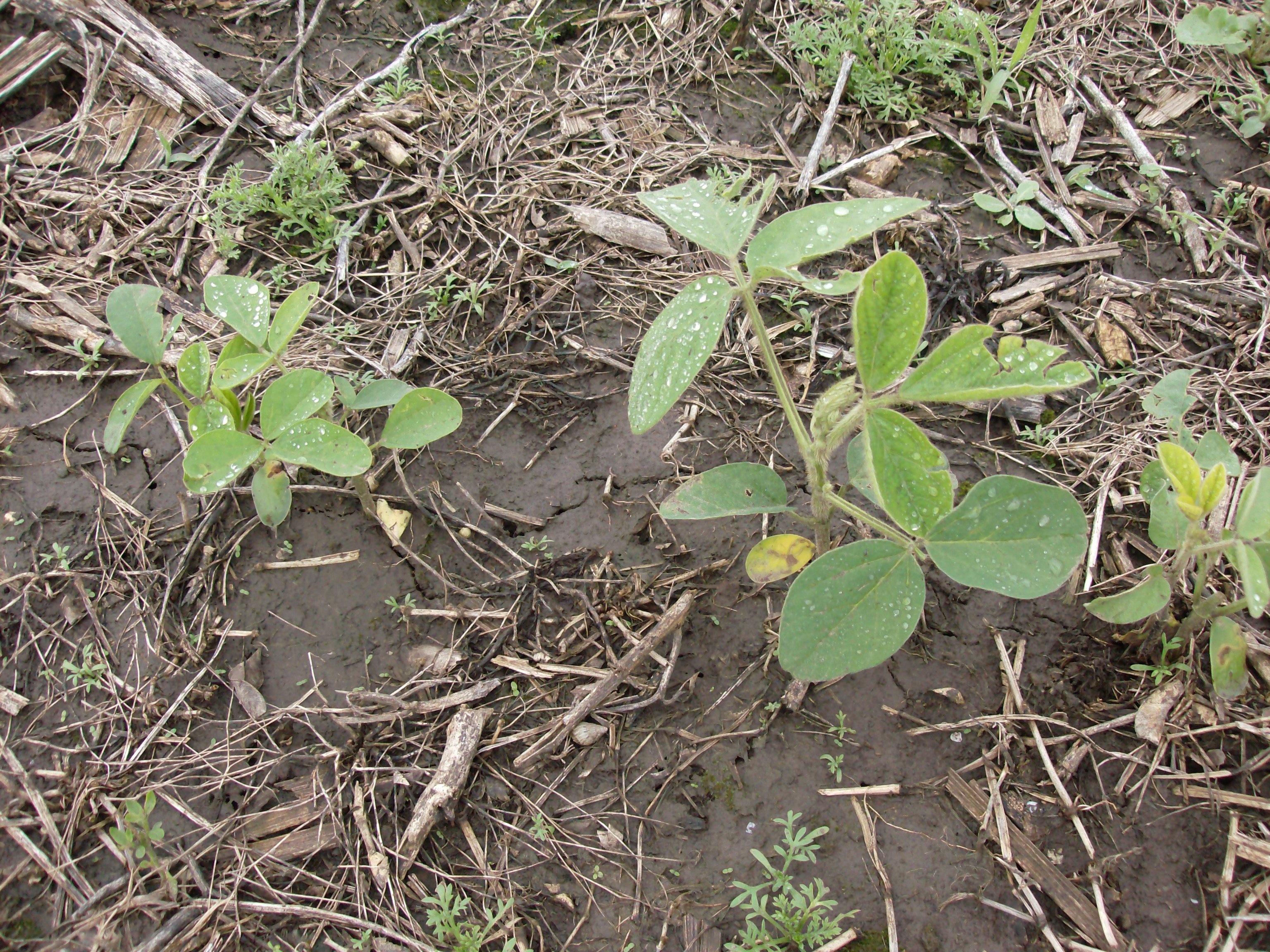
The soybean, soy bean, or soya bean is a species of legume native to East Asia, widely grown for its edible bean. Soy is a staple crop, the world's most grown legume, and an important animal feed.