Soybeans in shade recruit soil bacteria using sugar signals
Li D, Zhang C, Wang W, Ma L, Huang Y
Soil Health
If you've ever wondered why crops or garden plants crowded into shady spots underperform, this shows the problem starts underground, where dim light cuts off the sugary signals roots use to call in helpful bacteria.
Soybean plants grown in shade, like when crops are planted close together or intercropped, get less sunlight and end up weaker, with fewer of the root nodules they need to pull nitrogen from the air. Scientists discovered this happens partly because shaded plants stop sending out enough of two chemical signals, a sugar and an amino acid, that normally attract helpful bacteria to their roots. When researchers added those beneficial bacteria back to the soil, the shaded soybeans grew better, photosynthesized more effectively, and handled stress better, showing that healthy soil microbes can help plants cope with low light.
Key Findings
In field data, negative effects of low light dominated (>70%) of intercropped and densely planted legume systems, with light intensity being the top driver of yield loss.
Low light reduced soybean bacterial diversity and simplified root microbial networks, specifically depleting Rhizobiales and Burkholderiales bacteria linked to nodulation and growth.
Reintroducing isolated beneficial bacteria or a simplified synthetic community (SynCom) reversed low-light growth suppression by improving photosynthesis, redox balance, and gene expression in soybean roots.
chevron_right Technical Summary
Soybean plants grown in low light struggle to attract the beneficial soil bacteria that normally help their roots thrive, but scientists found that two plant-released chemicals, sugar and an amino acid called pipecolic acid, can recruit those helpful microbes back and restore healthy growth.
Abstract Preview
Original paper
Sucrose and pipecolic acid-mediated enrichment of rhizosphere Rhizobiale Burkholderiale bacteria improve soybean growth under low light conditions.
Low light (LL) is a major constraint on the productivity of intercropped legumes and dense planting crops, and also affects the root-associated microbial communities. However, how LL reshapes the r...
open_in_new Read full abstractAbstract copyright held by the original publisher.
Species Mentioned
Was this useful?
Want to tell us more? (optional)
Thanks for the note!
Something went wrong — please try again.
Too many submissions. Try again in an hour.
Targeted knockout of a host peroxisomal peptidase confers field resistance to...
The corn in your grocery store and the staple food keeping millions of East African families fed is under serious threat from a viral disease that can wipe o...
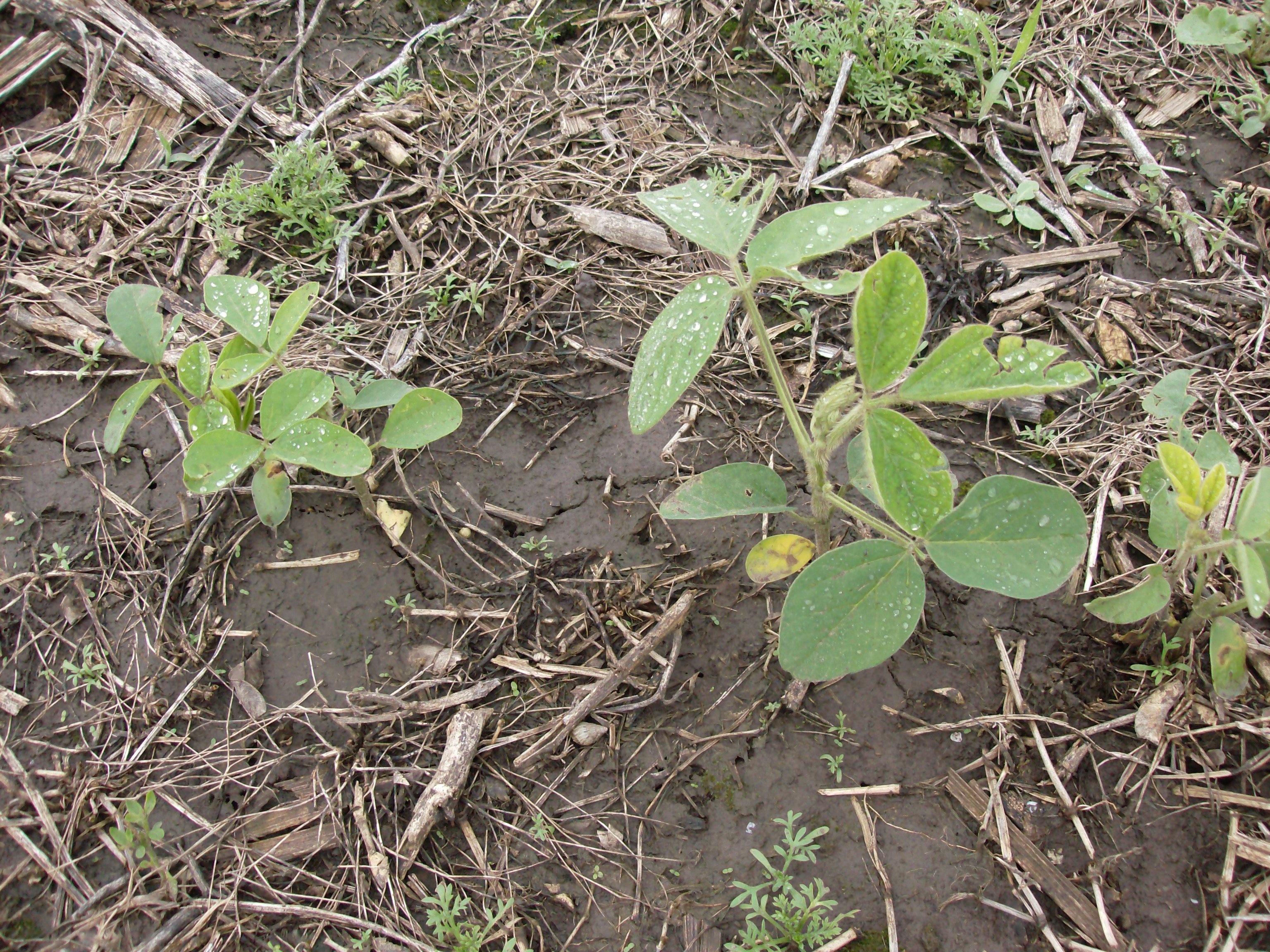
The soybean, soy bean, or soya bean is a species of legume native to East Asia, widely grown for its edible bean. Soy is a staple crop, the world's most grown legume, and an important animal feed.