Weeds struggle most when they resemble their crop competitor
Desai HS, Menalled FD, Shergill LS
Soil Health
The broadleaf weeds choking out your soybean patch aren't losing by accident: they're being crowded out precisely because they grow so much like soybeans do, a pattern that could help gardeners choose smarter companion plants or cover crops to naturally suppress unwanted growth.
Scientists grew four broadleaf weeds and two grassy weeds alongside soybeans and corn to see which crop suppressed them more. The broadleaf weeds struggled harder next to soybeans because both are broadleaf plants competing for the same resources in the same way, while the grassy weeds struggled more next to corn for the same reason. The more alike a weed and its crop neighbor were, the smaller and less fruitful the weed became, and the faster it dropped its seeds, a pattern that could help farmers and gardeners pick companion plants that naturally crowd out weeds.
Key Findings
Broadleaf (eudicot) weeds had 25% lower biomass and 11% lower fecundity when grown with soybean than with corn, reflecting their closer functional similarity to soybean.
Grass-like (monocot) weeds had 35% lower biomass and 13% lower fecundity when grown with corn than with soybean, reflecting their closer functional similarity to corn.
Greater functional similarity between a weed and its crop competitor was positively correlated with earlier seed shattering across all six weed species tested.
chevron_right Technical Summary
Weeds that look and grow more like the crop they're competing with end up smaller and less fertile, while weeds that closely resemble their crop rival also drop their seeds sooner, giving farmers a way to predict and manage them using plant traits instead of guesswork.
Abstract Preview
Original paper
Functional trait-mediated limiting similarity shapes weed biomass acquisition, fecundity, and reproductive phenology.
According to the theories of limiting similarity and life history trade-offs, (i) the probability of species coexistence decreases as interspecific similarity increases, and (ii) stronger competiti...
open_in_new Read full abstractAbstract copyright held by the original publisher.

Was this useful?
Want to tell us more? (optional)
Thanks for the note!
Something went wrong — please try again.
Too many submissions. Try again in an hour.
Gene editing removes 97% of celiac-triggering proteins from bread wheat
It could mean that people with celiac disease — roughly 1 in 100 worldwide — may one day safely eat bread made from real wheat, without sacrificing the taste...
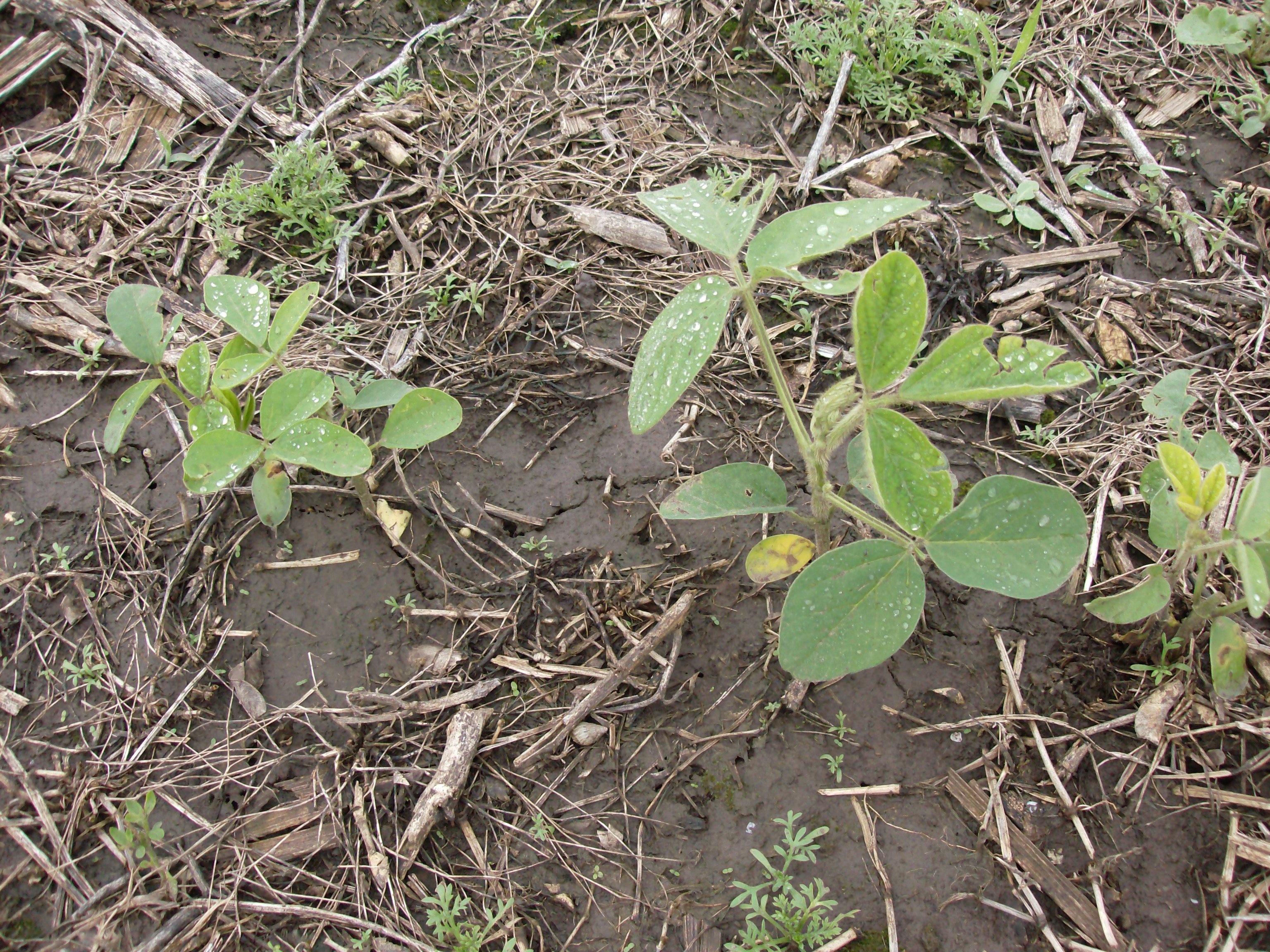
The soybean, soy bean, or soya bean is a species of legume native to East Asia, widely grown for its edible bean. Soy is a staple crop, the world's most grown legume, and an important animal feed.