Polynesian healers' plant remedies actually kill bacteria in lab tests
Titton D, Butaud JF, Ho R, Bourgeade-Delmas S, Raharivelomanana P, Chassagne F.
Ethnobotany
If you've ever grown Tamanu or Milo as an ornamental tropical tree, you're looking at a plant whose leaves and fruit sap can knock out bacteria at concentrations as low as 8 micrograms per milliliter, a potency backed by generations of oral-tradition use.
Scientists talked to 85 people across five islands in French Polynesia about the plants they use to treat infections, then tested the most popular ones in a lab. Two stood out: the milky sap from Milo tree fruit and the leaves of Tamanu, both of which stopped bacteria from growing without harming human skin or gut cells. A traditional mixed remedy for a specific infection also worked better than its main ingredient did alone, showing that the old recipes for combining plants may have real value.
Key Findings
Survey of 85 participants across five Society Islands documented 626 remedies using 84 plant species from 49 families, mostly given as fresh plant juices
Thespesia populnea (Milo) fruit exudate and Calophyllum inophyllum (Tamanu) leaves showed the strongest antibacterial activity, with MICs ranging from 8 to 512 micrograms per milliliter against nine bacterial strains
None of the tested preparations were toxic to human cells (Vero, hIEC-6, HaCaT lines) below the 20 micrograms per milliliter cytotoxicity threshold, and a traditional multi-plant remedy outperformed a single ingredient (Syzygium malaccense) alone
chevron_right Technical Summary
Researchers surveyed traditional healers across French Polynesia and found that two plants long used to treat skin and respiratory infections, Milo (Thespesia populnea) and Tamanu (Calophyllum inophyllum), actually kill disease-causing bacteria in lab tests, and none of the tested plant preparations harmed human cells.
Abstract Preview
Original paper
Medicinal plants used to treat infectious diseases in French Polynesia: an ethnobotanical survey and antibacterial evaluation.
<h4>Ethnopharmacological relevance</h4>In French Polynesia, traditional medicine remains an important component of primary healthcare and relies on nearly 300 medicinal plants, including species us...
open_in_new Read full abstractAbstract copyright held by the original publisher.
Species Mentioned


Was this useful?
Want to tell us more? (optional)
Thanks for the note!
Something went wrong — please try again.
Too many submissions. Try again in an hour.
Fifteen herbs from turmeric to lion's mane protect the aging brain
The saffron crocuses you plant in fall, the turmeric on a sunny windowsill, and the lemon balm spreading in your herb bed all contain compounds that clinical...
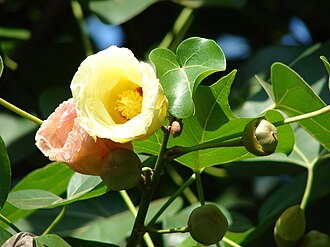
Thespesia populnea, commonly known as the portia tree, Pacific rosewood, Indian tulip tree, or milo, among other names, is a species of flowering plant belonging to the mallow family, Malvaceae. It is a tree found commonly on coasts around the world. Although it is confirmed to be native only to ...