Soybean bacteria use one genetic system to sniff out roots
Lubin MB, Teixeira DH, Belin BJ
Soil Health
The bacterial inoculants many gardeners and farmers add to bean and pea seeds work by literally swimming toward root signals, and understanding how they navigate soil could lead to better products that boost nitrogen fixation without synthetic fertilizer.
Soybeans team up with a soil bacterium that feeds them nitrogen in exchange for sugars, but first the bacterium has to find the plant's roots in the dirt. Researchers discovered that out of three separate 'steering systems' this bacterium carries, only one, called che2, actually drives it toward chemical signals released by soybean seeds. Oddly, bacteria that lost this steering ability could still swim just as fast in open water, they just couldn't tell which direction to go.
Key Findings
Bradyrhizobium diazoefficiens USDA110 has three chemotaxis operons (che1, che2, che3), but only che2 drives chemotaxis toward soybean seed exudate in soft agar assays.
The weaker chemotaxis contribution of che1 compared to che2 is not explained by differences in their CheA protein sequences.
Mutants unable to perform chemotaxis in semisolid media still swam at wild-type speeds in aqueous media, showing motility and directional sensing are separable functions.
chevron_right Technical Summary
Scientists identified which genetic system lets a beneficial soil bacterium sense and swim toward soybean roots, a discovery that could help improve how bacterial inoculants find and colonize crop plants.
Abstract Preview
Original paper
Characterization of chemotaxis in soybean symbiont Bradyrhizobium diazoefficiens.
Symbiotic relationships between nitrogen-fixing soil bacteria and legumes provide nearly half of all biologically fixed nitrogen on Earth, playing a crucial role in sustainable agriculture. These r...
open_in_new Read full abstractAbstract copyright held by the original publisher.
Species Mentioned
Was this useful?
Want to tell us more? (optional)
Thanks for the note!
Something went wrong — please try again.
Too many submissions. Try again in an hour.
Targeted knockout of a host peroxisomal peptidase confers field resistance to...
The corn in your grocery store and the staple food keeping millions of East African families fed is under serious threat from a viral disease that can wipe o...
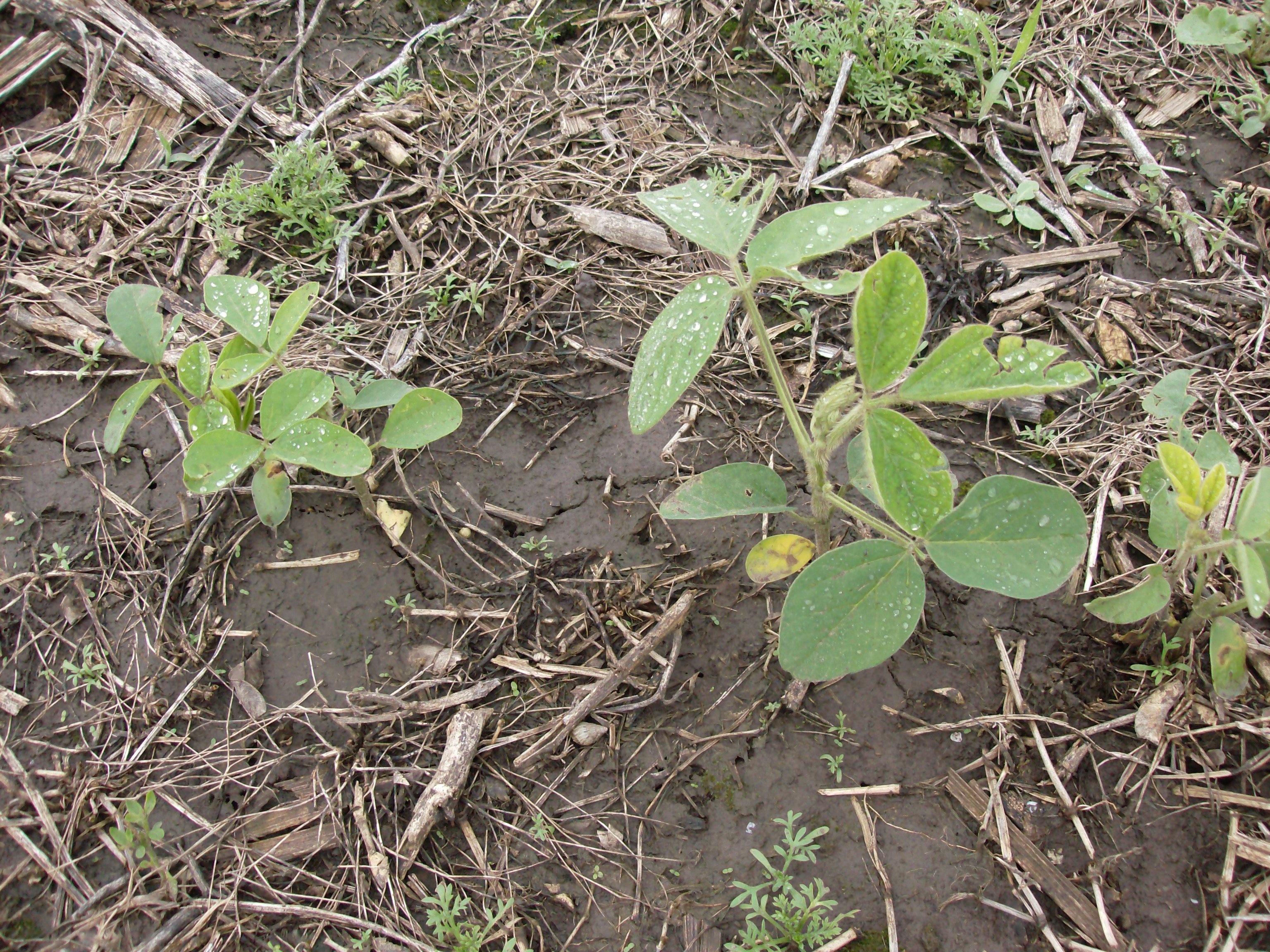
The soybean, soy bean, or soya bean is a species of legume native to East Asia, widely grown for its edible bean. Soy is a staple crop, the world's most grown legume, and an important animal feed.