One broken gene leaves cucumber leaves defenseless against heat
Ma Y, Jiang Q, Huang Z, Bian X, Zhou B
Crop Improvement
The cucumbers wilting and yellowing in your garden during a summer heat wave may be reacting to exactly the kind of chloroplast breakdown this gene normally prevents, giving breeders a real lead on heat-tougher varieties.
Cucumber plants have a gene called CsANU10 that keeps their chloroplasts, the tiny structures that do photosynthesis, working properly when temperatures spike. When this gene is broken, heat causes the plant's leaves to turn yellow and stay that way, its chloroplasts swell up and lose their organized structure, and the whole plant loses its ability to bounce back from stress. The discovery shows that keeping chloroplasts intact isn't just about photosynthesis, it also helps the plant's genetic machinery respond properly to heat.
Key Findings
A recessive missense mutation in CsANU10 causes temperature-dependent, largely irreversible leaf chlorosis with enlarged, disorganized chloroplasts.
Mutant plants under heat stress showed faster chlorophyll loss, reduced photosystem II efficiency, increased reactive oxygen species, and abnormal starch buildup.
Transcriptome analysis showed the mutation suppresses heat-inducible chaperone genes, RNA polymerase II-related programs, and photosynthesis genes, indicating weakened stress resilience at the transcriptional level.
chevron_right Technical Summary
Scientists found a single gene mutation that makes cucumber plants far more vulnerable to heat, causing irreversible leaf yellowing and damaged chloroplasts, offering a new target for breeding heat-tolerant crops.
Abstract Preview
Original paper
CsANU10 maintains chloroplast structural integrity and transcriptional resilience during heat stress in cucumber.
Heat stress destabilizes chloroplast function and frequently leads to leaf chlorosis in crops, yet the genetic mechanisms linking chloroplast integrity to nuclear stress responses remain poorly def...
open_in_new Read full abstractAbstract copyright held by the original publisher.
Species Mentioned

Was this useful?
Want to tell us more? (optional)
Thanks for the note!
Something went wrong — please try again.
Too many submissions. Try again in an hour.
Targeted knockout of a host peroxisomal peptidase confers field resistance to...
The corn in your grocery store and the staple food keeping millions of East African families fed is under serious threat from a viral disease that can wipe o...
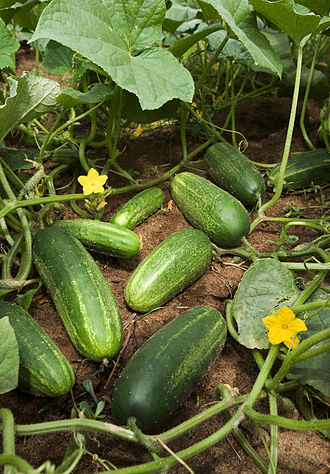
The cucumber is a widely-cultivated creeping vine plant in the family Cucurbitaceae that bears cylindrical to spherical fruits, used as culinary vegetables. Considered an annual plant, there are three main types of cucumber—slicing, pickling, and seedless.