All-female cucumber varieties grow with richer, more helpful root microbes
Liao L, Zhou X, Li X, Gu W, Lu K
Soil Health
If you grow cucumbers, the female-only ('gynoecious') varieties seed catalogs often push for heavy yields may also come with a built-in advantage: a root microbiome that's better stocked with pathogen-fighting bacteria and defense hormones.
Cucumbers come in two flowering types: some plants make both male and female flowers, while specially bred 'gynoecious' plants make almost all female flowers, which means more fruit. Scientists compared the bacteria and fungi living inside the roots of both types and found the all-female plants had a more diverse, richer bacterial community, including groups known for suppressing plant diseases. Those same plants also had higher levels of natural hormones and defense chemicals, suggesting their root microbes and their own chemistry are working together more actively.
Key Findings
Gynoecious (all-female) cucumber roots had significantly higher bacterial richness and evenness than monoecious plants, though fungal diversity was similar between the two.
Gynoecious plants were uniquely enriched in Verrucomicrobiota and Myxococcota, with Myxococcota and Bdellovibrionota identified as key biomarkers linked to potential disease suppression.
Gynoecious roots accumulated higher levels of hormone- and defense-related metabolites, including tryptophan, indole-3-acetic acid, jasmonic acid, and salicylic acid, with stronger correlations between microbes and these metabolites.
chevron_right Technical Summary
Cucumber plants bred to produce only female flowers (for higher yields) also host a richer, more beneficial community of root microbes than standard mixed-flower cucumbers, and those microbes correlate with higher levels of plant defense and growth hormones.
Abstract Preview
Original paper
Endophytic microbiota and metabolites profile in gynoecious versus monoecious cucumbers.
Sex expression in cucumber (Cucumis sativus L.) is a critical agronomic trait governing fruit yield and cultivation efficiency. Although its genetic and hormonal regulation is well-characterized, t...
open_in_new Read full abstractAbstract copyright held by the original publisher.
Species Mentioned
Was this useful?
Want to tell us more? (optional)
Thanks for the note!
Something went wrong — please try again.
Too many submissions. Try again in an hour.
Targeted knockout of a host peroxisomal peptidase confers field resistance to...
The corn in your grocery store and the staple food keeping millions of East African families fed is under serious threat from a viral disease that can wipe o...
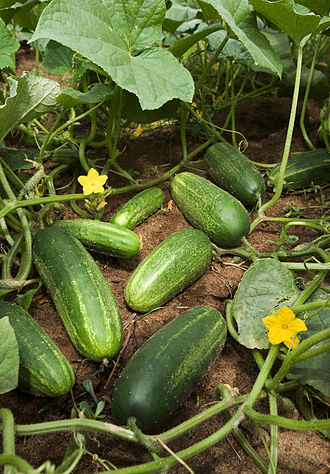
The cucumber is a widely-cultivated creeping vine plant in the family Cucurbitaceae that bears cylindrical to spherical fruits, used as culinary vegetables. Considered an annual plant, there are three main types of cucumber—slicing, pickling, and seedless.