Soil bacteria networks help soybeans survive salty ground
Luo Y, Kang FL, Li QM, Yang WC
Soil Health
Salty farmland is spreading worldwide from irrigation and drought, and this research points to soil microbes as a low-cost tool that could help crops and even your own garden beds cope in salt-stressed soil.
Researchers looked at the bacteria living around soybean roots and found that salt-tolerant soybean plants team up with a very different, more organized community of bacteria than salt-sensitive plants do. One bacterium they discovered, previously overlooked, actually improved a soybean's ability to handle salty soil when tested in a greenhouse. It's an early step toward using soil microbes, not just breeding or chemicals, to help crops survive salt-damaged land.
Key Findings
Salt-tolerant soybeans hosted a highly interconnected rhizosphere network centered on Pseudomonas bacteria, while salt-susceptible soybeans had a fragmented network dominated by Acinetobacter.
A newly tested bacterium, Thalassospira xiamenensis, improved soybean salt tolerance in greenhouse trials by altering ion-transport and oxidative-stress gene expression.
The team introduced a quantitative salt tolerance index (STI) to compare plant performance across variable natural soil salinity, enabling systematic screening for beneficial bacteria.
chevron_right Technical Summary
Scientists found that soybean roots host different communities of soil bacteria depending on whether the plant tolerates salty soil well or poorly, and they identified a new bacterium that helps soybeans handle salt stress better, offering a faster way to find helpful microbes for salt-hit farmland.
Abstract Preview
Original paper
Metagenomic Association Uncovers Host Genotype-Structured Rhizobacterial Networks and Novel Taxa That Enhance Soybean Salt Tolerance.
Salinity is an escalating agricultural challenge, yet plant microbiomes offer a promising avenue for improving salt tolerance. Nevertheless, most naturally occurring microbes remain unevaluated for...
open_in_new Read full abstractAbstract copyright held by the original publisher.
Species Mentioned
Was this useful?
Want to tell us more? (optional)
Thanks for the note!
Something went wrong — please try again.
Too many submissions. Try again in an hour.
Targeted knockout of a host peroxisomal peptidase confers field resistance to...
The corn in your grocery store and the staple food keeping millions of East African families fed is under serious threat from a viral disease that can wipe o...
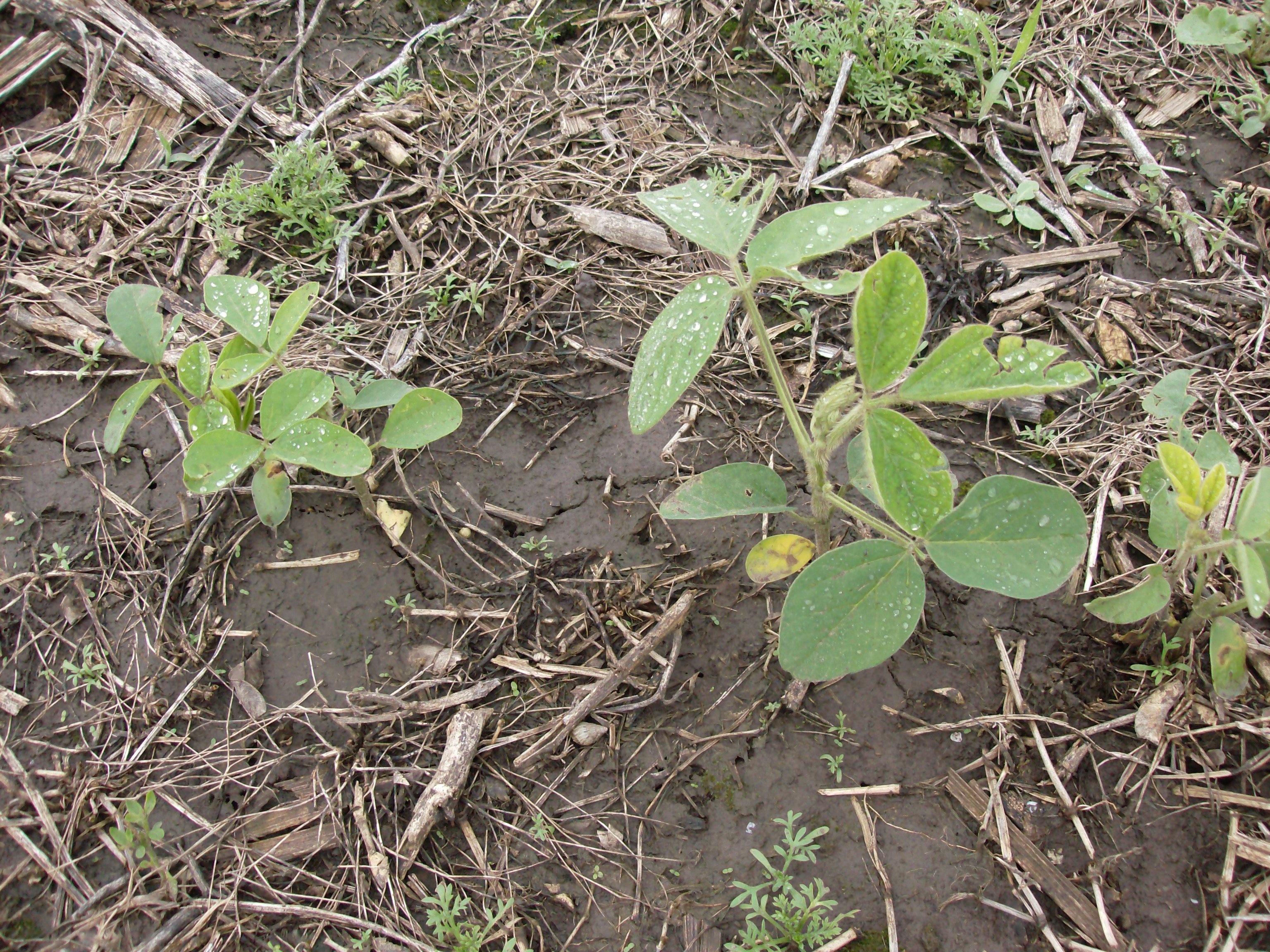
The soybean, soy bean, or soya bean is a species of legume native to East Asia, widely grown for its edible bean. Soy is a staple crop, the world's most grown legume, and an important animal feed.